



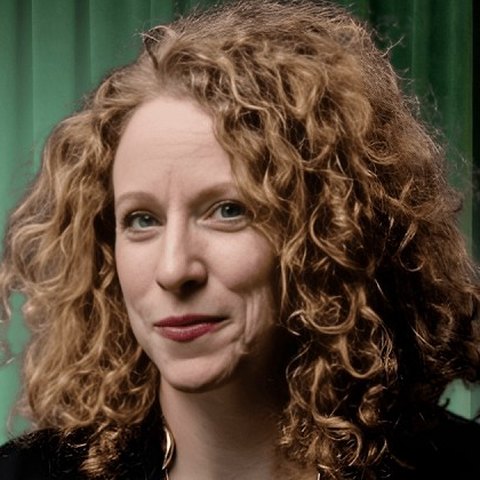
 Worth OwningEp. 14Wendy Brookhouse
Worth Owning · Episode 14
Know your number before a buyer names one
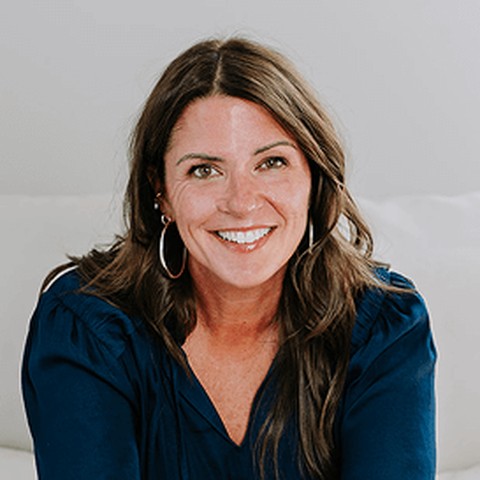
 Hosted by Krystyn Harrison · With Wendy Brookhouse, Founder and chief strategist, Black Star WealthMar 2026 · 33 min
90% of owners in her workshops never pictured selling
Overview
Wendy Brookhouse is a certified financial planner and the founder and chief strategist at Black Star Wealth. She also co-owned a software company and sold it after the partners split, with a shareholders agreement that set out how the company would be valued and sold. In her workshops, 90% of the room has never considered that they might sell one day. Her work starts with the number most owners carry in their heads, and whether it holds up.
Wendy breaks down what a buyer sees. An owner doing the social media, the HR and the quoting has inflated profit, because a buyer will have to hire for each role and will take that cost off EBITDA. She once looked at buying a business with $500,000 of profit and found 2 founders working 12 to 14 hour days. Her fix: list every task you do, hand off the work you hate first, and track the value of your business beside revenue and profit.
Then the money side most owners skip. Wendy works back from what your life after work costs on an after-tax basis, including the expenses now running through the business, to the value the company needs to reach. She sees female founders underprice from the first product, and owners who use the capital gains exemption get caught by the alternative minimum tax. Her advice: know your floor, so a ready, willing buyer meets an owner who can say yes.
Chapters
What you’ll learn
Where does your business stand today?
Get your Optionality Score →More on the episode
Note: Krystyn, Matt and their guests may hold interests in companies discussed in this episode. Worth Owning is not financial, legal, tax or investment advice, and is for informational purposes only. Do your own research and speak with your own professionals before making any financial decision.
You may also enjoy
All episodes →

Transcript · Worth Owning · Episode 14
Know your number before a buyer names one
Wendy Brookhouse, Founder and chief strategist, Black Star Wealth · Mar 2026
Wendy
When I do workshops to just say, "Let's think about this. Let's start being intentional and deliberate." 90% of the room has never contemplated, "Oh, I might be able to sell this one day."
Krystyn
There's a number most founders have in their head, the number their business is worth, the number they're planning to retire on, the number that's supposed to fund the next chapter. Wendy Brookhouse has spent 20 years watching founders discover that that number may not be real. She's the founder and chief strategist at Black Star Wealth. She's a CFP, a financial planner who also co-owned a software company and sold it. She built a practice specifically around the moment between building and exiting.
Wendy
And you're actually doing all the social media, you're doing all the HR, all that stuff, and they realize they're going to have to hire three people. They're going to discount your profit by that amount. So, you're not saving yourself anything in the long run. Revenue and profit drilled into our heads, right? Let's add the third leg to that stool, which is the value of your business. As the third leg that you should be measuring and tracking. I have a story about a client of mine who used to come in and he'd go, "Yeah, I have an offer for my company and but you know what?
If I work another year or two, I know I can increase that by like a hundred 200,000." And when and I was asking him one day, I'm like, "Well, how much do you need?" He didn't know the answer to that question. He wasn't willing to go down the hole to figure it out. And so, as a result, I think he kept pushing off because as we know, a ready willing buyer is a beautiful thing. And when they come, they need to be treated properly.
Krystyn
This is Worth Owning. And I'm Krystyn Harrison. Let's get into it.
Wendy
Thank you, Krystyn, for having me. I am so excited to talk about this stuff.
Krystyn
Love the energy. Let's just start where um a lot of folks kind of skip when they introduce you because I think it's really important for us to understand before we get into the advice and the wealth side of this. You co-owned a software company. So, you weren't just advising someone through an exit. Been on the other side of this. Tell me a little bit more about that experience.
Wendy
Yeah, so it was it was very interesting. We started this company with another adviser who kind of owned the IP and we also had a tech founder, a tech partner as well. So they provided the first build as part of their buy-in so to speak and we kind of managed the company and then along the way what happened was we just really lost faith in one of the partners and we're like you know what it's time to go. We can't be building something that we can't we could don't have faith in. And so what happened was we then tried to trigger our shareholders agreement clauses around the sale. And it actually brought up a whole bunch of stuff and it was a fascinating point in time.
And that's why I also say I have been in businesses without the shareholders agreement and I've been in businesses with the shareholders agreement and that shareholders agreement saved us. It saved us because it had the blueprint for how you're going to uh value the company. Here's how the sale will be handled because they tried to go all around all of that and we were able to go well actually according to uh clause 9 subsection 3 this is what it is and so it was kind of fascinating to be able to do that and not be bullied, right?
Krystyn
And this is such a this is a common thing for exits that we don't often hear about in terms of there's a disagreement with a partner and this... People build companies at the end of the day. Maybe AI will build companies on their... That's a future story. But today, people build companies. And so, from this perspective, there was a breakdown and then you saw an opportunity to find a path. Um, what was that just in terms of the shape of the company, where it was kind of what that felt like to go from owning it to then being on the other side of transaction? What did that feel like for you, that journey?
Wendy
It felt good from the sense of um hey we had built something, put in blood, sweat and tears honestly and then we actually received a dollar value for that, right? Because a lot of times we go into these ventures and it's all in a hope and a prayer, right? So you put all your time in, which is your most precious resource at many levels, and you never get compensated for it because you haven't uh figured out what is your endgame or how much do you need for that or anything. So I look at it as hey we learned so much through that venture and we got paid for our time and so I was happy with that.
Krystyn
And this is something that we don't often value and there's things where you could you can start to kind of create a shareholder loan for yourself and we will get into kind of the details of this but at the end of the day you know I've had a business that completely failed and I earned nothing from it but the opportunity cost to me in my head, the way I rationalize it, is the learning that I parlayed into the next thing and that's part of the ride. But a lot of times founders, for example, are not paying themselves a market rate salary because we have this sense of heroics around, you know, I need to be the one to be able to feed my team and therefore I will take the cut.
But the question really is, are you building a business that is has the potential to be scalable? How long are you going to take that on? Um, and I love that you were able to actually get through to the other side and a lot of folks unfortunately are not able to get to that point. So I guess what does that teach you now that you're on the other side? You're an adviser. You're a certified financial planner. You're in the wealth space. You're seeing a lot of different patterns. I imagine it's changed the way that you show up for founders, having lived it yourself.
Wendy
I absolutely it does. Have that lived experience is very very helpful from that perspective because that was a share sale. We've also done asset sales. We've seen good, bad, and ugly on both sides. So it really does affect us and what we have been trying to do and I think it happened when I hit a certain age and I started realizing man you need to start being more intentional and deliberate about this, right? Cuz I think we get into that just going along, we're growing but we're not trying to get anywhere in particular. Um and some of the things, it's like we're going out for a jog but we're not training for anything, right? Because when we're training for say a marathon we're very deliberate about how long the run is, how many runs we're doing, all those things, versus hey it's nice, I'm going for a run. Totally different approach.
Krystyn
Is that how you see a lot of folks operating right now?
Wendy
Yeah, because they've never been introduced to this concept, right? So when I do kind of workshops to just say let's think about this, let's start being intentional and deliberate, like 90% of the room has never contemplated oh I might be able to sell this one day. It's very interesting, the startup culture in Canada is huge. The get out culture isn't as big.
Krystyn
The get out culture, it's so interesting, too. And there's a principle from I believe it's the highly, you know, the habits. What is it? The seven habits, right, of highly effective... Exactly. Begin with the end in mind. And we are so strategic or we think we're being strategic and thoughtful and we're thinking about ramping and growing revenue of the business. That's the north star, versus to your point thinking about what is the exit path? What am I building? What is this worth? Is that going to help fund the next chapter, whether that's retirement or another build or what have you, and uh and also like what is the enterprise value of this business, which is a complete mindset shift.
And so we meet people along the journey. I'm curious where you see people fall in this. You know, there's sort of the, you know, folks who are thinking intentionally about this and those who are jogging just kind of day-to-day in the business. Where do you meet people? What sort of, how do they see their business when you...
Wendy
I'm trying to move them from the end of the jog into a training program, shall we say? Right. I think what we're trying to do is change the lens, right? So, I love your point about revenue as the north star because I think there's revenue and profit drilled into our heads, right? Let's add the third leg to that stool, which is the value of your business, as the third leg that you should be measuring and tracking. And then to that end about knowing what it needs to be worth, uh I have a story about a client of mine who used to come in and he'd go, "Yeah, I have an offer for my company and but you know what?
If I work another year or two, I know I can increase that by like a 100, 200,000." And when and I was asking him one day, I'm like, "Well, how much do you need?" He didn't know the answer to that question. He wasn't willing to go down the hole to figure it out. And so as a result, I think he kept pushing off because as we know, a ready willing buyer is a beautiful thing. And when they come, they need to be treated properly. And if you know what your floor is, you're going into your negotiations at a whole different level. Cuz if they're offering above it, you're like, "Yep, let's do it."
Krystyn
And I'm sure you've seen this. I've seen this firsthand myself where I had a seven-figure LOI for a business. It was the beginning of the dance. You know that it's not done until the bank, right? It's just the beginning.
Wendy
That's the first foray.
Krystyn
First foray, and the behavior and the way you know folks around the table changed when money was put in front. There's this very interesting psychology that we all have with money. And what I observed is just sort of it does change behavior. And so conversations with partners, with investors, with board become very very fine-pointed on how everyone is showing up emotionally around money as well. And so for me, I mean, my story there was it was a seven-figure deal opportunity, but it completely fell apart. Um, and that was because we weren't ready to translate the value of what we did into a value for a buyer.
And I couldn't run a process myself. It was not a competitive bid. So, learned a tremendous amount about what not to do, but a lot of folks we speak to get inbound interest all the time and it can feel very flattering. So, what are some blind spots that you've seen about moments like that where an inbound buyer's coming in and you know a founder starts to go, "Oh, this could be... This could be real. This could be my path out."
Wendy
Yeah. I think that we have to a couple of things by doing the education ahead of that time, like taking if that offer is not there now, use that opportunity to educate yourself. Educate yourself on what are they look, what would a potential offer look like or what would they, what would be their motivation, because what we don't want to have happen is they're just doing it to see what you're up to and they might sign off on an NDA and non-disclosure agreement so that they you they say they're not going to talk about it but now they know the inner workings.
And so that can change the approach as well. So making sure that they're coming in with the right intentions and with the right piece and not going into exclusivity until you're sure that hey cuz one person's interested maybe we should go get others. And I feel like sometimes when we get that unsolicited offer or whatever we were like oh well they want it so I guess I shouldn't go out and do other things, like you feel this invisible obligation because they brought the idea to you, versus okay what, well how do I maximize this.
Krystyn
Completely. And that idea of maximizing it, that idea of you know what is that number, what is enough, we get into more of that in a moment just kind of on what wealth looks like and the emotions around money. But I'm curious, some of the stuff we've talked about and you've talked about on your podcast, maybe a little uncomfortable as a point of view for founders to hear about the state that most businesses are in, and that is around how sellable is my business? And this is a question we hear all the time. Um because until you start thinking about it, and for many people you're thinking about it maybe when you're not at your strongest, right, maybe you're feeling extremely burnt out, right?
And there's three kind of buckets that we see. There's like, you know, the founder who's like I have a job, I am in every aspect of my business, or you know we'll get into sort of the TL;DR of that but very difficult to sell a business that entirely relies on you. The second is I've already got an asset, do I want to keep scaling it or do I want to step back or exit? And then the is I am ready to go. And there's sort of folks across that spectrum. Is that kind of similar to what you've seen in terms of the way you look at it?
Wendy
Yeah. I, well, here's where I'm see, I'm seeing a little bit of that, but I'm also seeing of uncertainty of where they are. I want to get them before they're tired. I want to get them because, you know, during the pandemic, we were talking to a partner, an accounting firm, about this whole concept of buying and selling. He goes, the number of business owners that are coming in and they're like, I want to sell. And they're like, "Well, if you wait 2 years, we could get you, we could fix this so you have pay less tax and do all this stuff." And they're like, "Yeah, no, I'd rather pay the tax right now." That's how tired they are. Um, and so I think uh that's also part of because they are involved in everything.
So some of the work that you know can be done to make your business more sellable is actually going to make you enjoy your business more. This is it at this end of it, right? And so I think there's this uh perception and depending on the size of the business I sometimes see people, well I can just do that myself, right? And so I think what happens is when we start going in and we start looking at value and everything else and we realize that you're, you know, you're doing all the stuff because you wanted more profit. Because you're actually doing jobs that other people could do and get paid for. So you've actually artificially inflated your profit.
Krystyn
Right. This is a really...
Wendy
When someone comes into your business and you're actually doing all the social media, you're doing all the HR, all that stuff, and they realize they're going to have to hire three people, discount your profit by that amount. So, you're not saving yourself anything in the long run.
Krystyn
This is a really good point. So, there are add-backs or adjusted EBITDA normalizations where a buyer is going to go in. And a lot of founders, Wendy, I've met don't actually know this. And why would they, frankly? You don't go to school for this. And there's so much education about how to start and scale, but exiting, and this is where I think we're both super aligned as partners on this, like, you know, um so we talk a lot about positive normalizations where maybe you're paying yourself I don't know um or or sorry, market rate salary. Let's talk about that. Exactly. So if you're underpaying, walk us through what you've seen and what a normalization is in your world.
Wendy
If you're not underpay, if you're underpaying yourself, they're immediately going to add back in what is the cost, the true cost of the role you've assumed, right? And if you have three different roles you're doing, they're adding them all back in. So that you're paying yourself, it really should have been 150, plus we should have been paying 60,000 to another person to do this. They're just going to take all that extra money right off the profit or the EBITDA. So the number they use to multiply by which they're going to give you your value. So you want, you know, you want to have your multiple high and you want to have that profit as pure as possible and as high as possible as well.
Krystyn
Bang on. And so if you're valued on EBITDA, for example, um this could be where you're going to see a discount because they're going to have to add all of those people to do that job. Um and then the other piece too, if I mean what are some kind of blind spots or some sort of use cases that you've seen where a founder is involved, for example they're the number one salesperson in the company? What are some other sort of checks that if a founder is listening you could kind of just give them a check on how sellable the business is?
Wendy
Well I'll give you an exact example. So my husband and I were approached to buy a business. It had a nice healthy profit of 500,000 a year. For me, woo, that's awesome. Lots of coin. And then we started digging in and we realized that the two kind of founders in the company were working 12 to 14 hour days. So the one of them was doing all the quoting because she didn't trust anyone else to do the quoting on the jobs. So there was that piece all added in. And so then we looked at, well, if we're going to hire someone to do all the quoting, there goes, that's not $500,000 of profit, right? And the second level was we were really not interested in buying a job. Right now when we think about most buyers, most buyers they want to buy a cash producing machine and they want confidence and predictability in how much that machine is going to push out cash-wise every year.
Krystyn
Absolutely. Well, and it's this idea, can I look at your results and go, oh, I know how you did them. You have playbooks. Do you have SOPs? You have people who are following them. And I can see that in your results and your weekly scoreboard, the system that you've built, the asset that you've built versus the job that you have. And I think it's really interesting when you think about technology and how it's supposed to make us more productive, and you think about why we all start a business. We want time freedom at the end of the day. We end up trapping ourselves in business jail.
Wendy
We do.
Krystyn
And so, how do we get out of it? What's the path?
Wendy
Talked a lot about it, but you know, part of it is I think the first step is look at absolutely every activity you're doing. Look at every activity. And when you, if you're first starting this, you can get more strategic about it in the long run, Krystyn, but I think to start off with, just get rid of all the stuff you hate doing. The stuff you put drain on. The stuff you're like, "Oh my god, I got to do that." And then you let it pile up to the point where it becomes this massive project that you are like can't stand doing, and you're like, then you take three days to do it instead of five minutes a day. Those are some good indicators. Um my caution there is, and I have been victim of this, I'm in the school of if I made this mistake and I can keep one person from making that mistake, it was okay, Krystyn, kind of like you.
Krystyn
Yes. Yes. I've lived it.
Wendy
My mistake was, hey, I need someone to do uh my books. We'll bring them back in house. We'll do that. I need a receptionist and I need someone who can book appointments or what have you, right? So, I hire one person to do all of that because what we're trying to do is find a unicorn, Krystyn. We're trying to find a unicorn that does it all versus, "Hey, let's break this down." Cuz guess what? The person who is a good bookkeeper may not be the extrovert you want greeting your guests at the door.
Krystyn
Yes. Yes. Know their strengths. Know what you need. Different profiles, trying to smush them into one.
Wendy
I was guilty of that so bad. Right. In the name of efficiency and you know and it's... Well because it's not a full-time job unless it's all in one job description.
Krystyn
Right. Right. And this is such a, this, the design that goes into scaling a business, the thoughtfulness, and I think so many of us get so heads down in the build that we're scaling so fast the wheels are coming off, or at least it feels like it, and then all of a sudden we're going oh we need to look inwards and optimize this engine that we've built and fix it. And that's okay. That's okay. But I think what happens along the way is we start to really not enjoy the house we've built, which is what you talked about, right? And kind of how do we get out of that. So walk me through, let's talk about, you know, numbers, which I know you're all about, but also the heart behind the numbers. So walk me through how you think about that one number. What is the question that you're actually trying to answer with a founder?
Wendy
What I'm trying to answer for that question is what does the end result of your sale have to be, to your point, to fund either retirement, next phase, whatever you want to do, and then let's work our way back. But I start at the very very beginning, Krystyn. I don't know how far away that is. I don't know when that might happen, but what we can control is today. So what we can do is look at what does your today cost and let's figure out how much you need from your business to fund that. Okay. Then we can add in, oh, in your ideal life post-work, I call it life after work sometimes because the word retirement doesn't seem to resonate all that well with business owners.
After work, option, work optional is kind of the goal for a lot of people we work with. What's that going to cost on an after tax basis? Cuz I'm not interested in knowing what it costs pre-tax because that's where the strategy I can apply is. But that's what I want to do. Now, here's a key thing for business owners, is like we've almost got to normalize your retirement income or your life after work income. You're running a lot of your life through your business. If your business is no longer there, you must now assume those costs personally. We need to add them back in. We're going to be skewing our final numbers.
But that gives us kind of like, okay, if we want this much income, we can now figure out along the road how much you would need to do. So, if I have all these other assets, okay, that means the business would probably need to net out this, and we have to look at it from, hey, you're going to have to pay uh, you're going to probably want some consultants along the way to help you build the value. You're probably going to want a really good accountant and a really good lawyer on your team, which are specialists in M&A and don't do real estate on the side. So, you're going to want that specialist.
So, you want to price that in. Then we're going to have to go, hey, how are you structured? Do we need to add in a holding company, a family trust? How are we maximizing all these pieces and letting them grow? These are some actual costs that we're going to have to deduct from the growth to come up with what your net is. And that's the net we're working with, but we will reverse engineer back to say, hey, based on all these assumptions, this is what the value needs to be, and you're here. Now, let's go.
Krystyn
And I like how you're doing that bottom up perspective versus going, "What do you think your business is worth?" And for many, do they have an answer? Because for folks, this is part of why, you know, we engage, right? We help with that answering. That's right. And ultimately, you won't know until you have an LOI, you have a C, you have cash in the bank. You actually will not know what it's worth. But you can get an appraisal, a bit of a sense, a framework to go, okay, where are we starting from? Where do we want to build towards? Um, and so how many founders do you think out there know their number, what their business is?
Wendy
Very, very few. The few that do, somehow it magically ties into what your capital gains exemption is or the amount of debt you personally have. Something along those lines. Like there's something driving the number that is external to the actual value and you attach, and I see a lot of business owners attach themselves to that. Right. So...
Krystyn
Yeah. Yeah. And that's interesting just in terms of the attachment. Tell me about that. What do you see in terms of, is it identity attachment or...
Wendy
Or they're trying...
Krystyn
If they're operating by rules of thumb or they're just like...
Wendy
They're feeling the work that they've put in. So they're trying to say what is that worth? Right. So they're evaluating the value of their effort versus the actual asset, whether they've built an asset or not that someone else might want to own.
Krystyn
Right. Right. And that's such a diff, a huge difference. And one of the things we do, and this is where we show up and work with and partner with folks, you know, folks like you and not like you, because from the perspective of you have built, you have sold, you have done the thing. We are very similar. We're very aligned and that's important to us because you have empathy for what it feels like to actually feed families, right, through your business. This is not something to take lightly. And so part of the question I have for you when it comes to the psychology of money, the emotions of money, um I wanted to just share something that I've noticed in myself and I'm curious if this is a pattern you see, particularly with female founders, um who are building.
And so for me, you know, you've built value in a company, you've scaled it, you get to a point where like, you know, I know this intellectually, that this is worth something. But then you know, like when someone sort of, when someone asks you like what do you, what do you want? Like what are you building? What's the wealth that you're looking towards? Like when you talk about wealth there is this sense of kind of holding that back. You kind of flinch a little bit and go like, can I say that out loud? Um and I was speaking to a founder the other day who was saying, I feel like as women we are not, we don't feel like we can be unapologetic about wanting to build wealth.
And there's this stigma around wealth related to um, you know, uh viewing it as I don't want to be greedy, when the shift for me has been kind of going, no, wealth can be a tool and I can align that with my values and I can align it to how I want to live my life and what I want to build outside of a business, outside of the walls, who I am as a person. Um but there's a lot of unwinding with that. So, I'm kind of curious, what do you see on the emotional side, whether it's female or or not? Um, is this a pattern that you've seen?
Wendy
The pattern, I'll take it even more granular than that, Krystyn, because I'll see it in how female founders price their products, right, of not wanting to seem greedy. And I think it starts at that granular level. And there's some, um, there's some obviously it's intrinsic in them. There's a couple of things there. I can't be greedy, to your point, but also who am I to charge that much, who am I, and um what if someone says no when you are assertive at that level, right? So I think that it takes all the gumption you have to price appropriately and it takes all the gumption to say this is my price and then to just be quiet.
Krystyn
Right. And when you see this at the exit side, what do you notice?
Wendy
I think it's going to be the exit side as well, right? When you look at the female founders. I have a great story though about the opposite side of things because I think it's systemic at some level, Krystyn, because I think I was lucky enough a couple years ago to be at a dinner table of someone who had done a very successful exit and she was telling the story of how she's in the negotiations and her lawyer is in there with her, a guy, and she's going no, this is how it's going to be, blah blah blah, and he's going, I think you're being a bit harsh or a bit, what, aggressive or something, and she goes, get out. And then she managed it from there on her own. Her, they, she was being almost socialized by her team to not be assertive and aggressive.
Krystyn
Fascinating. And to doubt herself, which I think as women, I still doubt myself even though my husband and co-founder, I know you're, you work with Kelsey, your husband, "Look at your LinkedIn, Krystyn. Go look at your, look at your, look what you've achieved." And yet I still show up with this sense of I need to have all the buttoned-down answers, I need to be the one who knows the... And there's this sort of level of trust. And so this shows up in exits. There was a sort of a study that I was reading about how um women associate money with generosity and love, whereas men associate it with autonomy and power.
Neither is wrong. But when you're thinking about negotiating and looking to maximize value, and I've seen this with clients, I work with many female founders, who value to them isn't about a dollar number. It is about the, you know, the impact to their team, the way that the culture is going to be maintained. It is about what it does for their family. And there's this very interesting difference. And I would say some men that I've worked with as well, it's either gender, but I think predominantly you could say. So, I'm curious. Do you see this sort of psychology with money and wealth in women and in female founders?
Wendy
I do. I find what it's interesting too is that when I work with a female founder over a period of time, part of our process is we actually measure kind of what's the value of your assets and we do it every quarter. So we're looking at the market assets. We're looking at, not necessarily, we've done their business valuation so we have it but we only do it once a year type of thing. Um but we still are looking at it and starting to get the confidence that hey, we're making decisions. I think to one person in particular, we mapped out a 10-year plan to exit, but my whole goal as her financial planner is, hey, I'm just going to be here to root you on, but I'm also, my goal is to build so many options for you.
How can I make all the options available so that if you decide to stay on as chairman of the board, woohoo, you're supported. You decide to sell to your employees, you're supported. You decide to totally just sell to a third party, we've got all the vehicles built to do that. Like every kind of option, if we can max it out, because um even things I think about sometimes which I don't hear a lot of other advisers talking about is on the sale you've used up all your capital gains exemption. You sold the company for 1.25. Boom. No tax. Wrong. There's going to be this thing called the alternative minimum tax that the government's going to say we'd really like some tax today.
So what we have to do as advisers is go, we know that there's a potential to happening. Let's make sure you have enough revenue producing assets that will offset that tax over the next four or five years. So thinking about it from that strategic point of view so that we are ready for anything.
Krystyn
And this is it. Optionality is a word that we both love. Know your number, both personally and in the business. Understand your options and start building with the end in mind. Think about where, what you want out of your business, what you want out of your asset, and don't be afraid to seek help and do the work. Do the work because the work matters in the end, right? Measure twice, cut once. And so when... Yeah. Go ahead. Go ahead.
Wendy
I just want to add in a little bit of a commentary there on, this is sophisticated, complex, that I don't think you putting it into ChatGPT is going to give you the right answers at this point. Plus, I think there's that whole point we've been bringing up about mindset around money and how that a good planner and advisor and your core will help guide you through those and give you that confidence you might not even have known you were missing, because it just, it slowly compounds over time through constant good decisions.
Krystyn
Completely. And once you can mirror and look at aligning your values, the direction of your life, where you want to go with your life, and know that number and then work backwards to what the business could be worth today and see kind of if there is a gap. A client of ours recently started a sale because they felt ready. They saw the number and it gave them the frame to go, this is the time. This is what I want to pursue. So knowing that helps inform your decision set about where you want to go, and every single case is so deeply personal and different. And so I love the work you do. Oh, go ahead. Go ahead.
Wendy
I was going to add another mindset piece. I think that in the media or just in the whole entrepreneurial sphere, I think that sometimes, I think in the tech startup it's different. You're almost groomed from day one for an exit. Whereas I think in everywhere else in the spectrum of entrepreneurship, we're not thinking like that. We talked about that, but then we attach this obligation to not sell versus preparing for a sale. And when we get into this world of, there's so many neurodivergent entrepreneurs with ADHD and things like that, and a lot of them, they really like starting things up, getting it going, and then they want to move on. So let's do that. Let's not think that a bad thing. Let's make sure you're going to get paid every time.
Krystyn
That is beautiful. And that has also been my, I don't know where I am, but ultimately I am the starter person. I am the zero to one. I thrive in change. And so just knowing who you are, and it's okay to give yourself permission to design a path out. That is okay and that is beautiful and that is celebrated. And if you want to stay and build something generational, that's also beautiful, and that's why it is deeply personal. Wendy, thank you so much for joining me on the show. How can people find you? What's the best place for them to get in touch?
Wendy
They can check me out on LinkedIn. It's just Wendy Brookhouse on LinkedIn. Um, I have my podcasts get posted there, my newsletters get posted there, and of course, my website is blackstarwealth.com, and I love to chat with anyone about anything cuz uh, love just getting you to the next level of questions.
Krystyn
Thanks for listening to Worth Owning. If you found value in this conversation, share it with another founder who needs to hear this. Subscribe to Worth Owning for more unfiltered conversations about building enterprise value and designing the life you actually want to live. New episodes every other Wednesday.
The full conversation, from the episode captions with light clean-up for reading. Check against the audio before quoting.
Free · 5 minutes
How much does your business still need you?
Get your Optionality Score: where value is leaking, and the first three moves to fix it.
Get my Optionality Score →