



 Worth OwningEp. 18Susan Richards
Worth Owning · Episode 18
Is your CFO just a controller?
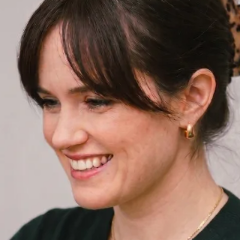 Hosted by Krystyn Harrison · With Susan Richards, Founder, NumbercrunchApr 2026 · 42 min
About 75% of M&A deals never close. Prep starts 36 months out
Overview
Susan Richards is an FCPA, FCMA and the founder of Numbercrunch, a fractional finance function for growing companies from startup through exit. Her hot take: most CFOs are controllers with a bigger title, trained to explain what happened last quarter. Too many owners make million-dollar decisions off gut feel and a bank balance, and about 75% of businesses that go to market never close a sale.
Susan lays out what a forward-looking finance function does: financials by the 15th of the month with a “so what” attached, a forecast updated monthly, and capital pointed at the divisions that earn it. She explains EBITDA and normalized EBITDA, the add-backs owners should document now, and why one buyer called unnormalized EBITDA an arbitrage opportunity. Fully loaded CAC only means something next to lifetime value, and segmenting by channel starts around $1 million in ARR.
Then the exit. Buyers look 36 months back and expect a forecast the history supports, and time kills deals. Susan’s checklist for owners 3 to 5 years out: books current, client and employment contracts signed, unprofitable divisions cut, and a data room you can defend. Court both strategic and financial buyers, because enterprise value is what the best buyer will pay, and it never shows up on your income statement.
Chapters
What you’ll learn
Where does your business stand today?
Get your Optionality Score →More on the episode
Note: Krystyn, Matt and their guests may hold interests in companies discussed in this episode. Worth Owning is not financial, legal, tax or investment advice, and is for informational purposes only. Do your own research and speak with your own professionals before making any financial decision.
You may also enjoy
All episodes →
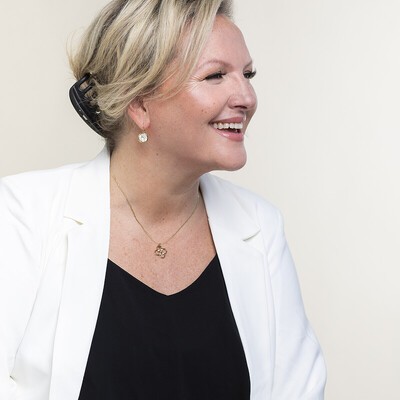

Transcript · Worth Owning · Episode 18
Is your CFO just a controller?
Susan Richards, Founder, Numbercrunch · Apr 2026
Krystyn
It's about 75% of businesses do not successfully close in an M&A transaction. They're too founder dependent for many of them.
Susan
Truth, truth, truth. That is my conclusion. Lots of reasons for that. I can't predict the future, so why could they? But a strong CFO is going to be pulling assumptions and creating models based on the assumptions that the founder does know. And other C-suite individuals inside the organization certainly are making strategies have unit economics and assumptions built into them and so that's what the CFO should run with what we're looking for in a CFO is strategy so strategic financial it's all forward-looking so that's where you want your CFO to be obsessed about
Krystyn
I had a private equity buyer who literally said to me Krystyn this is our arbitrage opportunity we want to go in to unnormalized EBITDA situations tell me what you're hearing when you hear this cuz what is a buyer doing when they go in and say, "Ooh, okay. This is how I'm going to value you." What does this mean? And how does that relate back to normalizations? Well, every founder has a finance person, a bookkeeper, an accountant, maybe someone with the title CFO. And most of them are looking backwards. They're telling you what happened last quarter, what you owe, what came in, but they're not telling you about what's coming. They're not telling you about what your unit economics actually look like when you load in the real cost.
And they're definitely not telling you whether your business is built to survive diligence. Susan Richards is an FCPA, FCMA, and the founder of Numbercrunch. She spent her career inside the financial engine of growing companies, and she'll tell you straight up, most founders are making million-dollar decisions off of gut feel and a bank balance. She's not here to audit you. She's here to show you what a forward-looking finance function actually looks like and why it might be the most important hire you make in the next 12 months. This is Worth Owning. I'm Krystyn Harrison. Let's get into it. Susan, welcome to the show.
Susan
I am so excited to be here. Thank you. This is going to be fun.
Krystyn
Let's start with a hot take. Most CFOs are really controllers with a bigger title.
Susan
Yes, I mean truth truth truth. That is my conclusion. Lots of reasons for that. So first of all, CFOs are often pulled from public accounting firms. So they were perhaps the auditor, tax advisor for a startup. They had a strong relationship and so that's what got them into industry. In Canada, in the US, it tends to be a bit more MBAs. Fewer CPAs here in Canada though. It's a CPA-driven profession. And they have a lot of strength in being able to read historical financials. They have a lot of strength in being able to categorize and explain revenue and recognition.
All these things that sort of drive their their common comfort zone to be backwards looking and founders without the knowledge of what they need they will tend to ask those historical questions too. So a lot of discussions go over what happened in backwards looking which is really more of a controller function and what we're looking for in a CFO is strategy. So strategic financial it's all forward looking. So that's where you want your CFO to be obsessed about.
Krystyn
If I'm a founder looking is there a quick two to three questions I can ask myself to go do I have a controller or a CFO?
Susan
M well you're I mean depends on the nature of the business but certainly the CFO should be able to help you like your conversations are where you're going to be in a year in two years three years you're talking exit strategy you're talking about raising capital your decisions around purchases are around the ROI of the purchase and not about the cash bank balance and how you did last quarter.
Krystyn
Yeah. Yeah. And so to your point, a lot of CFOs who are in seats came up through audit, came up through typical kind of compliance which sort of gives you this let's look backwards versus this strategic decision-making capability, right? And so I've seen a lot of founders and we've talked about this where maybe they're planning for 12 months and that's all they have in an operating plan. Meanwhile, they're being asked in diligence about well where is this going in three years? And they don't have that forward-looking capability. And I've also seen situations where maybe they do forecast further than 12 months, but they're not hitting forecast and there's a consistent pattern. I'm curious, are those symptoms as well that you see of kind of like there isn't a strategic finance function in this or
Susan
Absolutely because there's half art, half science to the CFO role. And so sometimes founders will default to assuming that a CFO is not going to be able to predict the future. I can't predict the future, so why could they? But a strong CFO is going to be pulling assumptions and creating models based on the assumptions that the founder does know. And other you know C-suite individuals inside the organization certainly are making strategies that are have unit economics and assumptions built into them. And so that's what the CFO should run with.
If the organization has an annual budget that's better than nothing because many don't even have that. But those tend to sit on the shelves and not be updated on a regular basis unless you have a strategic CFO. So you want that updated arguably monthly should be part of the monthly cycle to always be calibrating just like your GPS. You miss a turn. You don't just oh that's it. We don't know where we're going now. You're calibrating, navigating. That's what CFO behavior should look like.
Krystyn
And monthly let's talk about what you would expect to see. So for example, you close out your month end. When do you think like best practice what do you see is like when should you expect financials? Obviously it depends but sort of gold standard.
Susan
Yeah. Well I would say so for because you want to optimize efficiency cost efficiency with timeliness and so for a privately held business I would say mid-month. You want your financial reports coming in by the 15th of the month. It could be sooner, but you know what happens if you start to have like a three-day close because in a funny thing in our industry, people will brag about, "Oh, we had a three-day close." It's layered with assumptions and estimates and therefore not actually reflective of what happened in the organization. Things are getting faster with AI. We have more tech now that's recording in real time and allowing a month close to be faster. But if you really want accuracy and you want a strategic review of it in order to give you insights, then I would set an expectation that mid-month this.
Krystyn
And so I think this is another tell that I've seen where it's more of a controller in the CFO versus that strategic thinking partner where you have you delivered actuals. Let's say they do come in, they're on time, you're able to look back. If there's no so what analysis and hey decision making set analysis also another tell right that you've got someone who's who's just putting the compliance together versus actually looking at where the business could go and what we do with this information.
Susan
Absolutely. And you know there's a lot of teaming that happens inside an accounting department and we don't want a CFO and no controller. You want both. And if you're not large enough to demonstrate a need for two full-time roles, then two fractional can work. But having that controller that's preparing the historical information, putting together analytical reports that have been requested and designed by the CFO and then the CFO coming back with that Q&A. That's really where you test and verify.
So you want enough time for the CFO to do the internal review, provide the insights, and then still have an expectation on the founder side that there could still be questions and considerations of again when we're talking about forecasting. What will come out is things are going differently than planned and maybe one division is performing better than another and should be a consideration for resource reallocation midway through the year. For example. These are the kinds of conversations you want to be driving, not what were the payment processor fees and whether we had to pay a credit card penalty. That is not strategic material to the business
Krystyn
Completely. It's just it's noise, right? It's information, but not something you can necessarily act on. And I love that you brought up the idea of looking at divisionally or by by product. Like just being able to segment your data so you could understand kind of where things are performing in a healthy way versus unhealthy way to reallocate and key message make decisions. So what you're really describing is like decision-m tools in your finance function.
Susan
Yeah, that's absolutely and things like you know I had a client that had they were making a big capital purchase. They had end of life with a particular piece of equipment and it was multi-million dollar purchase that they had to make. And when we looked at it further, the reality is the division that required that was going to be utilized that was the worst performing division in the organization. So that commitment, it was going to be a recommmitment of 10 years of focus and energy and really and you know there was a decision to reconsider that and not continue to you know adjust to a maintenance mode for that piece of equipment and a sunset while they focused on the area that was generating the majority of the profit for the business.
Krystyn
And this is exactly it. You're not only talking about capital and allocating it to the growth areas of the business versus the lagards, but also time capital and people and there's so many decisions that go into that and you need the information and framework to be able to do that. One thing you said in another conversation we've had is around how founders are making decisions based on cash in the bank. Not projections, not unit economic level, just what's sitting in the account. Where does that come from? And what are you actually seeing when someone walks in the door?
Susan
Yes, I see that so often. It's hard to actually shift that. But the more that you can focus on the projections and making the decisions in advance and hypothesis, we're going to do this quarter, this next quarter, then you're priming decision making. So you even you may just delay the decision until you hit a milestone, but you're not doing knee-jerk from cash in the bank. And I think ultimately people make some personal financial decisions based on hash in the bank. So first of all when cash starts to get light people get nervous and anxious.
It's not a good point of decision-m they make decisions out of fear. But also if they secure funding so bringing in a million dollars in nine dilutive debt that hits the bank account people tend to get sloppy and all of a sudden feel flushed with cash and now there's spend outside the plan. So focusing on the results and adjusting the projections accordingly and staying on track with that decision- making is much more reliable. It's independent and objective and leads to better sleeps at night, right?
Krystyn
Oh, better sleeps. Yes. And I have been in a cash crunch myself and lived that pain, but also lived what it feels like to receive a capital injection and go, okay, possibilities, right? And so kind of balancing that dance between like scarcity mindset and abundance mindset. But I love the CFO role if it's played right in terms of holding that accountability and tension towards this is what we said we would do. This is the information we're working with which is never perfect but did we say what we would do? Do we need to adjust? And what is the financial story that's being told alongside the results in the business which are it's the history right? It's the story through a P&L and a balance sheet.
Susan
Absolutely. And so many different things can happen when it comes to cash timing. Another organization that I can think of, if they were had a tricky time managing their sales performance because they sell a SaaS business annual license, but sometimes they would sell a three-year license and their sales guy was fantastic at getting like two years paid up front. So, their cash balance was jumping all over the place and they had a really tricky time. The CEO of the company had a difficult time wrapping his head around the performance and whether he could be bullish or not. So he was bullish one month based on sales volume closing but that doesn't translate into revenue recognition which doesn't necessarily translate into cash. So, you know, the more complex your revenue generating model is, the more sophisticated you require that forward-looking CFO so that they can get ahead of these, you know, potential complexities that you have to factor in.
Krystyn
So, the complexity of a revenue model directly relates to also the skill required of this person. I would also imagine your cash conversion. So, sort of like when do you actually from a recognition perspective, can we break it down because I think there's a lot of founders. I met with a founder who was, you know, multigenerational business, been running his business for 30 years, super profitable, super healthy, over a million in EBITDA, didn't actually know what EBITDA was. They were looking at, you know, their operating profit. There's a lot of terms we throw around. I'd love to get a sense of, you know, what are some main jargon that you think every founder needs to know to know their numbers?
Susan
Okay. Well, EBIT as the one that first of all is good for every organization to know and it is essentially it translates to lenders as profit and it is your net income but you're adding back things like amortization which is just an accounting adjustment and interest which is how you're funding the debt of the organization. So if you take out those two pieces, your depreciation advertisation and your interest, that gives you EBITDA. And what a lender is looking for is an ability for you to be able to pay service the debt they call it, is make your payments. And they're going to expect that you can make payments out of your profit. And so EBITDA is profit to a lender. So that's one that's always important for every kind of organization to know
Krystyn
And most buyers unless you're Buffett and don't believe in EBITDA, but that's a whole other conversation. Well, because of adjustments
Susan
That's good. Well, you know what? You bring up a couple points. Yes. In the in an exit almost like every industry has an EBITDA factor. So, you cannot ignore it no matter what industry you're in and unless you have certain buyers that for whatever reason, but pretty much everybody 2026 is EBITDA focused. And the other thing is, is it EBITDA in your business or is it what we call normalized EBITDA? Normalized EBITDA is what a buyer is going to take on. So in a in a business that's privately held, business owners will end up in some cases putting together putting through expenses that maybe were not really a cost of doing business in that organization.
Krystyn
They're running their life through. Have you seen any normalizations that you could name would that would be examples for folks? And this is such a great bestkept secret of M&A. If you don't know what this is, this is worth listening just to this segment alone
Susan
For sure. So, and every business owner should get a sense of what this looks like. You may have some family, so maybe some kids, maybe a spouse that you tasked with doing some things or not, and they're you're running a salary through the business as part of an income splitting. A lot of these are tax strategies or things that people think about from a tax perspective. And you also may have it goes either way. So you may be getting free rent, in which case your normalized EBIT would need to include market rate rent because a buyer is going to anticipate that there's going to have to be a rental paid. So it's anything that is outside the norm of what market considerations of the business are.
So if you're doing, you know, golf memberships, things like that, those can be taken out. But any free labor that you're getting from people that's meaningful to the business, that would have to be valued in. So there's like pluses and minuses that you'll want to be aware of well in advance of a exit and you can demonstrate. So sometimes people will want to pull, you know, clean up their books and although that's recommended, at least knowing what those documented expenses are because an astute buyer will be aware that there are adjustments to be made in a privately held business before but but that's a thing to be factored in
Krystyn
And this is a leveling the playing field moment between buyer and seller and we're here in service of the sellers making sure that they understand the knowledge they need to go to market. I had a private equity buyer who literally said to me, Krystyn, this is our arbitrage opportunity. We want to go in to unnormalize EBITDA situations. Susan, tell me what you're hearing when you hear this because what is a buyer doing when they go in and say, "Oo, okay, this is how I'm going to value you." What does this mean and how does that relate back to normalizations?
Susan
Well, it's a negotiation tactic is how I look at it. So, the pricing model is often based on what market conditions dictate. So buyer seller agree on a in principle on a formula that will determine the valuation and then there's a ballpark number assigned to a new seller. They think that's the number they're getting. That's only the first part of the negotiation. Then we're going to dive into diligence and the buyer is going to claim that these are not adjustments that they're actually consistent with the offer that they are normalizing the results of the organization to reflect the true EBITDA or whatever the formula is based on because there could be considerations around revenue too.
So it's important to think through there's financial statements that you use for operating the business and then there's financial there's there'll be adjustments and then statements that you would be looking at in consideration of a sale and ensuring what you want is to be negotiating from a position of power not fear and deals clo I mean this is where you help businesses better than I and you can help explain the benefits but deal probability of close is based on getting swiftly through that transaction. So, you don't want to be cleaning this up in the middle of an offer. It has to be in advance.
Krystyn
Time kills all deals. Absolutely. And this is something where if you're ready and if you're prepared 36 months out, you're going to be in a much stronger position. And we'll get into more of the exit prep, but let's jump back into the build. You had mentioned there's kind of four stages of a build. There's sort of the start, the growth, the ramp, the scale. I have a I read this post on Reddit and I just kind of want to read it to us. It's a great example of what you probably see a lot what I have seen as well in terms of communication and how different leaders work together in the finance function. So here it is. The founder says this is a meeting.
Yeah, we need more leads. Let's try paid ads. The growth lead runs the number. I can get 50 leads a month at 200 CPL cost per lead. Then the CFO jumps in. That's 10,000 a month with a 24-month payback. Hard no. The CMO jumps in and adds, "But only 40% of those will be incremental anyway because of the brand overlap." The founder looks around the table and goes, "So, should we do this or not?" And so, there seems to be sort of this kind of, you know, communication breakdown between the different perspectives. And I'm just kind of curious what
Susan
Everyone's looking at decisions through different lenses.
Krystyn
Yes. What are you hearing?
Susan
Oh my goodness. Well, I love that those people are at the table because I think problem number one is that you don't have the right leads and you don't have your CMO and your CFO at the table for these conversations and they should be. So kudos for them being there. I want to see go to market being the strategist lead with respect to suggesting the execution and I want to see the CFO being more than onedimensional when it comes to measuring what success looks like.
So 24 I mean ideally payback period depending you know it always depends I hate to say that but it does 24 months in some situations is viewed as longer than ideal 12 under 12 months is often a metric a point of measure that said what are the overall unit economics of the organization how important is growth we don't want vanity metrics like revenue increasing and headcount increasing without it having a strong ROI high, but a 24-month payback may be adequate. And if you're doing a 36-month forecast, you will be able to model out how that injection will impact the overall metrics. And there's a number of them.
Any business really should at least be looking at a dozen that take different things into consideration. So, they're going to take a time to profitability. When if you're making a big investment in customer acquisition, you may be bringing yourself negative in the EBITDA. So, generating a short-term loss, that's how a bank will look at it. You're losing money. No, I'm investing money. It's hard to demonstrate that unless you're going to have forward-looking statements that show that payback period, the impact that it's going to have, that you're going to be back within profitability in a certain amount of time.
So, ideally, that CFO is hoping to support the CMO's growth strategy and looking at it from multiple standpoints, not just a hard no on 24 months payback.
Krystyn
I really like hearing this point of view just in the partnership between the head of growth, the CRO or chief chief marketing officer and what I'm hearing is they are setting the go to market strategy. The function though around the tooling for making that decision from a financial perspective is centralized in the CFO seat versus a forecast being created by a CMO.
Susan
Absolutely. Yeah, that's right. And like decisions that are happening like in this next 12 month period, the CMO is going or the CRO or the combination of the two of them, they're going to really have the intimacy with execution and translating that into how. But if we're looking out three years, four years, the CFO is that far out is a lot of unit economic technical. So it's almost like designing the perfect textbook projection and the timelines are important here. So, we want to be looking 3 years out, but also in any acquisition, you the buyer is going to be wanting to look at 36 months backwards. And so, CFO should be looking at that perspective of does the three-year history support the three-year forecast and h be able to tell that financial story
Krystyn
To ground it to ground it in. And this is where the historical truly matters. And so if I'm a buyer, there's three things that we typically tell our clients they're looking for from a strategic point of view. One, what were your results? And two, can I trust those results? Can I actually look at how you delivered on them? Where is your SOPs? Where is your scoreboard that shows your leading indicators? And okay, interesting. And then do I believe I can actually replicate those results as a buyer? And that confidence is everything. Back to preparation.
And so I'm kind of curious now that we kind of have talked about unit economics. When I was raising money on the venture capital side, this is where I got loaded with questions about is this fully loaded CAC, is this unloaded? And so, and I've seen patterns where if you want to tell an investor narrative, a lot of founders are afraid to look at fully loaded CAC. And CAC, for those listening is cost of or acquisition cost, your customer acquisition cost. So, you're a fully loaded CAC person. Tell me what's wrong with not loading it in.
Susan
Oh yes. Well, you're only telling a piece of the story. And how can you even verify it? Like the verification comes from your total cost of sales and marketing activity really and divided by the number of the new deals that are closing, the new customer revenue coming in and the unit economics around that. So the lifetime value essentially and how those relate. So CAC on its own is a meaningless number. It's a bit amusing when people will talk about their CAC in isolation because it really means nothing. It's only in comparison to the other metrics which is essentially the ROI, right? So whether you spent $10,000 on on something, is that a good deal? Well, what are you getting in return? If you're only getting 10,000 in return, no, that's not the most savvy business decision, especially since it's it's there's some going to be some risk in there. But if it's going to generate a h 100,000.
So it's it's the ratio of the two of them and absolutely needs to be fully loaded which which can be challenging depending. So I have a client that has attends very expensive trade shows and so within a period of time those numbers look wonky. So if there's a $100,000 trade show in a given month well the CAC that particular month is going to be offset but again Savvy CFO looks at the different cadences quarterly annually trailing 12 months. There's a number of ways to slice and dice the numbers so that we can get consistency in representing what that number is to an organization and drive conversation on how to approve it, how to make it more efficient. That's what we're looking for with CAC is to drive efficiency
Krystyn
And typically are you looking at this per channel across a few in terms of streams.
Susan
Excellent point. At a certain point, yes. So I would say so this is where the grow ramp scale comes in. Sometimes people get ahead of themselves in the grow stage and grow is like you know you're just you're a million two million you know you're less than 10 million and so you're not at the stage where you really understand how to cost effectively acquire customers throughout all sectors or channels and so that's the key thing there is just to you get to a certain level at least 100k MR before you start segmenting I would say sprint to that number at least or a million ARR And then after that start to look at the segments ICPS and I would say don't get too judgy early on but measure because it can take time before certain divisions may take a longer time before you start to penetrate.
So that phase in your grow phase you'll just want to be the collecting the data observing the data and then as you get more confidence in a particular division sector channel you'll know whether you can double down or not.
Krystyn
That's great. And so that that works very well from the startup mindset of let's experiment, let's try some things, but at a certain point you're going to know what 20% drive 80% of your revenue likely. It's probably only a few versus having a huge list of channels. And I'm kind of curious. And so if you don't have someone in the seat of the CFO being able to help guide and shape and hold tension to constraints in the business, capital being one, time being the other, you know, I get concerned for founders who perhaps maybe have too many products in their catalog and they haven't actually had someone take a look. Just the simplification as you get into more of the from the growth to the scale. What's the chasm that you see from a finance perspective between that, you know, growth phase to the ramp and then the scale?
Susan
Chasm. That's a great word. I haven't heard that word in a long time. So, Yeah. I think Well, I you know, it's only in hindsight that you truly know which true phase you were in. So I will say I think everything's a hypothesis until you know with certainty but predictability when you start so ideally if you're focusing on good financial hygiene and you have projections and you are measuring your variance every month and you're seeing where you're getting tighter and tighter in your predictability and so that predictability as it becomes stronger then there's good case to be doubling down and bringing non-additional capital to excel. So you're you're now negotiating capital in from a place of strength, not in a place of need.
So that's where we ideally want to be playing. And then you execute and you go so far and then there'll be another form of headwinds. I think you know the other thing is if depends on the again the industry we're talking they're so different from each other but a lot of businesses have a direct sale and they have a channel strategy sale and picking the timing with those as well. So if you your resources are lean at the beginning then in the growth tra stage perhaps just stay with direct because to nurture channels you're going to need channel relationships.
It's a whole other marketing investment and so unlocking different investment levels and different gotom market strategies when capital is available to do that and when you can be patient enough for the yield. So for Gance again, if it was a channel strategy and it could take three years for that to take hold, then being mindful that you're going to need to invest in the nurturing of that for up to three years and ensuring the rest of the business is making generating enough money to be able to afford that. Otherwise, you're the pen peanut butter's spread too thin.
Krystyn
I think just in terms of the foresight and the way that you're thinking about your revenue streams and where you're investing, what the bets are that you're making, how long they're going to take. So, here's a great example. You know, if you're looking at doing B2B outbound and you've been a consumer business as an example, and you're looking to evolve your model to include another way of acquiring customers, whether that's through B2B TOC or or what have you. Yes, outbound is very expensive to set up. These are skilled sales folks. You probably have someone BDR who's calling and placing meetings and you probably have someone in house who is closing them. And to set that up structurally is quite costly. And so knowing your unit economics for the outbound channel before you make the investment.
And make some realistic assumptions about how long it will take to find product market fit in a whole other area. You know, easy looking backwards. And I say some of this from my own experience of having learned how expensive outbound is. Um, but knowing why you're making the decision. So, for example, a founder might be like, "Oh, this is a great learning opportunity. Let's go learn about the market and land before we expand, but knowing that you need the three-year view to really see at a high level what the seed of that idea may turn into and whether or not you buy it and the board buys it and your investors buy it in order to double down on it."
Susan
Absolutely. Absolutely. Because you things that you'll discover if you're going out that far is you may discover your pricing model doesn't support it. So you start to add more players in generating revenue. Well, everybody has to get a piece of that. And so what happens when you have 20% going here, 30% going there, and now you're working with a smaller unit. Is that sustainable? And the sooner you have insights on that, the sooner you can either test an adjusted pricing model to see if your value proposition can support doubling the price, for example, or you're looking at the market that you're penetrating and you're identifying the niche within it that can afford that.
So the sooner you get into that because people will just feel backed into a corner if you get to the point where now you've got everything based around this one price in for all and now you're limited to your your growth is limited because it starts to become reality that you could grow revenue but you're eroding profit and that happens. You'll see grow gross margins start to decline. So looking at margins by slice and dice it any way you can whether it's your product line, your customer personas, the industries that you serve. And some may have really great unit economics, but it's a really small market. So that's not necessarily where you can build all of your goals around, but that's the kind of value you want early, not Not three years from now. Yeah.
Krystyn
Looking backwards. Exactly.
Susan
Yeah. Exactly.
Krystyn
So, let's let's close out with, you know, we've talked about the scaling journey from that growth phase, ramping to scale. Now, let's dive into the last phase of a business, which is the exit phase. Many people, including myself, when I was building my tech company, think of an exit as a transaction. It's a really nice headline, but really, it's a 2 to three-year preparation period to get to a level where you're going to run a process. You're going to hopefully go for maximum value. And it starts with knowing where your business is and what the value is. But for folks who maybe don't go through the preparation because maybe, and this happens a lot, I'm sure you've seen it. You've seen it.
An inbound buyer comes knocking out of the blue and they go, "Hey, I'd like to buy your business." Right? Or or you wake up and you decide, you know what? I'm burnt out. I want to go. And those are not necessarily positions from strength. The first being if you haven't prepared and it feels very flattering, right, to get these inbound offer or or request to kind of start the dance of due diligence. What do you see when you think about the founders you've seen go through diligence, whether they went through it successfully or unsuccessfully? What do you typically see separates the ones who who successfully go through a transaction and get the value they're looking for versus the ones who don't?
Susan
Okay, excellent question. I would say I mean preparation certainly stacks the odds. So the ones that are more prepared end up in a more successful outcome with the exception of these strategic opportunities do happen and come out of the blue. But I still think they would be a better result with the preparation. The worst case scenarios that I see are when I'm called and information has already been shared. It's like somebody's been interested. I've sent them all this stuff, but now they're asking for items that I don't have. Can you help me pull those together? And then we see what was shared and it was not, you know, there was now we're backpedaling. We've lost we're having to like when you create a due diligence room from a financial standpoint, you go deep.
There are layers deep. Revenue assurance, as an example, is where you actually prove that you received the revenue from the customers at the time that they that you claim you received it. So, it's just not a matter of, oh, these customers paid me this last year. It's being able to prove that out. And by and large, there's a big discrepancy between what a business will originally share if they if they're not adequately prepared for that. So that preparation is important. Other things that I'd like to focus on as well is that if it's a growth organization, there's a good chance that that's why the offer is coming in like, oh, this is a hot company.
Well, those forward-looking projections ideally are showing that growth so that you can drive up the value of your business by having forward-looking projections that are reliable and are based on historical trends that a CFO can explain in real time. So you could dump that in your your data room this week and next week hop on a call and the CFO defend the position of why your EBID multiple is actually higher than it is today because in three years you're going to be realizing this and for all these reasons that we can support. I'm not sure if that's exactly where you were going, but it is that preparation.
Krystyn
But it also tells me the role of the strategic CFO in those conversations that being able to defend the future that forward-looking perspective understanding
Susan
Understanding the system
Krystyn
Right versus just the finance function understanding how we bring in customers how we earn revenue off of them and how we do that profitably and then how we manage the cash in the business that whole system and strategic point of view is critical. I'm curious just in terms of if you were to think about if a founder was listening and they're thinking I might want to sell in three to five years what do you think they need to start doing tomorrow what's that kind of checklist highle checklist for what and what that would look like from the CFO seat
Susan
Well certainly I'd want to ensure that they had their books up to date that they really felt like their finance engine was in good order I have a bias towards that of course in addition you want your contracts documented and signed. So all of your client agreements to be signed, employment agreements, all of that is going to end up being relevant. And that can take a long time if an organization's been a business 30 years and doesn't necessarily have paperwork supporting, you know, in the way that we do today. So getting that caught up, I think knowing the pitfalls, too. So there this is the time to take a look and get rid of any unprofitable divisions or products or you know things like that that are they're not helpful to the enterprise value
Krystyn
Enterprise value. This is the first time I'm saying that on this podcast which is kind of funny um because that's what we're talking about here right is enterprise value and what is contributing what's helping and what's hindering and try to stop what's hindering if at all possible. And how do you define enterprise value? We talked about the north star, the vanity metrics of revenue and headcount. Why don't more founders Well, first of all, what is it in plain language? And why don't more founders know it and track it?
Susan
Yeah, great question. Well, enterprise value is really the worth. So, if you think about what you're going to sell your business for, it's that. And so, that's something that's not magned in current financial statements. You CRA does not give you an enterprise value number. Or you don't put it on your income statement, but it's a combination of things that are valued inside in an exit. So, when people ask me what their business is worth, it really is worth what the best buyer is going to pay you for. Um, and there's two types of buyers from my standpoint. I simplify it usually to strategic or financial. Financial buyers are looking at the free cash flow that your business is going to generate for them. And strategics have a there could be a position that you have a particular IP. There's lots of different reasons why you're strategic in nature to them.
And I would encourage all business owners to consider both types of buyers at every stage along the way and stack their odds to be of interest to both. So that creates optionality and increased value. We all want a bidding war at the end of a sale. You know, if you think of the house analogy, what is your, you know, to renovate that kitchen or leave it old because a buyer's going to come in and renovate it? Knowing those things are important and engaging with strategic advisers around this. I This is where I'm going to give you a plug because you're, you know, your clients get the benefit of you knowing, um, and it helping them through what is of interest from a strategic buyer standpoint in their particular industry. It will vary. So,
Krystyn
Totally. Yeah, that's know your number. Know at least what it could be worth. And this is where we work with it and we are exactly aligned until that money is in a bank by the way because as you know in diligence like you can hit a point and then post LOI, post the initial offer. There could still be deductions like this is a dance all the way through. You will not know what your business is actually worth, but you should at least start with a mindset of looking at your business through the lens of enterprise value.
So you can kind of look at where the gaps and opportunities are to make some improvements like the kitchen remodel before you go to market because otherwise you're leaving money on the table. And it does take considerable effort and work and it's not for everybody. And it's okay to have a lifestyle business. It's okay to run your life through your business. In our view, that's okay. But if you want to build it more as an asset that you could potentially have the option to sell, it's a different build.
Susan
Well, I couldn't agree more and I'll go one step further because I'm passionate about wanting to see the business owners realize the sunset that they've earned the right to have. And I really want them to have that successful exit and transition. And so that's so it's not I don't see that as an option. I don't want to see them close their doors on their business and say that's a wrap. They have built incredible goodwill and a brand and they probably have people in there and we want to see it live on and we want them to have the best um exit for themselves. So I'm yes
Krystyn
And knowing if they're sellable or not and how what can I do about it, right? Let's let's see fewer close their doors. And I think we shared this stat online, but it's about 75% of businesses do not successfully close in an M&A transaction for various reasons. A lot of it to do with a lot of to do to with with prep that we've talked about as well. And they're just they're too founder dependent for many of them. So, lots of decoupling, lots of work, but this is the type of work that that we do in different spaces together. And I'm totally with you in sharing that passion for entrepreneurs. And so if this if this episode really hit for you and you're thinking, "Gee, I really have a controller, not a strategic CFO, I need to act on this." Where can folks find you?
Susan
Well, you can definitely connect with me on LinkedIn. Susan Richards Ottawa is where we're located. We serve companies all over Canada, though. Numbercrunch.ca is the business. So we are a growth engine finance function uh that helps right from startup to that sunset that I spoke of and beyond actually because we do end up supporting a lot of buyers who acquire our clients especially if they're out of country and susan@numbercrunch.ca gets my inbox. So uh I'll stop there without giving out my mobile cell phone but call me. Happy to meet any business owners.
Krystyn
Susan, thank you so much for joining us. I so loved our conversation. Appreciate you.
Susan
Thank you.
The full conversation, from the episode captions with light clean-up for reading. Check against the audio before quoting.
Free · 5 minutes
How much does your business still need you?
Get your Optionality Score: where value is leaking, and the first three moves to fix it.
Get my Optionality Score →