



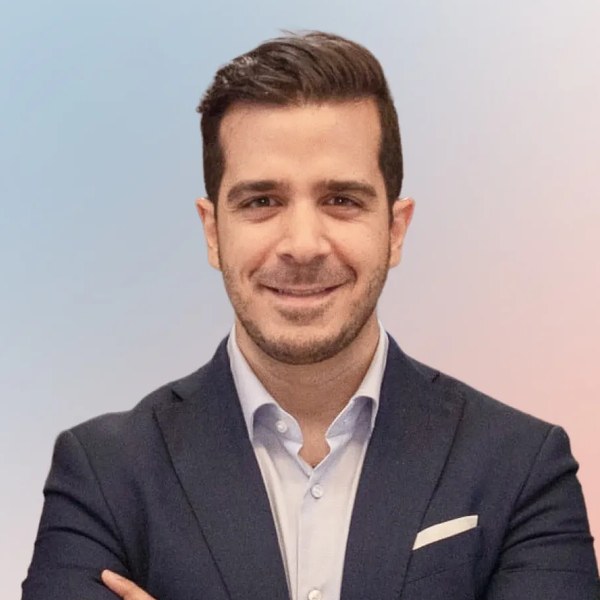
 Worth OwningEp. 06Narbe Alexandrian
Worth Owning · Episode 06
Selling to a 40-year buyer that never flips
 Hosted by Krystyn Harrison · With Narbe Alexandrian, Founder and CEO, Define CapitalOct 2025 · 47 min
He wants 90% retention and a business that runs without you
Overview
Narbe Alexandrian moved from Deloitte’s M&A group into venture capital, made partner in four years, and then ran RIV Capital, a public cannabis investment company that raised over $150 million and went through three changes of control in 16 months. He left to start Define Capital, a permanent capital firm with a 40-year fund that buys vertical SaaS businesses to hold and build, never to flip.
Narbe shares the three things he checks before an offer: gross retention of at least 90% and net retention over 100%, no heavy customer concentration, and a business that runs without its founder. He walks away when the owner is doing every job, or when the culture does not match what the founder says it is. After closing, he changes nothing for 90 to 180 days and asks why a business with great economics has stayed at $3 million.
The turn came at a conference, where a founder told him his buyer had tripled prices, cut half the R&D team and sunk his earnout. Narbe stopped leading with the spreadsheet. He now walks sellers through every term and does deals on trust. His advice to owners: take the inbound buyer calls, ask what they know about your business, and spend a year or two hiring someone to run the day to day before you sell.
Chapters
What you’ll learn
Where does your business stand today?
Get your Optionality Score →More on the episode
Note: Krystyn, Matt and their guests may hold interests in companies discussed in this episode. Worth Owning is not financial, legal, tax or investment advice, and is for informational purposes only. Do your own research and speak with your own professionals before making any financial decision.
You may also enjoy
All episodes →

Transcript · Worth Owning · Episode 06
Selling to a 40-year buyer that never flips
Narbe Alexandrian, Founder and CEO, Define Capital · Oct 2025
Narbe
Most people think private equity means slash and flip. Go in, cut costs, flip the company, get an exit, make a profit off of it. For us, it's the complete opposite. We're not buying to sell the company. We're buying to build the company.
Krystyn
My guest today is Narbe Alexandrian, founder and CEO of Define Capital, a permanent capital firm buying vertical SaaS businesses for the long haul. Before starting Define, Narbe was president and CEO of RIV Capital, a public cannabis investment company that raised over 150 million and went through one of the most volatile market cycles in recent memory.
Narbe
That was a light bulb in my head to say, you know what, it's not all about valuation. There's more to it than that. I had the spreadsheet open and I was ready to talk about valuation. And he didn't want to talk about valuation. He wanted to talk about what are you going to do with my business and what are you going to do with employees? We really don't do deals on spreadsheets anymore. We do deals on trust. The price gets the headlines. The alignment builds that the legacy.
Krystyn
I imagine you have walked away from several deals. What were some of the things that that drove you to say not yet, not ready yet?
Narbe
The business can't run without the founder. It's not ready for us. We want to buy company. We don't want to buy job.
Krystyn
Narbe, welcome. Thank you so much for joining me.
Narbe
Thanks for having me. I'm really excited to be here today.
Krystyn
Well, let's let's start a little bit sort of at the origin story for you. How did you first get into investing and the deal making side of this?
Narbe
Yeah, it's a funny story. When I was in university, uh and I'm a Schulich alumni as well, uh and I teach there now. Uh I never really knew what I wanted to do. I was kind of uh just experiencing the university life, having fun with it. I ended up going through the chartered accountancy or CPA route just because it bought you another three years of figuring out what you wanted to do with your life. And uh I remember in my third or fourth year I took a finance course because everyone was taking it wherever I wanted to be a banker. I thought hey this is interesting.
I went into the course I didn't really like anything about it to be honest until chapter 23. And I remember chapter 23 specifically because it was the mergers and acquisitions chapter. And reading it I'm getting goosebumps right now talking about it. When I read it just clicked in my head that this is exactly what I want to do. It's finance. It's people. It's dive deep into certain companies. Jump back out and the deal making process just really resonated with me and that changed the trajectory of my life. So even now when I go back and I teach I always tell my students like don't count out any elective courses, don't count out any anything that you read because there could be just this one chapter in there that just changes your life trajectory alto together and you never know when that's going to hit you without going out there and seeing so much.
Krystyn
Oh, that's beautiful. And so you were open to the possibility. You saw something that deeply resonated. And then what was your next move? How did you go from there to where you are today? And how did you kind of really develop your dealmaker skill set? Is that something you're born with or do you learn it?
Narbe
Yeah, I mean it's a great it's a great point. So uh my or origin story is uh when I was at Deloitte, I was in the strategy and consulting group uh and I moved into the M&A side of things. When I was in the M&A transaction advisory group, um I was predominantly doing commercial due diligence, which is helping private equity funds understand what they were buying from a strategic perspective competition regulation how it all fits together, antitrust issues. And uh I kind of fell in love with like the competitive angle of well, we're buying this thing, how are we going to flip it in 10 years?
And I thought that was really cool. This is back in the early 2010s. Uh in Canada, there was like a lack of venture capitalists. There's probably three across Canada. Um, and uh, there weren't many startups either. A big government program that put a bunch of money into venture funds. Hadn't started yet. So, I wanted to be in venture capital and do early stage investing, but it was kind of there wasn't many places to choose from. So, I joined I left Deloitte against everyone's advice and I joined a startup, a local one called Ferx. Um and uh it was pretty small, had a great private equity exit later on, but at the time it was small and did some uh strategy work there.
So we were looking at new verticals to get into and new new products to put out there, a lot of voice of customer work that we did. At the same time, I started work with MaRS Innovation uh in their uh UTEST, University of Toronto early stage technology program. And then uh I went over to United Nations. I did some work in cleantech VC. So trying to get a good handle of everything. And for a lot of young folks out there, I always give them the advice of um see like what skill sets you need and in my perspective at that time was I need to understand software.
I need to understand hardware. I need to understand how to build companies um in order to be an investor. Ultimately I went to Telus um where we were I was in the marketing group but we were kind of teetering between corporate development, buying companies, licensing other companies products as well as doing venture work. And in our in our group and our group was internet of things. At the time I joined Telus because they said hey you could work from home for three days of the week and two days you're in the office. So I said so when I was in the office I was there till midnight and then those three days I was helping out MaRS Innovation and uh the United Nations cleantech VC program and I was kind of living like the best life I would say very busy but I was getting so much experience and then an opportunity opened up at uh they were looking for an associate.
Uh so because of conflict of interest I had to drop everything and I came to work at OMERS I came in as an associate within four years was promoted to partner so extremely successful from a career perspective being there for four years and it really taught me a lot about institutional investing the dos and don'ts like you see the good things that uh funds do these larger funds do you also see the bureaucracy and some of the bad decisions that are made because of hierarchy and the fact that the investment committee isn't free to do whatever they want to talk about, but there there is some sort of a large pension fund feel to it.
So, when I got the promotion partner, I was really excited for it, but my heart wasn't really into VC. Uh, and the main reason was uh I just found it to be a bit of a um a contradiction to what we learn in finance. And around that same time, I would say that I became a Buffett Buffett disciple, Warren Buffett disciple. And I really um started to get back into private equity side of things. And I looked at the venture side and I said, "Well, we're all making just bets on these companies." In essence, it's a call option that's deep out of the money. And we're hoping that someone else comes in two years later and buys another call option deep out of the money and hopes that ultimately the company gets acquired.
But who knows how that plays out and if that plays out. Um especially in Canada where we have Shopify and bunch of other ones but Shopify is the big one and the Shopifies aren't coming up as often as one might want to as a VC. So around the same time I got headhunted uh to join uh Canopy Growth's uh private equity and VC arm which was Canopy Rivers at the time. Um joined in as a VP of corpor uh within a few months was promoted to president and then president CEO and then ran a public company for four years. Um it was uh an extremely great learning experience.
Um things that you do right, things that you should do that you're doing wrong. Um and being in the public reporting uh viewpoint, you just you get a lot of maturity as a as a professional. Ultimately, we had three change of controls in 16 months and I decided to leave the company um and started Define Capital. So Define Capital is a permanent uh capital private equity firm that acquires software companies. What makes us different like you mentioned is that we don't buy and flip. We just buy to build and we buy to hold. We hold on to these companies for the long term. We invest in their product, their people and make sure that what the founder has built continues to thrive forever. So for us, it's more about supporting the legacy and growing sustainably, not chasing an exit and trying to flipping the company in a few years. Um it's which makes it a completely different game from both a finance perspective as well as from a company building perspective.
Krystyn
So what an incredible journey to this moment. We'll come back to the idea of permanent capital and private equity that you found yourself in. But just hearing first of all this throughine of you know wanting to accelerate your growth looking for the opportunities where you could learn all facets of the business from how things work like the software the hardware element but also diving into you know business models and being you know seeing things from an operator standpoint through the lens of corp dev which for founders listening corporate development is typically where you're buying companies but it's also really looking at strategic growth typically it's going to be inorganic I.e through acquisition.
Um but just thinking about then you land in VC, you look at the landscape for capital raising in Canada. You're not seeing a whole lot of opportunity there in the 2010s. It started to accelerate from there. Um but then from a philosophy perspective, you know, you're seeing these founders building these companies. You're seeing VCs take a portfolio approach which is of course the investor way to find a few strategic bets that hopefully become the next Shopify and then you know VC has changed since then in terms of what I've been hearing from this sort of like grow-at-all-costs model which I was a part of when I was building not worrying about your bottom line necessarily really reinvesting everything you can in growth especially if you're more of a transactional model like e-commerce for example um to now thinking more about you know profitable development of companies. I'm curious as you think about how the way the ecosystem has changed in Canada, what are you seeing if you're you know talking to a founder who is building today, where are the opportunities? What's changed? What is it like to be thinking about scale in Canada today?
Narbe
Yeah, I mean there's a lot of uh folks talking about this which is uh AI is everything right now. So in the in the VC landscape, you're seeing that if you're not profitable um or you're not building cutting edge AI, you're not going to really get funded. So the world of uh enterprise SaaS has has really fallen out of favor and I don't agree with it because enterprise SaaS is an awesome uh um asset class because you get to go into these large organizations, you build mission critical software, it becomes part of the process, it becomes part of the plumbing like we like to call it and you can't rip it out.
Um, and that to me is a very strong business relative to chasing the hottest AI and having to consistently uh retune your algorithm or your LLM in order to get to where you are or you're creating a wrapper around another LLM which which makes you feel like there's a lot of platform risk. So, um, but that that's the game right now. So, profitability is everything or you're creating cutting edge AI. Anything that falls outside of those buckets probably isn't getting the favor it used to in the past,
Krystyn
Right? And so from a founder perspective, are you seeing a shift where founders are kind of go, hm, maybe I'll look at the partners I bring on differently? Maybe I'll build differently, maybe I'll bootstrap longer. What are you seeing at the founder level right now?
Narbe
I think there was a lot of money flowing through the market in 2021, 2022 when uh zero interest rates were were present and uh there's just money printing all over the place. And um and you see a lot of companies right now that raised a series A off of no revenue, but they raised $8 million on a $20 million financing valuation. And uh fast forward now, they really haven't built a product. Maybe they have seven figure ARR, but they just really haven't fallen into that growth of what you should do when you take that much money. And uh and now they're in market. So, we're seeing a lot of those distressed companies where the VCs want to get pennies on the dollar.
They want to get their money out. Um, it wasn't a good investment for them. The companies are still growing, but they're not VC like. Um, they're not growing. They're not doubling. They're not tripling. They're not being able to raise that follow-on round or even a bridge round to keep them alive. And so, we see a lot of opportunity there to go in and to just clean things up.
Krystyn
Let's talk about your model and let's talk more broadly first about private equity. Uh this is something when we meet with a lot of founders there's this sort of fear let's say or kind of conception about what private equity is right it's sort of this um you know typically US entity coming in and I and I worked in private equity as well so I saw the inside as an operator um and I had a great experience but it is a model uh typically it's a three-year, five-year hold of an investment and they're working on how do we get to exit uh and sort of get out and you mentioned in the money out of money.
Walk me through kind of just if you were speaking to a founder today, how would you talk about what private equity is and then I'd love to come back to what you're doing and your model around this idea of permanent capital, which in my experience is kind of a new term that I've been hearing and maybe it's been around for a while, but I'd love to get kind of the lay of the land from your worldview on that.
Narbe
Yeah, a lot to unpack there. So, from an in the money, out of the money perspective, this is uh finance talk for how call options work. So if you have a call option uh in the public markets, you have the ability to buy not the you know not the obligation to but the right to buy a stock at a certain price which is your strike by price at some point in time in the future depending on what expiration of that uh of that option is. Um when it's in the money that means your strike price which is the price that you're paying to buy that stock is below what the stock is selling for.
So there's some profit made. If it's out of the money, that means your strike price is way above or above what the actual price of the underlying stock is at that point in time. So, if you look at the venture capital world, a lot of these companies have revenue. They're growing well. Uh but for the most part, I'd say majority of them, 95% plus of them, they're at a loss. They're not making any money. There's no EBITDA or earnings before interest taxes depreciation amortization. There's no net profit. Um that they're kind of they're spending in order to grow. From a finance theory perspective, those companies are technically worth nothing because you have no profit.
So, what are you going to do with the company? You're just spending money over and over again. Uh and so when you think of the venture capital world, uh the VCs are putting bets on these companies and hoping that at some point in time they turn profitable or maybe they get sucked in by a larger company that can take away their back end and turn it into profitability theoretically speaking. So in essence, what VCs are doing is they're buying these companies that are worth nothing from a finance theory perspective for some valuation, which means it's pretty much an option that they're buying in the future at a certain price,
Krystyn
Right? And so the idea of the private equity path as an alternative. And so a lot of folks that we're working with are past the startup point, they're past the scale, they're kind of at a point where they're going, "Okay, I've built this thing. What's the next thing for the company? What's the next thing for me? Do I want to continue to grow or do I want to take a different path? And there is a huge spectrum of exit options for founders as you know. Um when do you typically meet a founder? What makes them kind of a good fit? What's attractive to them about this idea of permanence and building uh the company versus building it to exit in a in a shorter period of time?
Narbe
Yeah. I mean, mo most people think private equity means slash and flip. Go in, cut costs, flip the company, get an exit, make a profit off of it. For us, it's the complete opposite. We're not buying to sell the company. We're buying to build the company. So, when we go into those companies, we say, "Listen, if you go to the traditional private equity model, they'll buy you out. They've they have a thesis on what they want to do with the business, cut down headcount, uh increase prices, uh just really aggressively try to grow, and then at some point in time, they're going to flip the company to another private equity firm or to a strategic or take it public depending on how big it is.
Um and uh your company's at their mercy because if it breaks because they put too much leverage on it or they can't get that growth rate they want to or once they cut costs everything breaks or if they buy another company it can't integrate well with it. Everything's gone. So we like to come in and say well you have this legacy you've created this is like your second child or your third child. Let's take care of it for you. Let's you've ran this thing for 20 30 years. Let's keep on continuing to run it. And that's an important concept to think about because there are other options.
You don't have to sell to your big competitor that's just going to suck up your customer list and kick out the IP. You don't have to sell to a private equity firm that's going to go and flip that company four years to god knows you. And you have no control over your employees, your customers, and what you've built in the past. Um, but you can give it to us. And what we promise those founders is a we're not going to really touch your uh employees at all. We actually need more employees for the most part because a lot of these bootstrap founder-led companies uh have have typically underinvested rather than um uh overinvested in headcount.
And then at the same time, we're going to and we always promise this is uh we're going to keep the logo the same. So when you years pass by, you come by and this little software company is now this big software company with a big logo on the building. You can point to it with your grandkids and say that's what I built and look where it is now. Um and so we want to keep that legacy enduring and so it's a different viewpoint that we give to those uh those sellers that are looking for an exit uh but not but want to hold on to that legacy and see their company be in good hands.
Krystyn
And so thinking a little bit more about, you know, the word private equity, the connotation that typically triggers for a lot of founders, for the founders that want to grow and that want to see their business continue to live on. I love this value proposition you've created around even something as simple as retention of the brand and thinking thoughtfully about the employees and seeing that most bootstrap founders have underinvested in their headcount. We're seeing very similar patterns as well because they're typically very thoughtful about capital efficiency and oftent times they're underresourced and that's also where they're kind of at a moment of I'm feeling a little bit overwhelmed and burnt out and do I want to continue to grow?
What's the path? That's where we meet a lot of founders is kind of at that moment of what do I do now? What's the next path? Do I want to grow this uh you know aggressively? One of the things I came across in your post was really interesting about the story you were sharing about how you kind of pulled up your financial model with a founder and we're starting to really dig in to kind of the economics, the nuts and bolts, all of that and they just wanted to stop you and talk about the human side and their team and what that would look like. What was that like for you? That kind of moment and sort of that insight that has maybe perhaps has that changed the way that you think about partnership with founders and the conversations getting to the deal. What's that like?
Narbe
That's a great that's a great uh segue into that story because uh it's I mean it was at a conference about a couple years ago as I was starting to find capital. Was the Ontario Fire Firefighters Association, chief firefighters chief association. And uh and I saw this booth. Um there was this older gentleman there. Uh they were creating uh software for fire stations. So I went and talked to him and I said, "Hey, looks like a cool product. Uh like are like who's are you acquired? Are you bootstrapped? Like love to know a bit more about you." And um very quickly with a with a thick Quebec accent he said um we were acquired recently and I was like okay but you could tell that there was something more to it.
So I said well I'd love to know like how did that process go and then that's when it all started coming out. He said well this private equity fund acquired me and they promised us that they were going to grow the company and we're going to grow together. Uh so when they acquired us there was a cash portion that we got and there was an earnout which meant that if I hit certain targets of growth I get more capital altogether it was the price that I wanted it to be. Um and I talked had a bunch of reference calls and I talked to a bunch of folks there and then when the deal got done uh they came in and the first thing they did was they tripled the price of my product in the market and the second thing they did is they cut out half of my R&D staff.
It's a software company. So he's like, "Now I'm at this conference." He's like, "I am three times more expensive than the competitors across the hall from me. I have no new features to pro talk about because I lost all my R&D staff that built new features. They're all just maintaining the software code. And I'm not going to hit my earnout. So I don't really like it." And he just stopped there. And that was a light bulb in my head to say, you know what, it's not all about valuation. There's more to it than that. Then fast forward uh a year or so after that um it's our first acquisition that we're trying to do an LOI that we had signed and uh as a as a finance person as a person who's who pitched the private equity platform to our investors and got them on board for this long-term horizon.
It's a 40-year fund. Um so I'll be deep in my I guess like 70s or 80s by that time. Um it uh like we talk a lot about the finances. Well, this is where we're going to invest and this is how the our internal rate of return is going to be because because that's what they want to hear. Like they're parking money with you. When we went to talk to that that that founder, we were we I had the spreadsheet open and I was ready to talk about valuation and he didn't want to talk about valuation. He wanted to talk about what are you going to do with my business and what are you going to do with employees and are you going to move the staff somewhere else and uh what about the logo?
It's a bit antiquated. What are you going to do with that? And that just it just something clicked in your head to say, "Okay, well, let's take a step back." Um, this founder has been around in this business for 20, 30 years. Um, they've built a beautiful business, incredible margins. Um, they probably take a dividend out of the business every year. Uh, and their equity value has grown as well. So, if you take a look look at the company, you're like, you know what, they're pretty they're probably fine from a finance perspective financially at home. Um because they've been cutting a dividend for decades and they're also getting the equity piece of uh of selling the company as well.
So, it's not about money for them. It's more so, hey, I have this group of employees that has just trusted me for 15, 20 years. Many of them don't know that I'm selling the company and if you come in, they're kind of like family to me. Don't screw them over. And I just want to know that you're what are you going to do with the business? And the more he talked to the founder, the more he found out that if he could embed what I was saying inside of the terms or the uh share purchase agreement, he would. But there's no way to like legally do it.
Um so it was a lot of just trusting on us. So we found that like we really don't do deals um on spreadsheets anymore. We do deals on trust. Um, so our job is to find those founders that really care about that trust piece and it's not just a check and they don't care where the company goes and those are the ones that we resonate well with uh at Define Capital.
Krystyn
So two questions on that. In this podcast, there's stories that we're sharing from a buyer perspective like yourself or investor perspective as well as the founder perspective and what I've and I've been a founder myself. I know what it's like to feel this emotional connection to your business, the you know connection to your customer, to your brand, to the mission, to the vision. And the quest is never typically about money. Typically, typically. And folks that we work with too, it's value is more than just dollars and cents. It is truly thinking holistically about what a fulfilling exit would be. What does success mean to you? And it's unique to everybody, but it's rarely ever just about the money. And so I'm curious, you know, when you think about buyer psychology versus founder psychology and building value in the company, um what do you think the major difference in mindset is?
Narbe
Um I think the buyer psychology is uh a lot of it has to do with return. So you want to know what you can do with the business. Uh how much of it you can underwrite right now through the due diligence process and how much of it is left for chance. From a seller psychology, it's uh a lot of times and I know you have experience in this a lot. Um a lot of the sellers like this is their one and only transaction they'll ever do. So, um and I kind of when I was telling my team about it, I was like, it reminds me of the time when I was proposing to my wife and I got really deep into diamonds and knowing that hopefully this is the last time I actually care this much about what a diamond is and all the ABCs of diamond diamonds.
And it's kind of the same thing for sellers because they're going to get into like this M&A transaction phase. It's probably going to be the last one they ever do, first one, last one they ever do. They're gonna they're going to be hit with all these terms, jargon, working capital adjustments and statements and what uh normalization adjustments look like and disclosure schedules and then it's gone and they'll forget they won't have to think about these things all anymore. So our mantra is we want to be transparent. So, I always tell folks that we're buying businesses off of, the sellers, I'll say, "Here are the terms.
Let me just walk you through every single piece of it, and I want you to understand why it's in there." And I'm not going to say it's in there because every deal has it in there, because that's not true. You can actually move anything you want. Every you can you can create the most exotic terms and structures that you want to think about. But, I'll walk you through why we put everything in there. If it's safeguarding me, if it's safeguarding you, if it's uh generally safeguarding each other. Um, and if you have any questions, ask me and I will like I don't like the words, but I will dumb it down as much as possible and explain to you in layman terms why everything exists.
And I want to build that trust. And I always believe that when you're doing acquisitions, um it's not about um me getting the best price or the seller getting the best price. It's about both of us walking away extremely excited about the transaction. So, I might not have got the lowest price and you might not have got the highest price, but we got a fair price between us that we're both happy with and we can walk away. And the first business that we sold because that's the one with the longest tenure. Um the founder, for example, reached out to me yesterday and saw some marketing that we did and he said, "That's awesome.
I love that you did that." And it's like his little baby. And I was like, "Yeah, absolutely. This is what why we did it and this is how it turned out." And he was really excited about it. And I want that relationship to go on forever for as long as both of us are around that we can always talk about the business and he can always look inside the business and I'll tell him how his baby's doing. Um and likewise I can live vicariously through his retirement as well.
Krystyn
Well, and I think this is such a beautiful partnership and this form of trust and this idea that it's not about a spreadsheet. It is about the relationship and building trust on both sides. So, as you get into diligence, let's talk about the deal itself. Getting to the Deal, you know, you're looking at a ton of different opportunities. We're now in what they call the tsunami of succession. It's happening. Folks are transferring or looking at how to sell. Many don't have a plan for how to transfer, uh, which is kind of where we come in a little bit on the exit planning side. But as you look at this, what are the first three things that you're really looking for when you evaluate something? What's most critical to the deal getting done?
Narbe
Yeah, I mean to take a step back um our viewpoint is very long term. So, we're not in it for the short term. And um I was a public company CEO at one point in time and I've lived the pressures of quarterly reporting. And it taught me that building for the next 90 days often destroys the next 10 years. Um and when I left those public markets, I knew one thing. I always told myself one thing is like I never wanted to build another business to impress an analyst versus build a business for what it was worth. So when we look at the viewpoint of businesses we look at as long term and we call this like there there's a there's something called the Lindy effect which means to say like if something has existed for a long period of time chances are it will exist for another long period of time.
So think Shakespeare it's been around for 300 years it's going to be around for another 300 years. The Beatles been around for 70 years it'll be around for another 70 years. So when we're looking at a business we want to understand like how long will this last and generative AI is a bit of a thorn in the back of all of this because you never know how it's going to play out. But one of the key attributes we look at is retention rate. How much do customers stick around? Um what's your churn like? And our retention rate that we're looking for is on a gross level at least 90%.
On a net level, which means there's uh um some of those that 90% ends up uh um upselling and getting different or cross-selling and paying more. We want that to be over 100%. So we want to see that your current customer base is like super excited about it and uh and that they cons continuously want to uh be a customer. The second thing we want to look at is customer concentration. We don't want a single customer or the top five customers to represent a large amount of the business. Um and I and I say customer concentration is like putting all your eggs in one basket and then handing the basket to someone else.
That's a red flag to me. So we want to see that there is diversification of a customer base and if there's not we might make some adjustments and how we value the company and we'll be very transparent with what we do as well. And the last key piece that we look at as well is how much um reliance is there on the founder or personal goodwill that the founder has within the business. So if the top three customers happen to be cousins of the founder or family members then that's a bit of a red flag for us. So in our viewpoint, if the business can't run without the founder, it's not ready for us. We want to buy company. We don't want to buy job. And I think that's the concept.
Krystyn
Let's talk about that a little bit. So things that would make you completely walk away. And I imagine you have walked away from several deals. Have you walked away from several deals?
Narbe
Absolutely. Yeah.
Krystyn
Okay. So thinking about the ones that you have walked away that perhaps weren't ready. And we have a core belief at Exit Horizon that every founder can have a fulfilling outcome. But our belief is it takes work. It takes strategic preparation. You don't just arrive one day to a sale process necessarily fully ready with a maximum value for your business. Typically typically and most founders we when Matt was in my co-founder and M&A typically arrived at an M&A sale process not for great reasons, right? Like there's death, there's disability, there's, you know, full burnout, there's what have you versus someone who is thinking and planning ahead, which is a very different profile. Not everybody is up for that journey. But for folks that you walked away from, what were some of the things that that drove you to say not yet, not ready yet.
Narbe
Um, so one of them was that they were too involved in the business as founders and they want to walk away from the business. Uh so and there there is a and this is where where firms like you where you come in and help these founders is very important because as a if you're if you're a bootstrap founder and you're taking a cutting a dividend out of the company every year you're really key keyed into like how the cost structure looks and um with a lot of founders we found that COVID-19 and the shock that that hit to these tech companies um really sobered them to that as well.
So, a lot of times we go into companies when we're first start starting to talk to them, we find out the founders trying to do everything and instead of hiring people to do these jobs, they're doing it all. And then they're ready to sell, but they're the company's not ready to sell because once you take that person out, everyone's kind of looking around being like, well, what do I do? I' I've always looked at that one person, the founder, to give me direction. So, in essence, we walk away from those businesses and we say, "You probably need a year or two to find someone, general manager, operations director, whatever it is, bring them in there, have them run the day-to-day, teach them the ropes of it.
They're an employee. They're not an owner, and then slowly walk back from the business and be ready to sell the business when the time comes to say, I'm not in charge of the day-to-day. I might do like product management because I love it or I might do some coding because I love it or I might sell the product because I love it but this business can run without me and I' and I here are the proof points that that can happen. That's probably the main reason we walk away from a business and then beyond that it would be some sort of uh something wrong with the operating metrics of it.
So like they just churn too much or gener kicking their butt. Um you see a lot of uh um economic reasons where the model just doesn't work for some reason. And uh we were also transparent with them. We would say, "Hey, if you fix this one thing, then it's not only me, but you have a lineup of buyers outside the door. Um but this is what you need to do to fix it. And it's not easy. Sometimes you have to let go of someone. Sometimes you have to um invest in more people and spend some more money. But this is what you need to do to maximize your own success.
Krystyn
The fact that you're giving those tips and value away, I mean, just it's it just sounds so deeply relational the way that you approach this and you have this long-term mindset which is very very different. And I've operated in businesses where you know you are making quarterly decisions against a longer term vision, but oftent times you're running in 90-day cycles um and making decisions far too short term, especially related to people. And I'm curious, just thinking about, you know, the ones that you walked away from, was it typic, was it because of the data? Was it because of spreadsheets? Was it because of what you saw in their economic model? Or was it more indexed on the human side of it, if you were to really parse the two?
Narbe
Yeah, we always believe that culture is everything. So culture above everything. So we want to go in, we want to see employees that are happy. And if employees are happy, then that means there's a higher likelihood that customers are happy because they're probably giving great customer service to their customers. Some you go in there and you see like the whole place is in disarray. Like people aren't happy. There's no culture. Everyone's really quiet. Of course, it's going to be quiet the first time we walk in because everyone's worried about the what we talked about earlier, which is like the what's private equity going to do with my job.
Um yeah but um but you can kind of tell where the culture is and how people uh react when uh and how they interact with the founder with the CEO of the company or the president of the company. Um so a lot of times it is culture-based. Um you can find a ton of businesses that from an economic perspective um look great. They have great margins. Growth is fine. EBITDAs are, EBITDAs strong. It's mission critical. But when you go into business you say like well your values don't align with what you said they were and the culture doesn't align with that. And um and sometimes and I don't want to give specific examples here.
There's times where like you can tell they're screwing over their customers with something and you're like, well, that's not going to last forever because someone's gonna catch wind of that and create a competitor and you don't have a competitive advantage that's sustainable enough to keep uh a barrier to entry away. So, um we want to zone in on everything. Uh um I always believe that the price gets the headlines, but alignment builds the legacy. So we want to make sure that how we see the business growing is the same way that the founder would agree to and as well as the people who are left over the actual operators of the business they also believe it as well.
So as much as we can we want to talk to everybody within the business. I know it's not always like that because a lot of times founders don't want everybody to know that the business is for sale. Um but uh the what we the number one thing we really lean on is when we find that a founder really talks about their people with pride and when they do we know that we're aligned because that's the way we think of it as well.
Krystyn
Oh, and I love this idea of alignment and just the fact that you're thinking so much about the people involved and the fact is people build software at this point anyways in history there's AI assistance but people build software and the people people part of a business in my experience as an operator is always it's always where the complexity lies right because people are not data on spreadsheets and so diving sort of into the post deal I'd love to get a sense because you're there for the long haul. You're there to buy then build versus buy then flip. Um you know there is a transition period and most acquisitions fail completely fail post in the integration phase the harmonization phase if you will. Uh what is your kind of approach to how you think about that first 100 days post-acquisition the integration what sort of creates you know successful acquisitions and ones that thrive and separates them from the ones that completely fall apart.
Narbe
It's a great question. Uh first thing we do is when we when we make an acquisition relative to our model there's always a margin of safety which is to say like we're going to buy ourselves some time relative to what we paid for the business where if the business starts trickling down a little bit in those first early months we're not freaking out because our model still works and we never go in with a machete. We go in with a magnifying glass. We want to really understand what's going on in the business. So, it's in our LOI all the time that the first 90 to 180 days, so 3 to 6 months, we're not changing a thing.
We're just going to respect the process. We want to listen to everything before we touch it. And this is a part that never um Krystyn, never really resonated with me with normal private equity, traditional private equity where they would do due diligence and they jump in and they make changes on day 10 and I never really understood that because um when you're in the diligence process, as many questions as you ask, uh you still don't see the full breadth of the skeletons in the closet and the problem.
Krystyn
You're still dancing. It's still a dance, right? Until it fully closes.
Narbe
It's that honeymoon phase, right? So, you don't really know what's happening until you get in the business and then you're like, "Oh, wow. Okay, there's a toxic VP that's there or something's not working out." And so we want to give it time to really understand it. And it honestly like it is hard. Like I'm not saying it's easy for us to do because we'll go in and automatically within the first like two weeks we're like something's not working here and we know exactly what it is, but let's not take like let's not believe that yet. Let's just watch how the business performs. And um the beauty is if you buy a business that has a high retention rate, you do buy yourself time to do that.
The customers aren't going away. You've seen that in diligence. So you can take a step back for six months and just watch how everything plays out and say, "Well, it's a great company. It's a great product, but in the lower mid-market where we play, why is it they only have three million of revenue over 25 years?" Um what stopped you? Like if you're so smart, if you had such a great team and a great idea and then and the operate and the economics work in your favor from a unit uh perspective, why aren't you a $30 million company? Like what stopped you? Is it the TAM?
Well, we know it's not because we looked at that in due diligence um which is the addressable market. Um what is it? And typically you see like there's something in the way the culture was built where if you made a small tweak in a positive way um or which which which um a lot of times just means you just talk to your employees more or you go out there and you talk to your customers more which a lot of small businesses don't either. Um we can actually see a big jump in how this business grows. Um and again you can't do that if you just walk in. You have to give it time. You have to be patient and just see how the business works.
Krystyn
Seek to understand and then be understood. That classic view and just taking that moment to discover and this is something where we work with a lot of founders on exactly that before they meet someone like you in terms of where is their untapped growth potential in the business. Value creation which is very much a private equity term but really it's looking at the business through the eyes of a buyer and going where is their potential to build a more valuable version of this company? And for many folks, they either they're so close to it because you're so heads down, you don't see it. To your point, like just a simple tweak in optimizing your funnel, for example, to drive the fundamentals of conversion rate optimization, for example, are often overlooked, right?
These these core fundamentals because you're so close to it or you're just choosing not to build something bigger. You're choosing to have more of a lifestyle business, which is a beautiful choice as well and everything in between. And so kind of coming coming back to sort of close the loop on your story on the buyers on folks that were kind of um in a moment. If you think about the founders in Canada, we're very focused on supporting Canadian founders through not only the start, the scale, but the exit. That's really where we are there to support in that ecosystem. Um we want to see more great outcomes for Canadian entrepreneurs.
We want to see more exits happen or potentially folks who decide, you know what, I want to turn this into an asset and maybe go buy companies, right? Like it's really just thinking differently about Canada and hopefully having more stories uh than Shopify to talk about. What would you what would you say to a founder who's listening right now who has started, they've scaled, they're in a point where they're going, "What's the path I want to take? What's my exit path? What's my plan here? What's where's the business going to go?" What would you tell them in terms of something they could practically do to reflect on that moment and maybe start to make some moves?
Narbe
Yeah, my one biggest advice would be if someone's reaching out to you to say, "I'm interested in buying your business." Have that conversation. Um have a couple of those conversations a week. What is that like an hour of your week to understand what they look for in your business? Um what they don't want in your business, how they how they look at legacy and how you want they want to build things afterwards. Ask them point blank blank questions. Really test how much research and education they've done in your industry in your business to understand where things go and then you kind of get a good understanding of like where you want to take it and then go and hire someone like you bring them in and say you know what like can you help me get my c my company ready?
I'm not looking to sell tomorrow. I'm looking to sell in two years, three years, maybe a year from now. Um, but I understand that it's not a perfect and to maximize the exit for myself both from a financial perspective and a legacy perspective. There's probably a lot of things I need to do to change this business to make this business more attractive. Um, what could I do? And just really take people's advice for it. Um, and ask questions. Ask like don't think and a lot of times as you know founders because it's the only deal they'll ever do, only M&A transaction. Sometimes they're scared to ask like the stupid questions.
Ask the stupid questions. Like there's no such thing as stupid questions. Or go into ChatGPT and have a conversation about it. But don't don't just blindly trust everybody. Do your research. Ask those questions. This is your legacy. This is your baby. It's going to go in someone else's hand. And God forbid they screw it up. You're going to live with regret for the rest of your life saying, "Well, why didn't I why did I want that extra 500 grand when I could have given it to someone who I saw as a younger version of who could take this thing to the next level?" Um, and we call that uh in our firm, we call that the prodigal son strategy, which is when we go in, we really want to prove to the founder that we are you 30 years ago and we're going to make this thing better in 30 years and we're going to give it to someone else maybe someday in 40 years when our funds uh um exits, but uh maybe we're going to give it to someone else who is like you as well because that's what we believe that these software companies can live forever because they've lived for such a long period of time.
Krystyn
Oh, that's so powerful. So, the playbook that I'm hearing there is educate yourself by talking to taking those unsolicited buyers, taking those inbound inquiries about your business. The second thing I heard there was just around asking them what they know. And this is something we recommend to our founders that we work with before you kind of share and be open and vulnerable. We always recommend ask, you know, what do you know about my business and my industry? And it sounds like your team is going in thoughtfully and precise, but there's a lot of buyers who are kind of just, you know, you're on a list somewhere.
And a lot of founders don't recognize that. So before you spend time there, be thoughtful, but learn and then and then start to prepare and think about your timeline. Um, and that may look different depending on where they are. But I love that approach. And I really appreciate the thoughtful approach and this 40-year horizon that you have with your fund is so unique, so interesting. Where can folks uh learn more about Define and the work that you're doing and perhaps have a conversation?
Narbe
Yeah, you can uh go out to our website www.definecapital.ca. You can follow me on LinkedIn, Narbe Alexandrian. Uh and feel free to have a conversation. Like I love talking about people's businesses. One of the things I love the most is just understanding uh a new sector that I don't know anything about or a new niche that I don't know anything about. Um, so I like the best case scenario, you learn there's something you can do there. Worst case scenario, you learn something about what we do and we learn something about what you do and we get to build that relationship on. Um, we find that the best deals aren't ones that we call or we reach out and they're ready to sell.
It's the ones that we cultivate a relationship that lasts a number of years until the founder is ready to exit. And at that point in time, we feel like we've known each other forever and uh we've been talking forever. We've shown them value that we can provide business and they've shown us that the business has uh legs to last another 20 years. Um and it makes that process and that transaction much easier to consummate.
Krystyn
Awesome. Well, and this is about relationships over spreadsheets. Uh thank you so much for joining us on the show.
Narbe
Thanks for having me.
Krystyn
Awesome. That was Narbe Alexandrian of Define Capital. I hope this gave you a new lens on private equity. One built not for flipping businesses, but on building them for the long haul. For founders, it's a reminder that the right buyer isn't just about price. It's about trust, alignment, and respect for what you've built. Getting to the Deal features strategic founders who have successfully exited, plus the advisers who've guided them through their entire journey before, during, and after the deal. Exit Horizon is a private, highly vetted membership for Canadian entrepreneurs planning their strategic exits. Systematic expertise you need to maximize value and design what comes next. So, what resonated with you from today's story and what questions should I have asked? Connect with us at Exit Horizon on LinkedIn or reach me at krystyn@exithorizon.com. I'm Krystyn Harrison and subscribe to Getting to the Deal wherever you get your podcasts. We'll see you next week.
The full conversation, from the episode captions with light clean-up for reading. Check against the audio before quoting.
Free · 5 minutes
How much does your business still need you?
Get your Optionality Score: where value is leaking, and the first three moves to fix it.
Get my Optionality Score →