



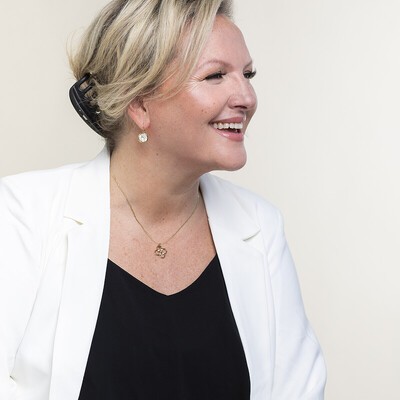
 Worth OwningEp. 03Jacqueline Dinsmore
Worth Owning · Episode 03
3 exits in 10 years, and why buyers smell desperation
 Hosted by Krystyn Harrison · With Jacqueline Dinsmore, Managing Partner, CaravelSep 2025 · 40 min
Sold FlapJack Kids months before COVID would have shut its stores
Overview
Jacqueline Dinsmore left a Bay Street law career at Blakes when her mother was diagnosed with breast cancer. After her mother recovered, the two started a handbag business on maternity leave that reached about 250 stores, then turned it into FlapJack Kids, a reversible kids clothing brand run with her parents and husband. They sold it in 2019, just before COVID shut the brick and mortar stores that made up 95% of its sales. She has had three exits in under a decade.
Jackie explains why the FlapJack Kids sale worked: the buyer owned one of their factories, had watched the business grow, and was buying several brands to share one overhead. The deal came from the relationship, not the spreadsheet. Her professional services exits taught her the other side, where culture, low attrition and strategic fit matter as much as revenue, and a buyer will pass on a firm that does not fit its plan.
Then the parts owners skip. After the sale her mother was sad, and Jackie talks about the success hangover and staying on as the last founder standing. She has watched owners show up to a sale with no minute book, no IP plan and no idea what a data room is. Her advice: relationships matter more than pitch decks, take care of yourself first because buyers smell desperation, and run your business as if due diligence starts tomorrow.
Chapters
What you’ll learn
Where does your business stand today?
Get your Optionality Score →More on the episode
Note: Krystyn, Matt and their guests may hold interests in companies discussed in this episode. Worth Owning is not financial, legal, tax or investment advice, and is for informational purposes only. Do your own research and speak with your own professionals before making any financial decision.
You may also enjoy
All episodes →


Transcript · Worth Owning · Episode 03
3 exits in 10 years, and why buyers smell desperation
Jacqueline Dinsmore, Managing Partner, Caravel · Sep 2025
Jackie
Because you know what? Buyers smell desperation and they come to us as a law firm saying, "Oh my gosh, I had this buyer who wants to see our data room. What is that?"
Krystyn
Today on the show, I have a friend and multi-exit entrepreneur, Jackie Dinsmore, on the show today with us. We are so excited to sit down with you, Jackie. Welcome.
Jackie
Thank you so much for having me, Krystyn. I'm excited to be here.
Krystyn
Well, let's dive into your not one but three exit stories. Uh, and really, you know, one of the things that struck from from what we talked about was just how a lot of this was very deeply personal. One of them was a family-run business with your mother. And so, we'll talk a lot about, you know, kind of the personal side of this journey as well as the exit headlines. Um, but digging more into your story, Jackie, you left a Bay Street firm. You left uh Blakes to become an entrepreneur. What was going through your mind at that time? And was there this sort of defining moment or feeling that kind of prompted you to take that leap into building?
Jackie
Yeah. Well, thank you for that question. Um, I mean, I love Blakes. It was a great experience for me. And sometimes, uh, life throws you know, turns in the road, shall we say? And, um, unfortunately, my mom was diagnosed with breast cancer. My mom and I are very, very close. And I could, I was billing, you know, thousands of hours a year at Blakes. And at the time I just thought, you know what, this is kind of a bit of a godwink to maybe have a little bit of a change in my career. I didn't know if she was going to survive cancer. And a job came up at Torstar, parent company of the Toronto Star, for me to work in house there.
And it was four days a week. And so the idea of being able to bring my mom to chemo on the fifth day was really appealing. And so that's what made me make the move. I don't know if I would have made the move cuz they were really supportive with me on Bay Street. And I and I felt like that at that time was my purpose. But like you said, uh you know, life throws you curveballs from time to time. And so that was the one that was thrown to me.
Krystyn
Definitely at a defining moment that completely changes how you view time and how you want to spend it and who you want to spend it with. Um and I'm curious, you know, you then went into business with your mom. Let's talk about that story. You went from a legal career to jumping into the world of direct to consumer retail, kids, apparel, Flapjack Kids. Tell us about the origin story of how you built that and then you know what an incredible moment to build something with your mother. What a personal moment to jump in but also then to build together. What was what was the start of all that?
Jackie
Yeah, it was great. So, I spent about eight years at Torstar and then I was on maternity leave and my mom had survived the breast cancer and she said, "I think we should start a business together." And from mom to mom, you'll appreciate, you know, when they hand you a newborn and you're on maternity leave, that doesn't mean it's a break. It doesn't mean that all of a sudden,
Krystyn
No.
Jackie
Oh, great. Let's this is a great time to start a business. But in a way, it was because, you know, you're able to like you have that flexibility. So I remember many a time going to meetings with you know my children and carriers and things like that and you can at least have that flexibility. But uh so we actually first started off with a handbag business. So my mom had thrown like six handbags in our suitcase and she come up with this idea for a convertible handbag and we did a little prototype and um it was called Lovely. Was actually named after my daughter. That kind of ended up morphing into Flapjack Kids, who I'll tell you a little bit later.
But it got me into that kind of entrepreneurial rhythm. And uh by the time I come back to Torstar, we were in about 250 stores. We'd won like the top 10 best products award in Canada. It was it had really taken off and it was really really exciting. I actually had a little pop-up shop in my Torstar office and like my like my colleagues and other associates would come by and buy handbags.
Krystyn
Oh, I love it.
Jackie
You're incredibly supportive. Like it was really really nice and they knew that we had developed this. My mom and I had developed this on maternity leave. Um and then it got to a point where my mom was like you know I have to either shut this down um or you have to quit your legal job and do this with me and defining moment really difficult decision to do that. Um and then for a bunch of reasons handbags are a really intense capital business. Uh so we kind of took that same kind of convertible reversible concept and put it into Flapjack Kids which was all reversible kids clothing. Um so that's that you know what started here ended up over here but became really a great success story. So it was a lot of fun.
Krystyn
And so I love this idea and I think a lot of founders can relate to this especially female women founders when you know you become a mom your priorities change you shift to then really become a mompreneur like you're doing this kind of side of your desk side hustle as they say and then all of a sudden it becomes something that's gaining traction and you're faced with this moment of do I go all in do I leave this very safe space and do I jump uh what kind of as as you're thinking about that moment and reflecting back on it. I know it's a few years ago. What was it that gave you the conviction to bet on yourself and bet on your family?
Jackie
That's a really good question. I mean, I was very very very fortunate because I had a supportive spouse and Jamie's a corporate guy. You've met him. He's a corporate guy and I'm the crazy entrepreneur, right? And uh what did they say about
Krystyn
Steady Eddie? Matt has been my steady Eddie all of my entrepreneurial life.
Jackie
Exactly. So opposites attracting and just a very different. So he was able to kind of hold the financial fort down while I did all these crazy things and yeah and see he supported me in it. So that that really helped me take the leap um a leap of faith there and uh and I was really lucky. I was one of the very fortunate ones that it worked out.
Krystyn
Oh it's beautiful. And so the build story, you know, you built. Walk us through kind of the moment from from that pivot in your career, jumping out, doing this full-time, you know, diving into the build with your mother and the build from there to the exit. How were you thinking? What was sort of critical to that successful exit path for you?
Jackie
Yeah, sure. Um, I mean I maybe I can kind of back up too a little bit because I the end of the day, you know, back when I started this business, they weren't teaching you in high school about entrepreneurship, right? You became a teacher, a doctor, a lawyer, you fit in one of their boxes, right? Um, so, you know, I was always that kid that was really really excited about doing the family garage sale. So, I think entrepreneurship was built in me from a very very very long, you know, from being a kid. It was it was a gene that was really strong in me. Um so I think you know even though I went the traditional path and went into law that ended up being an amazing foundation for entrepreneurship for me and to answer your question it ended up being a really great foundation in building the business. Um I didn't know what I was doing. Most entrepreneurs don't know what they're doing.
Krystyn
No we do not.
Jackie
But that was okay because I figured it out as long as long as I went along the way and I built the plane as you were flying it kind of thing. And I think for me the law degree really helped me um you know kind of understand the some fundamentals of business and I was really not a typical lawyer in the sense that I was somewhat uh I was somewhat of a risk taker and uh and so a lot of people would call me a non-lawyer lawyer and I think that really helped me build the business to what it ended up being.
Krystyn
Yeah. Yeah. And that is typically I am I am going to my lawyer for the downside protection versus thinking about the upside and the expansiveness of kind of where could this go, where could this grow to. And so I love that you carry both because I do think as entrepreneurs, as founders, we are not necessarily the most what's what's the word? Risk averse, but we are we are risk tolerant and we're assessing risk every day and making choices and actually most importantly driving action to see this thing come to life. Walk me through um sort of the moment when this exit idea came about. And for a lot of us listening, I myself included thought an exit was a transaction. I never really understood an exit to be a phase of a business. You know, the startup, the scale up, the exit. What was it like for you? What was the experience? What triggered it? Walk us through that moment, that phase.
Jackie
Yeah. So, I'll talk about Flapjack Kids because that's probably the easiest and probably the most emotional for me being a family family business. Um, my parents were aging, right? And uh and they were my partners in the business. So, it was my mom, my dad, my husband and I. And we had started talking about like what does that future look like? So, when you have partners that are a little older, you know, they don't have the runway that a 20-year-old does. And we didn't know. We ended up selling Flapjack Kids in 2019. Talk about another godwink because we didn't know what was around the corner which was COVID and I don't know I mean a CPG company the problem with a CPG company is it requires a lot of capital to buy product right to buy products
Krystyn
Hold inventory
Jackie
Hold inventory and unlike a lot of CPG businesses we were very um brick and mortar heavy so like one of our biggest customers was Indigo across the country and so 95% of our business was brick and mortar and we all know what happened in COVID with brick and mortar it shut down for a good year, year and a half, even longer for some retail stores and a lot of retail stores didn't make it. So, we would have been kind of holding that inventory. So, you know, the timing couldn't have been more perfect. Um, and I can talk about this a little bit later, but the buyer couldn't have been more perfect because he actually owned one of our factories and had been walking along our business the entire way.
So, you know, I'll talk a little bit about building relationships, but we had built a relationship with him. And that's why it really worked out very, very well is because he knew our business. He understood our business. He believed in our business. And it was about the relationship, not the spreadsheet, if that makes sense.
Krystyn
It very much does. And there's two pieces here that I'd love to unpack. One on the timing and this belief that, you know, we can control everything when the reality is we can't control private capital markets, right? But the second piece just is around you know that building the relationship. And so we something we work with our clients on is this belief of okay earlier days if you have two years for example to build more value in your company. Who are the strategic partners you can start to build commercial relationships that get to know because people buy product from people but people also buy companies from people. And so that same idea that same thread what was that like? I mean did you intend to build it that way? Did it kind of foster organically? How were you thinking about that relationship as it unfolded?
Jackie
I mean, I think we always intended to sell it to someone because with the again with a consumer products company, you know, if you want to bring it to a billion dollar company, billion dollar brand or even, you know, a hundred million dollar brand uh you do need you do need capital and you do need partners in that. You know, you can't do it as a small family business with four people, right? So, we knew that an exit of some form was going to be down the road. So I think you know with the building relationships I think it's important to build relationships with the idea that you want to exit but also build relationships with the idea that they can introduce you to people that can help you exit.
Krystyn
Yes.
Jackie
Yes. And at the end of the day it all comes down to you know the humanity and relationships and pe and understanding people. It's not the numbers come into it, but you know in a lot of my experience it's really about about this about what we're doing here.
Krystyn
Yeah. And so then you know that whole idea that it's a dance as they say it's more of an art than a science. Does that hold true from your experience?
Jackie
It is. It does hold true. And I think keeping your eye on what people are doing in this particular case the person that bought us he had bought a few other brands. So, I kind of was watching that and I'm thinking, I think I know what this guy's doing. He's going to create he's going to buy a bunch of brands and then create one overhead, right? What ended up being really good for our exit when when he purchased us was that um you know, he had one social media, he had one like one social media convenor, right? He had one warehouse, he had he was able to kind of combine that overhead so that all the different brands could benefit from that.
And strategically that's super brilliant because when originally all the brands were operating independently and so we were watching that and um and then we just ended up being one of the brands who bought so and in good news I mean my son's name is still on the my photo is still on the website you know our story is still on the website so going back to kind of the buyer and the relationship he's somebody that valued what we had built he didn't go in to just change everything he still valued the story and so like that that cultural fit was just as important um as the numbers were.
Krystyn
And is that something if you're an entrepreneur listening and you're thinking about your exit um you know it's this whole idea of deal preferences versus a plan for your deal and how it's going to go down. What advice would you have? Uh because for example my exit, we had an asset sale. I ended up having to sell uh the brand all of the assets in the business and I had to let my brand go. My brand was then dissolved. They ended up rolling it into the larger entity and that's you know when your identity is very tied to the story and the mission and the vision of what you created. It's a very challenging unwinding moment. What advice would you have for founders listening around how to think about your legacy and what lives on and that story post acquisition?
Jackie
Yeah, and we were very lucky because this doesn't happen all the time right there. I've had other exits too where you know you have a seat at the table especially if you stay on. So, not all founders stay. In all three cases, I stayed on. And sometimes you're like, "I have this great idea." And they're like, "That's great. Okay, we'll consider it." And then next thing you know, they didn't they didn't take your idea. You're like, "Well, wait a second. That was a great idea." Right? So, as an owner and a founder, you just implement your idea because you think it's a great idea and you tell the team underneath you doing this.
Krystyn
Yeah.
Jackie
Happen when you get bought, right? And even with Flapjack Kids, he's taken his own creative direction. And he hired a new designer. I look at the website from time to time and they're different designs than what maybe I would have done, but I also he also wrote me a check. So, you know, you have to remember that piece.
Krystyn
So, walk me through that for you personally. What is that like? What does that feel like? The check clears, bankers go away or whoever was on your deal team. What does that experience look like when all of a sudden you see your bank account increase with uh sort of the measurable value of what it is that you created?
Jackie
Well, it's different for everybody. So, my friend wrote a book called The Success Hangover. Kelsey Ramsden, Kelsey, she's incredible, incredible founder. And um not many people are feeling very sorry for you when you had a check written to you, right?
Krystyn
A champagne problem, a niche problem.
Jackie
Well, after we sold Flapjack Kids, my mom was really sad. I mean, She's 75. This will be the last kind of she's not building another business anytime soon, right? This is probably the end of the end of the road for her in terms of a career. She was a stay-at-home mom my entire life, so this was like her big big bang, right? Um, and she was really sad. And a lot of entrepreneurs go through depression, right? So, one of the one of the things I've told a lot of entrepreneurs is when you're thinking about getting ready for a sale, whether you have your own therapist or whether you have your own support network or system or business coach or whatever, make sure you take care of yourself on the emotional side.
Um, because it's more of a hit than a lot of people think, especially if you're the one that is continuing with the business. So, in the case of Flapjack Kids, I continue with the business. My parents didn't just for a transition period. And even in my current role, I'm the managing partner at Caravel. My two co-founders are no longer part of the business or the co-owner. So, uh I'm the last a last woman standing as they say, right? And that that can feel I'm not going to say lonely because it isn't. I'm supported by an amazing team, but it can feel a little strange.
Krystyn
Yeah.
Jackie
Um and so uh so you have to kind of learn how to live in your new world.
Krystyn
What you said also is just really important around thinking about, you know, if you look outside of your business today before you exit and you think about the relationships that you have. One of the things we work with folks on is around your community. Where is your community? Is the majority of your community in your job at work? If so, when you do transition out, you do go to the next thing, where are your people? Right? Something as simple as that. Just having that connection outside building that life and integrating more life into the build when your head's down building your company. And I've I've lived the life where I had that exit.
I did have to go through I don't think I would have called it depression. But I think now looking backwards, I think it was a depressive state where I was feeling this sense of who am I? Do I have any worth if I if I'm not a founder of this company? And you realize you absolutely do. Especially when you become a parent, you realize you have so much worth. You are so much more than what you do, but it is such a Yeah, the success hangover, Kelsey. Yes. Like that is absolutely a way to capture what that feels like. And so, how do you, if you think back on that, how do you, how would you coach a founder on maybe preparing for that feeling? Is it something you can truly prepare for, or do you really just have to go through it?
Jackie
Um, I think you have to go through it, but I also think you can prepare. So you had you had asked me a question a while ago about you know a lot of a lot of entrepreneurs who are looking to sell are at a stage in their company where they're burnt out. They're tired and exhausted.
Krystyn
Yeah.
Jackie
And you have to take care of yourself first because you know what buyers smell desperation and they also smell they can sense when someone's unhealthy whether that is emotionally or physically or both. Right.
Krystyn
Very true.
Jackie
I always just tell people, you know, make sure that you are healthy, right? Uh whether it's with, you know, your relationships, your friendships, your physical health, you know, make that a priority. And make sure your business is healthy. I mean, the number of people who try and sell their business with they don't have a minute book and they haven't figured out their IP and they don't shareholders agreement and they come to us as a law firm saying, "Oh my gosh, I have this buyer who wants to see our data room. What is that?"
Krystyn
Yes. Yes. And actually this happens so when you build something attractive which you know perceptively looking out and you're building it and you're scaling it and you know what this feels like you're running so fast you're not documenting SOPs you're not thinking about accountability structures all of this stuff and then all of a sudden you have the unsolicited buyer the inbound inquiry and I was speaking to a founder the other day who sold her company to Dropbox. They came in through the view of you know we want to invest. It turned into very quickly an acquisition conversation and at that moment a it's flattering b like if I'm in those shoes I'm thinking right okay and it's happening so fast versus taking a step back and going hey how might I run more of a competitive process is there like right and so just kind of pulling back it's sort of interesting to me because it feels like this is partly why we exist there's this lack of knowledge around that phase would would you agree Is this something you're seeing as well from your
Jackie
Very and you know for entrepreneurs who are not used to this kind of world I try and give them some analogies that they are used to. Think about we've all sold a house right think about if you're going to go sell your house and your house looks all pretty on the outside and the buyer knocks on the door and you say, "Well, come on in." And there's clothes all over the floor and there's in the sink and you know the buyer
Krystyn
Leaky faucet.
Jackie
Yeah. The buyer knows that that can all get cleaned up, but what does it say about you as as a homeowner? Then the buyer starts to go, "Well, wait a second. If they are so messy, have they really paid attention to, you know, updating the electrical or like, you know, is the roof, you know, even good?" And so then they start to question whether they even want to buy that house. Well, then they start to question, do they even really want to buy that business? Because this entrepreneur has not got their crap together.
Krystyn
Exactly. Well, and then to further that analogy, I love that analogy, thinking about, you know, would you sell your own home if you wanted to maximize the value of your home? Would you sell it directly or would you run more of a bidding war, which I know we all hate this in Canadian real estate, but Right. And so, further to that, it's thinking through that process, but it's also thinking about value creation, right? So instead of thinking about your business as like, you know, I've got a P&L, it's thinking about, okay, I want to put in a kitchen reno because I think the kitchen reno is going to lead to 3x the value of my home or whatever you think you're going to get back.
And so it's a very systematic way of building. It's a little bit different than if you're just building a lifestyle business, which we've we've discussed this. Wonderful, right? And it's a beautiful choice, right? And it's a choice to build a more valuable version of your business. If you look at um kind of the three exits that you had in just under a decade, which by the way I think three exits and under compressed timeline. So you have Cognition, Caravel, Flapjack Kids. When you think about kind of the early days, did you did you think you would be known for someone who has had you know the multi-exit entrepreneur? Was that ever something that you thought would be part of your identity? And I say that carefully because we are not what we do but part of your story perhaps.
Jackie
Not at all. Like not at all. I did a psychology grad, right? Like I was not I would hear about stories about people doing that and going into business and going to be entrepreneurs. That was not my track. I wanted to be a lawyer for the deaf community because my aunt and uncle were and I wanted to help the deaf community and be a lawyer for them. And then I decided okay well if I can't do that maybe because I knew sign language to a certain extent. Well, maybe I'll be a criminal lawyer. And then I won the family law award in law school. One of the family law awards. So I'm like, well, maybe like I am so off the beaten path that I was supposed to be doing. And now I look back and a few people have asked me this. Do you wish you had done your MBA? Do you wish you had done commerce at Queens instead of psychology? Absolutely not.
Krystyn
Sliding doors.
Jackie
If you've ever seen that movie, it's one of my most favorite movies with Gwyneth Paltrow, right?
Krystyn
I was. Yes.
Jackie
You don't know what door is going to open when. And I would never change. I love how my path led. It was just a really windy path and not straight like a lot of folks think it would be. But
Krystyn
It sounds like there's this through line of curiosity of exploring the kind of the what if, the build versus the risk reduction kind of mindset, the creator versus just the consumer. I'm curious for you. What when you think about your mindset and mindsets change and evolve, was there a way you were thinking that has helped you get to this moment?
Jackie
I think I was going back to kind of my earlier comment of being like loving the garage sales thing. I love sales. Love sales. It's like the thrill of the hunt, right? It's the win. And um in all of my businesses, that's been core and center of it. Now, I'm not saying all successful entrepreneurs have to love sales. That just happens to be my skill set and my love. But, you know, when you get off that phone, and my mama was the same way. I remember she off the phone like it was with one of our big big companies that we ended up selling to and she's like, "I got it. I you know, I got the sale." And that reward is incredible. It was way bigger, I think, than any other profession could give me. But that's just me.
Krystyn
Yes.
Jackie
You know, other folks get rewards in their professions in other ways. I have my high school friends, most of them ended up being teachers and their reward is, you know, that they can get their grade one student to read a paragraph. Awesome. Right. So happened that what drove me was I just love being able to get the get the sale in the door and that's what helped me build the companies, right? At the end of the day, that's what builds an exit is, you know, revenues
Krystyn
And build it to sell. And I will say that every founder and I've met with a few uh including our clients, if they're listening, who will not say that they are salespeople, right? Meanwhile, I will challenge that directly because I think everyone has this idea of kind of like the car salesman sort of person. But if you are able to persuade someone enough to take your idea from a PowerPoint deck to a product to the market to build a team to like that is that is sales that is storytelling that is connecting pain to a solution and creating value right so I would say we are all sales people or have to be otherwise you're cooked
Jackie
Start going and selling vacuum cleaners door-to-door then I probably I don't love sales that much you know love what I'm selling I have to invested in the idea and believe in it. Um,
Krystyn
Wholeheartedly agree
Jackie
And my husband's often said, "Oh, well, you could you should go, you know, earlier in earlier days like you should consider working for like a technology company and selling software." I'm like, eh, I don't know. So, that's why it kind of worked for me because a with Flapjack Kids, you know, it was a product that I believed in. My mom and I created, you know, it had my kids' names in it. It was I, you know, I could get behind it. And then in the legal world, I wanted to disrupt and revolutionize the legal world. So, I had been on the other side of the buying table. I had been an in-house counsel. I've been an entrepreneur that absolutely hated lawyers and got frustrated with them. So, I'm like, "Oh my gosh, here's an opportunity for me to really disrupt that industry and make it better for entrepreneurs and lawyers and so
Krystyn
Powerful."
Jackie
I even still get excited talking about it, right?
Krystyn
I can I can see I could feel it. We're not in the physical room, but I could feel it. And actually on that note, I wanted to ask, did those two exits feel different selling a professional services firm? What was different versus selling more of a direct consumer or, you know, retail uh brand?
Jackie
Well, I mean, from a from a structural perspective, it was different because um I was more of a minority shareholder and there was two other deals and thankfully I had co-owners who did a lot of the heavy lifting on the deals. So, I got to kind of I was in the room and got to be a part of it, but I got to watch and observe and see them lead. On Flapjack Kids, I had to kind of do the entire thing from soup to nuts. So, that's what made it very different. Um,
Krystyn
Yeah.
Jackie
And I mean, both professional services and consumer products have their pros and cons, right? Uh, we a little bit about inventory and professional services don't have to worry about that. But at the same time, you know what the inventory for professional services is? Humans and you know what's uncomfortable humans.
Krystyn
Yes, I can say that from experience. And from a buyer perspective, when you think about the diligence questions you were seeing, did you see any that were like major red flags for anyone who has an agency or services firm that might be listening? What should be they be thinking about?
Jackie
I mean, obviously they cared about our culture. I think culture is really, really important because when you're dealing with humans, you know, they want to make sure that those humans want to stay because that's really what your value is, right? And we didn't want to be just a body shop. I mean, one thing that we said about Caravel that really was different was, yes, we brought on like one in 42 lawyers. So, we were really, really picky there. And we had a really kind of unique overhead model where we didn't have kind of the mahogany panel boardrooms and the fancy artwork and so we made it uh pricing available, but then also technology, right?
So, we were really forward thinking in technology long before this legal tech explosion and the world of AI. So, uh, we when we were selling, we couldn't be just about the bodies, right? You have to be more than that because if you're just about if you're only about the people you have, people come and go, right? And so, what have you really built that is more than just that? Thankfully, like our attrition is really, really small. And I think the fact that we had such great people really helped us on our exit.
Krystyn
And so if you think about your pitchbook, if you were to take those to market again or someone else, you know, if they're thinking about and one of the exercises we actually do with clients is we give them a draft kind of CIM confidential information memorandum, pitchbook, uh which is what you're going to be going to market with in a sale process. What would it have said in terms of like high-level metrics that you think buyers of professional services firms are looking for?
Jackie
Well, I mean, our buyer had bought three firms in the US and we were the first one to buy in Canada. So, people think that like folks are really just looking at um at the spreadsheets, but they're not, right? They're looking culture, they're looking at strategic fit, they're looking at like sometimes you might you could have, you know, hundreds of millions of dollars of revenue, but if you don't fit within their strategic plan, then they're not buying you, right? So, it's not all about the spreadsheet. So, you know, I can't I can't say that I can get in the heads of the of the private equity firm that bought us and why they did necessarily obviously and behind closed doors for the most part, but I'd like to think that they were really buying a movement, right?
They saw a need in the legal world and so they bought three firms in the US, they bought us in Canada and we've been really lucky to have a supportive PE firm that sees the vision, right? And it's not just about the check that they get from flipping you in three to five years, which we talked about. It's about the vision and really building something that that means something.
Krystyn
That's beautiful. Buying the movement. I think just even thinking holistically beyond a service model, a billable rate, etc. You're thinking holistically about the value proposition, about the ideal client profile. And also, I'm sure you I've been on the buy side in an operating role uh on a services firm, and you're looking for client fit. You're looking for a pipeline. You're looking to kind of assess the quality of that pipeline. But then beyond those numbers, to your point, you're going, "Yeah, what is their culture? What is their way? How do they build? What are their kind of their meetings, their rituals, all of that? And how might we integrate?" Because you're absolutely right. People are actually quite quite challenging. Numbers are very easy to get right. Numbers are math. People do not math. Uh there's so many other variables and that's what makes us human, I suppose,
Jackie
Right? And beautiful and you bring up interesting about integration, right? I think the real work is in the integration afterward, right?
Krystyn
Yeah.
Jackie
And we've talked about this. I think the real reason deals close is because of the trust in the relationship, right? About relationships again. Um and then uh the cultural and strategic fit. Again, it's not about the spreadsheet. I think too many entrepreneurs, and I'm not saying you don't pay attention to your financials, 100% you should.
Krystyn
Yeah.
Jackie
But there's more than just, hey, like look at what we've done in revenues this year.
Krystyn
Yes. Yes. Exactly.
Jackie
These are the all the other elements and pieces that have to come together to make sure that the actual check ends up in your hands.
Krystyn
100%. Yeah. And just on that note, just in terms of the other the intangibles, right? And this is where a lot of folks typically think of their value purely through the lens of what is my P&L, what is my profit, what is my EBITDA, which is what most businesses are, especially in services are valued off of. Um, you know, but this idea of brand love, what is my NPS score? Tracking more of the things that you say. We, you know, we say that we are the most beloved firm, for example, in this specific niche. Do you have the data to prove it? Do you have something that I can look at to build confidence and conviction that that is that is what they say? And so I'm curious just in terms of the intangibles as you look at businesses now as an investor, as you look at businesses who are on their scaleup journey, um how does your mindset now approach from a buyer perspective, from an investor perspective looking at companies?
Jackie
Yeah, I mean I love that, right? Uh I always say kind of a bit of a phrase that um I like to invest in the jockey, not just the horse. So I spend a lot of time with the founder, right? Uh again, back to relationships, back to people. The horse is really important because you're not going to win any races if the horse can't run. But if the jockey is no good, doesn't matter how good the horse is, right? So I pay a lot attention to the jockey. I mean, some of my deals took a year or longer to close, right? Um because it was getting to know each other, dinners and lunches and things like that, right? It's really getting to know who you're investing in and even if the founders are long gone after that, they've they're the ones that have established the culture. They've established everything that you're buying. So, if you don't agree with that and you don't align with that, then why would you ever buy that, right?
Krystyn
And to that point about just who the founder is. Are you looking at you know their values values driving decision m like what kind of attributes are you thinking about as you're getting to know someone?
Jackie
I mean, there's the soft ones, right? You can tell if somebody's transparent, authentic, deals in with integrity, right? I mean, my dad told me a long time ago, go on a golf game with them and tell see if the person lies score. But I you we laugh, but you know what?
Krystyn
Yes.
Jackie
You're going to lie about your score in a golf game. What are you gonna do in your business? Right. Um, and so there's all
Krystyn
The stakes are higher,
Jackie
Right? So, there's all the soft skills. Obviously, I love to see somebody with initiative. Um, maybe my kids have hardened me on this, but I don't like to be ghosted ever. And like, I'll text my kids and if they don't text me back, I lose my mind. You can imagine how it must feel as somebody who now is on the investing side when a founder doesn't respond to me. And I'm not saying they need to respond to me in like 5 minutes, but when 24 hours, 48 hours, 72 hours goes by and there's no out of office, so they're not on vacation, you start to wonder, okay, well, clearly I'm not somebody that is a priority in their lives and maybe they're not willing, they maybe they don't want to exit because if they can't answer my email, then I guess that's not important to them right now, right?
And I'm not saying that, you know, it's like I'm supposed to be the most important person in their life right now, but I just think it's respect. And I think we've a little bit of it that a little of that over the years that maybe it's just the number of emails people get and just the noise, but be responsive. I was just dealing with a friend's daughter today and it's not age related because she's 21 and I got an email in three minutes from her when I offered to introduce her to another colleague who was looking for somebody in the investment banking space and that that alone impressed me beyond belief. Right.
Krystyn
Yes.
Jackie
Um so I think it's I think we can't lose sight of you know the relationships the intangible things that make us human and make us really believe in businesses. I think most folks have got the tangible stuff down right like you know you got it
Krystyn
At that stage totally you scaled you built something of value but I love this idea just and it is it's the soft stuff but those are often the hard things right now especially and this idea of the fundamentals of relationships and of building connection especially when you're thinking about is this does this person have the executive function to be organized enough to manage a high priority initiative like raising money or exiting their business. And I think it's a really good reminder for entrepreneurs who I do empathize. There's a lot going on often, but just to start to really check how you're spending your time pre-exit well in advance, take stock of where your time is going and making sure that it's, you know, allocated appropriately towards a high priority investor conversation, for example. Um, I'm with you on that.
Jackie
And if I could bundle it, like if I had to bundle it into kind of like we could talk about this all day long, right? Bundle into kind of three big takeaways that have been important to me. I would say, you know, um, relationships matter more than pitch decks, right? And people lose sight of that. I would say um, take care of yourself first. You know, a healthy founder is a founder that people are interested in exiting. And I when I say healthy, I mean holistically in every way. And then you know run your business as if due diligence starts tomorrow.
Krystyn
Yes.
Jackie
Right. And keep running your business. We talked about this. Keep running your business while the deal negotiations are happening. It does it's not that's not when you stop.
Krystyn
No.
Jackie
Anything that's when you have to keep getting better and better because I see deals fall through 90% of deals or I'm not going to I'm not going to quote the exact number, but many deals fall through.
Krystyn
Yeah.
Jackie
And so if you've let your business go during that time, it's pretty hard to recover. If you're not growing, you're dying.
Krystyn
Oh, that's good. That's good.
Jackie
And if you're with you're not changing, you're choosing.
Krystyn
Oo, yes. Yes. Oh, I love that. And it is a lot of this is a series of choices. That's what strategy is at the end of the day. Choices that guide action and perpetual action compounds over time and eventually you get to your destination, wherever you choose it to be. And on that note, just thinking about the entrepreneur who's listening who's thinking about an exit or they have the exit on their list, they're starting to think about what do I do with this asset that I've built? Is there a practical step if you were to sort of say, "Hey, here's one action you could take today to get closer to that goal." What would you say to them?
Jackie
Um, I mean, not to not to be repetitive, but I think it's build your community, build your relationships, build your people, right? Like like you never know. How many times have you and I been invited to an event and we're like, I don't feel like going to that event, right? We all feel that way.
Krystyn
Yeah.
Jackie
It's funny. I could I could probably tell you there were several events I've gone to where I've I've met people that have turned into relationships that have led me to some some success in some way, right? And so, you know, just just just go and do it. Go and do it. Go and meet people. Keep people in your circle. Keep the right people in your circle. You know, help people when they ask for help because you never know when they're going to be in your corner later. And um and build those relationships because I relationships matter more than pitch decks and uh and I think that's gotten lost amongst entrepreneurs sometimes and so I'd love to see that be brought back.
Krystyn
I love that. Be open, be curious, be relational and build with that in mind. Jackie, thank you so much for joining us on the pod. Appreciate you.
Jackie
I appreciate the opportunity. It was a lot of fun. Thanks so much, Krystyn.
Krystyn
Awesome. Thanks, Jackie. This podcast brings you conversations with founders who've made strategic exits, plus the advisers who guided them through the entire journey before, during, and after the deal. Real expertise from people who've actually been there. Getting to the Deal is made for the Exit Horizon community, a private, highly vetted membership for Canadian entrepreneurs planning strategic exits. We discuss what most won't, how to maximize value, build systematically, and design what comes next. Connect with us, Exit Horizon, on LinkedIn or reach me at krystyn@exithorizon.com. I'm Krystyn Harrison. Subscribe to Getting to the Deal wherever you get your podcasts. We'll see you next week.
The full conversation, from the episode captions with light clean-up for reading. Check against the audio before quoting.
Free · 5 minutes
How much does your business still need you?
Get your Optionality Score: where value is leaking, and the first three moves to fix it.
Get my Optionality Score →