



 Worth OwningEp. 15
Worth Owning · Episode 15
The pivot that built a 4-million-member fintech
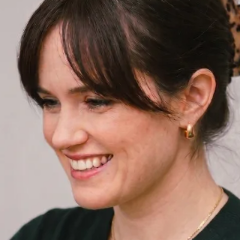
 Hosted by Krystyn Harrison · With Eva Wong, Co-founder and CPO, BorrowellApr 2026 · 42 min
From a 2-week volunteer stint to 4 million members
Overview
Eva Wong never planned to be a founder. The child of two immigrants who worked blue-collar jobs, she was on mat leave with two kids in 2014 when she offered to volunteer for 2 weeks at a friend’s startup. That stint became a co-founder role at Borrowell, now a Canadian fintech with over 4 million members, just over 100 employees and a place on the Deloitte Fast 50.
The first product, installment loans, didn’t take. After a conference showed how companies in the US, UK and Australia used free credit scores to bring people in, Borrowell launched one with Equifax as lead gen for its loans. Thousands signed up in the first week, and the lead magnet became the business. With 20 people running three business lines, they watched which grew fastest and exited the other two. OKRs, three objectives at a time, kept the team pulling one way.
Then the move most owners never consider: buying a company bigger than yours. Refresh Financial was a long-time partner with more staff, and Borrowell was one of its major acquisition channels. They closed the deal during COVID and started the integration with a joint values exercise. Eva’s lesson for owners: you can build, partner, white label or acquire, and the partner you work with today can become the company you buy, or the one that buys you.
Chapters
What you’ll learn
Where does your business stand today?
Get your Optionality Score →More on the episode
Note: Krystyn, Matt and their guests may hold interests in companies discussed in this episode. Worth Owning is not financial, legal, tax or investment advice, and is for informational purposes only. Do your own research and speak with your own professionals before making any financial decision.
You may also enjoy
All episodes →

Transcript · Worth Owning · Episode 15
The pivot that built a 4-million-member fintech
Eva Wong, Co-founder and CPO, Borrowell · Apr 2026
Eva
If this doesn't work and if I fail at this, it will somehow make me unemployable for the rest of my life. Throughout my career, I've been thrown into situations where I was the youngest person in the room, often the only woman in the room, and the person with like the least experience. So, I do think that from early on in my career, I got pretty used to being uncomfortable and needing to ramp up pretty quickly. This is a technology that's coming. We can't be scared of it. We have to learn it. This is coming whether, you know, people like it or not.
Krystyn
From what I read, you were literally rejecting every single application.
Eva
I can't remember exactly the numbers, but you know, thousands of people signed up the first week or so.
Krystyn
From that internal and external kind of dialogue in your head, how do you separate like this isn't working, we need to change?
Eva
I would say that
Krystyn
Eva, you've said something that I keep coming back to. You said that you don't think entrepreneurs are born. You think they're made. Can you unpack that?
Eva
Yeah, I would say that as a child, I never dreamed about owning my own business, being an entrepreneur. I grew up the child of two immigrants who both worked blue-collar jobs, and so I didn't have a lot of entrepreneurs or founders in my life. And my goal when I went to Queen's School of Business was to come out and get a job. And it really was later in life that I explored being an entrepreneur, thought about being a founder, even though I think there were some seeds when I was a child of having a bit of that like entrepreneur or founder mentality. I don't think that I was the stereotypical kind of, you know, born a founder kind of person.
Krystyn
So, when did you start believing that? What was there a moment that you can think to? And we'll we'll go through kind of where Borrowell is and the origin story, but can you think about a specific moment when you were like, yeah, I'm an entrepreneur. I'm a founder.
Eva
That's a great question. I'm not sure if I did think about that before actually becoming one. So, yeah, I don't think that that's sort of how I would have defined myself or how I would have said that's who I am.
Krystyn
Yeah. Well, and you were a mother before you were an entrepreneur, before you joined Borrowell. So, let's go back to that and we'll pull this thread because I think it's such an important moment. When I was building my tech company, I felt tremendous, kind of like I didn't belong in these rooms, particularly a lot of male-dominated rooms. Like that just kind of is the industry. And I felt like I had to kind of keep figuring out how I needed to show up in those rooms versus going, "Oh, I can actually just show up truly as I am." And build. So, I love I love your story because you weren't putting this on some action vision board and going, "I want to be the, you know, a founder and build wealth through entrepreneurship." It was more like, "Hey, well, actually, let's get into it. Let's talk about, first of all, where is Borrowell today? In 30 seconds, give us the picture and then let's go back to the beginning.
Eva
So, Borrowell is a Canadian fintech company. We have over 4 million Canadian members and our mission is to help Canadians feel confident about money. We do that primarily by helping people understand their credit, build their credit, and use credit. So, we have a couple of credit-building subscription products that we have launched. And then we have a marketplace of financial products. And yeah, so we've got just over 100 employees and hundreds of thousands of people use our products every week, which is super exciting.
Krystyn
It's amazing. And you were first in Canada with Equifax a partnership. You're on the Deloitte Fast 50. You know, when you think about where you are today, what sort of comes to mind as a snapshot of like, "Oh, wow, okay, like we're waking up and here I am." In your new role as chief product officer as well. What excites you in this moment?
Eva
Yeah, I mean, today there's just so much excitement around AI, which I think it's sort of hard to not talk about, but it is super exciting. And I just think that things that were maybe 3 years in the future we now think are possible within the year. So, I think, just in terms of being able to build, you know, features and products for our members that will help them achieve that that confidence when it comes to their money, is super exciting.
Krystyn
I would love to talk about AI as a portion of this and I think we'd be doing a disservice to founders listening if we didn't at least kind of go like, "How are you thinking about it?" I was talking to a founder who was a building an AI company, so pure AI, AI first. And I was like, "Oh, is this feature going to be out in, you know, in like, I don't know, a year?" Because I'm used to being like, "Let me just like temper my excitement." He's like, "No, no, we can't move that slowly. Are you kidding?" And it's like, "Okay, well." It's the pace and I'm sure we all we all feel that. But let's go back to the very beginning of when Andrew approached you, walk us through where you were. My understanding is you were on mat leave at the time and this was kind of like a, "Hey, can we do a little project together for a couple weeks?" What was what was that moment for you?
Eva
Yeah. So, my co-founder Andrew Graham, we knew each other from before and we had actually founded a not-for-profit together and that was a great experience for me to I think understand what it might be like to be an entrepreneur, but in a really safe way in that I still had my day job, but there was something really exciting about building something from scratch around casting a vision for a mission and recruiting people to join in and then actually just building something. And so, I think that for me was my first taste in again a pretty safe way, but I do think that that's what gave me the confidence again with Andrew to say, "Hey, I know that we work really well together. I'm super excited about, you know, the vision of Borrowell that he was pitching and it was actually me who said, "Well, like, if I can't find another job, I'll just come and join your startup." And I expected him to laugh.
Krystyn
He didn't even like, "Haha, that's very funny that you would ask that."
Eva
Yeah. Yeah. And he didn't, he took me really seriously and he just sort of said, "Well, what would you want to do?" And I had no idea. I was like, "I've no clue like what is it that you need done?" And it one conversation led to another. He responded to by saying, "Well, why don't I just give you the pitch for what the company is and you know, and he's like, I have to practice it anyways. And I got really excited about it. And so that's when I volunteered. I was like, look, I'm home with your kids.
I think my parents had just arrived and could look after them for a couple of weeks. And so I was sort of itching to do something with my brain and uh that's when I said, why don't I come and volunteer for a couple of weeks and see what I can do. And it was a good trial period for both of us, right? Like for him to see what I could do and for me to be like, is this something I'd want to spend some time on?
Krystyn
And so you had the spark. You'd already had kind of the early traction of working together. So you could sort of see what that could look like if you projected out. When did the co-founder conversation come about? And I don't know, like walk us through what did he say to you? Go back to that moment.
Eva
Yeah, about two weeks some sometime into the two weeks, it was going really well. So Andrew approached me to say, "Hey, I'd love to make this a bit more permanent." We hadn't raised any money yet. But I think we gave ourselves a bit of a deadline. This was the summer of 2014. And we said, "Hey, we're going to be raising some money in the fall. Would you commit to I think it was at the time we sort of thought another 3 months." And so yeah, I was like super excited. And again, I think being on mat leave it was easier in that I didn't walk into a room and quit my job. I more made the phone call to say, "Hey, I don't think I'm going to come back." And thankfully my manager at the time said, "Totally get it. If this thing doesn't work out, let us know." And you know, they weren't necessarily holding my job for me, but you know, the door felt like it was open.
Krystyn
Did you feel safe?
Eva
Yeah, it felt a little bit de-risked. And I do say this all the time that if entrepreneurship hadn't worked out, I would have found myself a job. Do you know what I mean? I do think a lot of people think that They wouldn't say this explicitly, but I do think in the back of their minds it's if this doesn't work and if I fail at this, it will somehow make me unemployable for the rest of my life, and you know, there'll be this big failure. And so, to me it did feel de-risked and now like I'll just get a job if this didn't work out.
Krystyn
I love this mindset, by the way. This is really and I talked to a lot of entrepreneurs and myself included, I get so wrapped up in my identity tied to what I'm doing. And so then if something fails, and I have had something fail a venture, you kind of feel inextricably linked to it. And so you feel like a failure. Meanwhile, if you actually look at it objectively, there are so many things out of your control that didn't necessarily show up. It wasn't necessarily what you did in your actions. And it's hard to separate that sometimes. What I'm hearing from you is you kind of went into this with this experimental mindset of like I'm going to show up curious. I'm going to keep learning. Learning seems to be a key theme in the way that you relearn and keep accelerating.
Eva
That's right. Yeah, and one thing I will say as an employer, if I see someone's been a founder before, that's a huge check mark. Whether the venture was successful or not, I just recognize that person has experienced something that they've got that founder mentality, they've got that sense of ownership. And so, yeah, it's you know, on the other side as an employer, I definitely look at that as a plus.
But yeah, just to go back to learning, I think that is something that throughout my career I've been thrown into situations where I was the most junior person in the room, the youngest person in the room, often the only woman in the room, and the person with like the least experience. And so, I started out my career as a management consultant and by nature of the job, you're sort of plopped into an industry and a company that you don't know. So, I do think that from early on in my career, I got pretty used to being uncomfortable and needing to ramp up pretty quickly. And I do give Yeah, that a lot of credit.
So, as a founder in those early days, I definitely was Googling things during meetings.
Krystyn
Do you remember being like I remember things are being thrown around and I had to know what that meant.
Eva
Yeah, all these things. And so, but I was okay with that and I do think that that is a key to success and I still remember you know, I joined Andrew alongside a Rotman MBA student who was there for a summer internship and one of the comments he made to me is like, "Oh, Eva, you're not afraid to ask questions." And I thought that was like super interesting.
Krystyn
Superpower.
Eva
Yeah, and so that was definitely some of the consulting training that I had had which is like if you don't know, you just ask. I guess I hadn't realized that like some people might hesitate to ask a question and in my mind I was like, "Well, if I don't ask a question, how am I going to learn?"
Krystyn
Completely. And this is such a threat, too. Just coming back to where we are today where knowledge is accessible because beyond Google, you now have an LLM in your pocket, you have an expert in your pocket within reason. And now it's really all about how do we continue to relearn, right? And that is the skill versus knowledge and now it's about judgment and making sure you can be thoughtful about that. Have you seen that in the way that you're thinking about AI in Borrowell and kind of the strategy for the business from a product perspective, people perspective as something that has come through in the way you've built the culture as well?
Eva
Yeah, I think for sure in that our view on AI internally is that this is a technology that's coming and like many other things before it, you know, there's a lot of things that I think are different about about AI. Like many things before it, it's like we just have to experiment and learn, right? And so I think that is like the primary thing is like we can't be scared of it, we have to learn it.
This is coming whether you know, people like it or not, but for the most part there's a ton of excitement around what it can do in terms of just accelerating our ability to do more for our members. So, yeah, I think it's been exciting for sure and there it's opening up lots of new questions for us just in terms of you know, like what are things that people are expected and supposed to sort of like learn on their own and build on their own versus how can we support as an organization maybe like an infrastructure layer and obviously establish some like principles and guidelines around safe AI.
Krystyn
Yes. On that note, and I have a client for example who is, you know, more in this sort of operations C as a leader and is thinking about productivity as a team and productivity and knowledge work is challenging cuz yeah, you could measure velocity of the engineering team or whatever, but ultimately it's like bits and bytes. It's not like we're like working with physical things necessarily. So, I'm curious from an operating perspective if you're thinking of the operations and helping everyone kind of upskill if you will with AI. Do you have any guidance there? A, even in like tools or frameworks or things that could just be really practical that a founder listening could take away and apply just to get started?
Eva
Yeah, for sure this is something that we're wrestling with right now. Like what are some of the metrics that we should be using and I think some of the ones that we brainstormed around like percentage of AI-generated code we're like, okay, well, maybe that was relevant pre-agentic AI, but with agentic AI maybe that's actually not the right metric. So, I do think that everyone sort of has to wrestle with this on their own, but maybe some principles. I do think it's like what is the goal, right? Like is it operational efficiency? Are you trying to reduce cost? For us that's not what it is.
For us it's much more around like how can we keep the same size team, but how can we do more? How can we accelerate what we're building? And so, I think for us it really is it's that and so, yeah, just sort of thinking through what that means for even like team structure and we're like super early in that, but one of the ideas is like do we repurpose some folks to be building internal tools or building some things that again, super early. We haven't made any decisions around this, but yeah, I think there's like a lot of implications as we think about how we integrate AI into our work lives.
Krystyn
That's awesome. No, and I think that just that idea of what are the guardrails, what are the principles, and then letting people cook a little bit, letting people try things within those guardrails, makes a ton of sense, just given the pace of this. And textbooks are literally irrelevant a week after they're published.
Eva
Feels like it.
Krystyn
And so, trial by doing and learning, relearning. For the kind of jump into kind of when you jumped in, you came into the business as co-founder and COO, you raised money, and the product you built, the thing that you raised money for, isn't working. So, early days, my understanding as you launched with installment loans, and from what I read, you were literally rejecting every single application.
Eva
Maybe not every single application, but definitely way more than we thought we should. And I think that's very normal for a lending business is that you are very aware of the risk. And we had a chief risk officer who was great. He was also really thoughtful, right? And so, you know, while we would cheer, it's like, yes, we put out a loan, his guidance was like, you don't celebrate when you put the money out, you celebrate as you get payments back, right? So, just like the learning of what a Yeah, what some of the metrics are for a lending business. And so, yeah, I think we had a lot of debates in those early days around product market fit. Was it the product? Or were we being too tight?
Or was it the market? Were we just like not doing a good job finding like the right people? And so, there was this tension around whether the product needed to change or like the marketing needed to change. And yeah, it was definitely a struggle. And I think, going back to the point around like, is it that we're not doing this well, or is this, you know, a reflection of me personally, or us personally, as individuals and as a team that we like just weren't doing the right things. So, yeah, those early days were definitely a challenge.
Krystyn
That moment too, you know, what's happening in the company and external factors that you're seeing, and then the internal conversation that you're having with yourself. What was going on inside your head in the moment when you were like, is it me? Is it us? Is it Yeah.
Eva
It's super stressful, right? And I do think the default is like we're just not doing this right because on the outside you're reading all these success stories of other companies that are doing an amazing job, who are growing really quickly, who are raising more money. And I think you come to quickly realize that of course people are only talking about their successes and it's more on the private rooms that founders are talking about their failures.
And so a bit later I was able to you know, I've been part of different founder groups and those are amazing because I think for the most part maybe the benefit is that you just recognize that all of this is completely normal. This you know, things not working out the way that you expect them to. And I think that nowadays there's just like so much more in terms of content and podcasts and things like that. Like people recognize that product market fit is a process, right? You're not going to just launch something and expect it to work. They will come.
Krystyn
Build it and they will come.
Eva
Yeah, that's right. I think we had put a lot into the building of it, right? And we were pretty excited about it and the fact that it didn't work right out of the gate was you know, in hindsight maybe naive, but you know, at the time felt like a failure.
Krystyn
And so you had raised money on this idea. Is that right?
Eva
Yes, that's right.
Krystyn
And so you had a moment where you're like, okay, free credit score is the idea. Who made the call to pivot to that? Where did that come from? And was there tension with your investors to make that shift?
Eva
Yeah, so I attended a conference Andrew and I and some others and I think that was like a real eye-opener just to understand in other markets, you know, there were similar companies to ours and how did they think about customer acquisition? And so I think we became aware of, you know, in the US market, Australian market, UK market, that there were companies that focused on credit education and used free credit score as a real hook going people understand their credit, but then also to understand that the financial products that they had maybe weren't the best ones for them at that time. The idea came from attending that conference. We came back, we discussed, you know, the possibility of doing this. We spoke to Equifax, they were a great partner. And I think the thing that was helpful was that we didn't necessarily as a pivot, we launched it initially as a way to acquire customers for our loan product.
Krystyn
Ah, like a lead magnet.
Eva
It was a lead gen. Yeah, it was a lead gen idea. But then we also did know that there was a possibility it would become its own business line, which is what happened. So for us it wasn't really like sort of like a 90-degree pivot where we're like turning away from one thing to another. It was a more gradual thing where we layered on a second business that was actually lead gen for the loan business.
Krystyn
Yeah, and so you get to this point where this becomes the core business and I'm curious when you're in a room making a decision to really go all in another direction for the company. From that internal and external kind of dialogue in your head, how do you separate like this isn't working we need to change more of the business side from like And again, maybe this wasn't what you were feeling, but I've had this feeling of like ah, I'm not good enough to make this work. Like I'm kind of wondering cuz some founders I think confuse that external signals from things aren't working because of external signals versus that internal dialogue. And you do need both to be able to have conviction in where you're going. I'm curious like sort of what you hear when you hear that.
Eva
Yeah, I would say that we've traditionally been bad at deciding not to do things. We've been pretty good about well, good or bad around spreading our bets around, which I don't think is the official guidance. I think typically especially when you're early stage and you've got a lean team, it's very much like pick a path and go after it. I don't know that that's necessarily what we did. We'd spread our bets sort of around three things. We had the loan business, we had our sort of like credit education free credit score leading to a marketplace business.
And then around that same time we actually were launching a B2B business where we were powering a personal loan and then credit score for one of the big banks. And so we then had, you know, a whole enterprise business as well, which I did not recommend for a company of, you know, 20 people to be running three different businesses. It was a lot, but I think we were just you know, we were worried about, you know, not knowing which one would work. And I mean, eventually what happened was we placed our bets, we saw which grew fastest, and in the end there was a winner, and we sort of gradually exited the other the other two businesses.
Krystyn
What did life look like when you were at that number? And again, head count can be a vanity metric. So, the fact that you all had 20 people running three lines is also incredible, but from a from a time allocation perspective, like how life was it all-consuming at that time just because it had to be?
Eva
Yeah, I think in the early days it definitely felt all-consuming. And when the team is small, like in the early days is four people, it literally is if I didn't do something, it didn't get done. And so it just felt like you know, everyone had their stream, and so you everyone had their workload. But for like the stuff that I was doing, if I didn't do it, it didn't get done. So, I definitely felt that pressure. And you know, I had two kids at home. I had a four-year-old and a one-year-old. And so it definitely felt like multiple shifts, right?
I would come home from the work shift, and then like another shift would would begin. And I know you're in this you're in this sort of stage of life right now as well. I think I also didn't realize that this is a marathon, it's not a sprint. I was definitely going at sprint pace. And not getting the sleep I needed, not prioritizing my health, and I got pretty sick actually at the end of that first year. Nothing serious, but just like literally
Krystyn
Your body was like, "Hey, woah."
Eva
Pinkeye in both eyes. I didn't know if you knew that was possible. You know, people always It's similar, right? People call it pinkeye. I mean And I still remember like I was off for a little bit but I went back into the office and people were like please go home. Like we do not want what do you have and so you know but like
Krystyn
This is what we do. This is what we do and I have done this where I have literally been like your brain being carried around by your body like go go go go. Okay so let's let's talk about when that shifted for you because I think a lot of founders in the bill need to hear this in terms of that longer term thinking. And there especially with AI it does feel like this sense of like we have to keep up. When really why do we go into these things? Why do we build? Why do we do the hard thing in the first place? For me it's because eventually I would like time freedom. For me it's because I want to make an impact on the world. I want to pick something that is meaningful enough to do that over a long enough period of time but yet we work within these very short-term cycles. What's going on there? Do you think?
Eva
Yeah. I mean I do think that it comes from a good place right? I think the motivation is like you're passionate about the business and you want to build it and you want it to be successful. And so I think it is more just like a framing of what the time horizon is you were saying right? It's we have to set ourselves up for a long-term success not just for short-term success.
So I think that's been helpful is like in order to build what I want in order to be in this for a long time what structures and what boundaries do I need to put up and I also do think in the early days it's a lot of just like running the treadmill and not necessarily stepping back and being thoughtful around what actually matters here. Do you know what I mean? I think there's very much this like do it all and the things that are short-term are easier to check off right?
So I think for a lot of people who like love that have a list a to-do list and check things off it's easier with some of those things that are actually maybe not as valuable long-term. So
Krystyn
That's a really good call. Yeah. Stepping back doing more Yeah. Doing more is not necessarily going to lead to results. Spreading yourself too thin isn't necessary. When did you start to simplify because ultimately to scale in my experience complexity happens you start to grow so quickly the wheels are coming off. You hit product market fit, which you certainly did. First of all, what did that feel like in your body to be like, "Oh my god, whoa, it's working." And second of all, what did you do practically if you were to think about the things that you did, two to three things, to redesign around this for your life so that the house you built actually worked for you and you wanted to live in it? Yeah. What were those things?
Eva
So, for us, product market fit came pretty clearly and I think that this isn't always the case, but when we launched credit scores for free, it was this thing where it's like it sort of took off right away. And so, I remember we went on CBC News, we were on breakfast television. Like it was an exciting time because Yeah, I can't remember exactly the numbers, but you know, thousands of people signed up in the first week or or so. So, you know, it would definitely felt a little bit like we had hit the nail on something and it was a super basic product, right? We literally showed you a three-digit number and said, "This is your credit score." Which, you know, it was.
It just like we didn't give you really any context around the number other than maybe like what kind of, you know, you have a 742 and it's good. And then we would update it in 3 months. So, you know, very far from what we have today, which is free credit score, free credit full credit report that we update on a weekly basis. But yeah, even that like very basic version of the product, people were coming for and they were really curious about what their credit score was. So, yeah, that felt nice.
And again, I don't think that's always the case, but for us it's like, "Oh yeah, this felt a lot more like product market fit." Or that we had something here that came a little bit easier. So, that was exciting. And then, yeah, to answer your question around like simplifying, I think it was around this time that we realized that as a organization, yeah, we weren't big at the time. We were maybe like 10 or 12 people. Then we did need to be thoughtful around what our goals were. And so, we did settle on OKRs as a goal-setting framework.
And that was super helpful just to align and make sure we were all pulling in the same direction because again you have all these people running this hamster wheel like doing all these things that everyone thinks are good but they may not be the best things they may not be the most important things and we just recognize that we all had to be aligned pulling in the same direction. So I think that quarterly practice of taking a step back thinking about what the most important things were not just you know everything that was good which is not a high enough bar was helpful for us to be like okay this is what we say is important and then we could evaluate decisions based on that.
Krystyn
And for you personally was there anything any practices or things that you've put into your daily routine that allow you to show up differently than those early days because ultimately we are paid for judgement at the end of the day and so taking care of ourselves is really important and I have lost sight of that in the past. I've found my way back to it now out of getting sick and having hard lessons. What's important to you what's made a difference for you?
Eva
Well around the time that we applied OKRs to work I also really embraced OKRs even for my personal life and I maybe back to it. Yeah yeah yeah so one of those nerds for sure and I just it was like okay well goal setting works for companies and it should work here where it's like being transparent about the goal being very like you know specific and measurable all those things and so for me like a big one has been sleep. It's you know it's like if I want to get more sleep I can't just say I want to get more sleep.
I have to be very specific around what that looks like and so it's like a bedtime that I tried to stick to right and it meant like 30 minutes before that bedtime I was going to be off screens and not get my brain going because in those early days with young kids what happened a lot was come home it's like the craziness of young kids put them to bed and then I would start work again. But once I started work my brain would get going I wouldn't be tired and
Krystyn
You're fired yeah you're sort of like firing on all cylinders and then you're
Eva
Yeah it's like sacred time.
Krystyn
No I'm totally I've lived I'm in this a little bit. So did you did you find you had to just kind of
Eva
Yeah, like I wouldn't be able to get to sleep, right? Because and then the next morning and so you get into this like vicious cycle.
Krystyn
Yeah. And so how did you get out of it? Did you just have to say I'm no longer
Eva
Yeah, I think it was more just like okay, there is a certain bedtime I am going to like turn screens off at a certain time even if I'm feeling super productive, even if like my inbox, you know, I'm like so close to getting my inbox cleared cuz again, it's like one of those things where it feels good to check that off, but I just came to realize that like if I if I kept on going that way, I wouldn't be able to do it again like that many nights in a row because I still had to get up early the next day. I think again, it's just like setting foundation.
Krystyn
Yeah. Foundation and being intentional about where we're going and making sure everyone's rolling in the same direction. Yeah. And likely like what if you were to say, "Hey, this number is a really healthy company level number of OKRs?" What would you say the maximum should be? Cuz I find a lot of folks are like, "Let me do it all." And it's it's out of fear of like if I don't do it all, I may miss something versus going, "No, if we radically focus, we're going to get a better result cuz everyone's going to be clear. If you ask anyone in the org, this is what we're focused on." What's that number for you? Is there a number?
Eva
Yeah, so we try we typically have three objectives and within each objective we'll have one to three key results. I think actually this is like a good reminder. I think we are slightly over that, but I do think that a good test is like can you remember them, right? If I can't even remember them, then that's a problem and you know, pick a person in the organization, could they come back with like 80% of them? Do you know what I mean? And so for us like we you know, we have typically we have some sort of like revenue and profitability metric and so those are always there. Those are important, but you know, those are maybe a bit of a given, but yeah, can people actually remember what the other ones are?
Krystyn
In terms of, you know, where you are now, so absolutely this idea of focus and I really love the power of three. It's so simple, probably back to consulting days for both of us, but that is there's only so much we can retain and so much of leadership, especially when you're at the scale you're at, is in narrative and storytelling to really help hone in the clarity of what that individual needs to do and how that ties up to what the company needs to do and then everything's just kind of rolling in alignment, not always, but this is the goal. This is the goal.
And so I'm curious just in terms of, you know, you go out there and you see an opportunity to grow organically through an acquisition, that is Refresh Financial. Can you tell us a little bit about what that was like, whatever you are able to share in terms of being on the buyer side and then going, well, we're going to be able to accelerate through this path, which a lot of Canadian companies need to hear, there's you can be the buyer, too.
Eva
Yeah, it's possible. And I do remember at the time I referenced this group of founders that I mentioned, hey, we're like potentially going through an acquisition, just do people have advice? And the default, everyone just thought we were being acquired, not that we were actually acquiring company. So, yeah, I do think that is the default. For now. So, we were at the time maybe 50 people and Refresh was actually a larger organization than we were in terms of like head count, but they were a company that we'd partnered with for a long time and so we offered their credit building product and their secure card as part of our marketplace.
And we didn't realize this at the time, but we were one of their major acquisition channels. And so at the time we were thinking about growth and, you know, what new product we might build and we had both this credit builder product as well as secured card on our road map of things that we could potentially build ourselves. So I do think this is the natural like should be build this, should be like partner, should we buy? And again, because we had this really strong relationship with Refresh, you know, we had different conversations and sort of one thing led to another.
And yeah, there was like a lot of openness for on the other side to, you know, to merge the two companies. And it was super exciting. I think, you know, to go through an acquisition, whether you're an acquirer or you're, you know, like whichever side you're on, I do think it's a cool sort of, you know, check mark on that professional resume. And so there's definitely like learnings there. And overall, yeah, it was like it was really exciting. And I think for us, the fact that it was similar sized also made it interesting. And the fact that we were doing this through COVID. So.
Krystyn
Oh, yes. Yeah. Definitely. Your due diligence through COVID. So interesting. What was it from a the way that you looked at the acquisition? Because there's sort of a shift that happens when you go from founder to buyer hat. What did that shift look like for you inside your head? Like how did you evaluate? What did you look at? What was important to you? The buyer perspective.
Eva
For us, the fact that it was an established product, that they had a lot of expertise in this was helpful, that they had obviously like sort of a book of business. Yeah, I think there were a lot of check marks there that just felt like we could accelerate rather than starting from scratch on our own. And you know, in this business it is all about speed. And so, yeah, I think that was definitely a big plus is that we were acquiring, you know, a going concern and a business that was already doing well and had a bunch of traction. So.
And then quickly, I think we were thinking just around the integration and what does it look like to successfully combine these two companies? Because you hear so many stories where it's not just about getting the acquisition done, which is a challenge in and of itself, because there's so many things that could derail it, but it's actually, you know, successfully integrating and growing the business together. So, I mean, even maybe before it was done done, we were thinking really thoughtfully around how do we make sure that we can successfully integrate these two businesses from like a cultural and operational level.
Krystyn
What would be your playbook, if you will? I mean, just high-level things that you think a founder, maybe blind spots that you think folks miss when integrating. And I've been involved in four acquisitions in a year, and I was COO and I had to integrate them. And for people listening, yes, there's software, but at this stage, while AI agents can code, this is people. This is people, for sure, in terms of how do we harmonize, bring folks together, and design it well, so that everyone can kind of rise.
Eva
Yeah, what are your things that we did early on was we hadn't refreshed our values in a while, and so we took this opportunity to do a joint exercise of like what our values be. Like looked at the Refresh ones, we looked at the Borrowell ones, but we did take a step back just to say like what kind of company do we want to build together. I think doing that kind of exercise with everyone, everyone having, you know, an equal say in, you know, to contribute. In the end, obviously, it's like as co-founders, we're the ones that are making the decision, and we have to own that. But I think, you know, doing that kinds of joint exercises, really what kind of company do we want to be, and involving everyone in that conversation, I think was foundational and helpful.
Krystyn
And were they running on the same sort of systems in terms of OKR and performance setting? Was there any complexity that you had to really design to integrate well?
Eva
Yeah, I don't recall whether they were using that the framework before, but yeah, I think for us it was in a way or the fact that it was COVID was easier in some ways in that it wasn't like there was the Borrowell team in the office in Toronto, and Refresh is based in Kelowna in BC. The fact that everyone was online, I actually, I think was helpful because then everyone, you know, was a square on a screen. I think typically with hybrid meetings, the people sort of in-person feel like they've got the bulk of it, and it's not as good an experience for people who are joining online. So, yeah, I think there were some things like that that we didn't think about, but just sort of happened that I do think were helpful to like equalize and make sure that no one sort of felt like a secondary citizen.
Krystyn
So culture is what I'm hearing just that people focus and making sure that you really designed the house together, if you will. I really do think of companies like houses, it's really helpful, especially when you're thinking about enterprise value. It's like, do I do the kitchen remodel and does that add value when we go to sell, if we go to sell, right? So designing it together, building it together, and then I'm curious for you personally, how does it change or how had that experience change the way you think about growth and building value in the company?
Eva
Maybe as someone who's a builder, you always default to building yourself first. And I know whenever I hear about other companies that are either, you know, it's like they've launched a new feature and then you start to find out afterwards that they actually didn't build it themselves. They hired an agency or they, you know, they had outside help. It's always a bit of a surprise to me. So I think it is just like helpful to recognize that like you don't have to build everything yourself. You can partner, you can white label, and you can acquire. And that this is it's another tool in the toolkit, right? And so I think some of us the default is always like, oh, you know, we have to build it ourselves, otherwise it's cheating. It's like obviously it's not cheating.
Krystyn
Totally. Well, yeah, it's that kind of like that founder, I'm going to do it, versus, you know, the moment you realize that that you're going to not be able to scale beyond yourself, if that is your mindset. And so looking to that. The other thing too is how long was that relationship kind of in the works before the acquisition? Was it a number of years, a year? Like what
Eva
Yeah, we've been working together for a number of years before the acquisition. So we definitely like knew each other and knew the team. Yeah, knew the leadership.
Krystyn
People buy from people, and this includes companies. And for founders listening, this partnership to acquisition strategy can be a strategy. Thinking about early your end game, where you want to go with the business, whether that is an external sale, thinking through your universe of potential buyers is actually the inverse, thinking through the potential universe of ecosystem partnerships, how that helps you both grow. So then there's business cases on both sides, cuz you already have the data to go, oh, were their number one acquisition source, interesting. Oh, they have products we don't have, similar customer base. There's a really nice alignment there and I think that is just really helpful to think through that that way. Not that it has to be so strategically designed. You probably didn't know when you partnered that this would be a potential
Eva
Yeah, we didn't.
Krystyn
You're now at this incredible scale. You've been on this incredible ride that you jumped into. Is the self-doubt still there even now? Do you have moments of doubt at this scale?
Eva
Sure. But I don't think it's there the same way and because I do think maybe too many founders have too much self-doubt. So, I don't think about it at times, to be honest. But I do think that maybe in a similar vein, even though I'm not thinking about it, is it somehow in the back of my head that like this is all I can do. And so, I do think it's important for me to like challenge myself around like, no, no, no, there's definitely still more.
And so, while yeah, I don't think I have those moments of self-doubt the same way explicitly, I wonder if like implicitly it holds me back from thinking bigger than I should. And I feel like this is where my co-founder is really great. He's always like sort of pushing us to be more ambitious and think bigger. And I really appreciate that because again, even though it's not explicit, I wonder if sometimes there's an implicit thing around like, oh yeah, I'll just grow this a little bit farther than I am today as opposed to thinking about it in a more ambitious a more ambitious way.
Krystyn
Well, I think that's a really helpful frame especially to just for women founders, too. I do feel like when I was out pitching in California, I was pitching a very similar business to others and I think just your conviction is so important, but also recognizing that you are this is I'm speaking to me here, past me, like you are you are enough and frankly, your imagination is your limit when it comes to what you can build with software today.
And ultimately, you did push it, you did go after it and I've heard and seen and we talked about kind of like you choose the things that scare you a little bit and you lean into it and you learn and you grow and the result is here and I do wonder if doubt starts to fade away once you see the snowball of all the traction and momentum and then you kind of arrive. But you haven't arrived and when we started this conversation I was like, "Hey, you know, like it must be great." And because you're you're on the next milestone.
You're on the next So what would be your advice for founders who are so heads down in the build to just kind of look up and I don't know, look at what they built so far.
Eva
Yeah, I do find Yeah, our we do quarterly board meetings like I'm sure many companies do and I do find those helpful because you sort of look back over the quarter. It doesn't even have to be a board meeting just as sort of far as we do our quarterly OKRs as we look back. It is exciting to think about what we've built and as we look forward we're always like so excited to be like, "Oh, I can't wait till we've actually, you know, achieved these." So I do think some of the goal setting is helpful and for sure we need to do more celebrating of what we have achieved. Achieved, but yeah, I think it's a balance, right? You want to celebrate what you've achieved, but you still want to keep pushing and
Krystyn
Hold that tension.
Eva
Yeah, yeah, to hold that.
Krystyn
Totally. No, and I think there is so much to celebrate, but there's also so much more impact that you have on the horizon and such an important space and such an important economic time for Canadians especially just to be able to have these tools. So last question for you. If you think about a founder sitting in front of you who, you know, maybe maybe hasn't started the thing or maybe they're in the thing but they're still feeling like they maybe don't belong in some of these rooms or they're not a tech founder so therefore, you know, they're out of the loop, what have you. What advice would you say to someone who's feeling like maybe they're not enough for the role they're in?
Eva
I have a 15-year-old son and I am really amazed at the amount of confidence he has given that he's 15 years old, right? He's a very confident, you know, intelligent guy, but he literally has only been on this earth for 15 years and I look at him and his friends and just the amount of confidence they have around what they can do and what that enables them to do. And so, I think my advice is to channel the confidence and energy of a 15-year-old boy because they really believe they can do anything and they've done nothing.
Krystyn
I bless. Hear this. Hear this. Any founder and specifically women founders, you know, I'm not saying this is This was my experience as well. And I heard this the other day, Eva. Krystyn, and this is just in a book I was reading, Tiny Experiments. I don't know if you've read it. It's fantastic about how to adopt more of an experimental mindset. But, everyone you're worried about and thinking about what they're going to think of you or what have you is going to die within the next 100 years. And so are you. So, get out there, do the thing, and don't worry about it. Don't sweat it. And I love your mental model of your son and the confidence there. Hey, thank you so much, Eva, for being on the show and appreciate you. Cannot wait. Where can folks find out more about Borrowell and you?
Eva
For sure, they can go to borrowell.com or you can download the Borrowell app. And I think that's, you know, to take your advice and apply it to personal finance, which is also an area that sometimes people feel like they don't know what the next step is. I would just do one thing, right? And maybe it's find out what your credit score is if you don't know it today. I think just take the step, do the thing.
Krystyn
I love that advice. Love it. Thank you so much.
The full conversation, from the episode captions with light clean-up for reading. Check against the audio before quoting.
Free · 5 minutes
How much does your business still need you?
Get your Optionality Score: where value is leaking, and the first three moves to fix it.
Get my Optionality Score →