



 Worth OwningEp. 11
Worth Owning · Episode 11
Selling The Peak for $5M, then buying it back
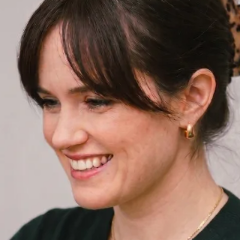
 Hosted by Krystyn Harrison · With Brett Chang, Co-founder and CEO, The PeakFeb 2026 · 37 min
$2.3M in revenue at a 30% net margin, sold, then bought back
Overview
Brett Chang and his two co-founders started The Peak in early COVID, unemployed and running out of runway, with a plan to build a Canadian version of Morning Brew. At its high point the business newsletter had about 165,000 subscribers, $2.3 million in annual revenue, a 30% net margin and a team of 12. In 2023 they sold it to Zoomer Media for a reported $5 million, and later bought it back.
Brett walks through how they built it to sell: raising $350,000 from friends with a plain pitch of 30% for a shot at a $5 million business in 3 to 4 years, running on the Traction operating system so each person owned one to three priorities a quarter, and documenting every process so the company could run without the founders. He also reached out to the buyer himself, months before a deal was on the table.
Then the part most exit stories skip. Closing took 4 to 5 months while the three founders kept the sale secret and the business running. Two years as an employee taught Brett he prefers working for himself. Now he is rebuilding with AI to raise the ceiling, and planning to hold. His advice to owners: build a good business first, because that gives you the option to sell or to keep it.
Chapters
What you’ll learn
Where does your business stand today?
Get your Optionality Score →More on the episode
Note: Krystyn, Matt and their guests may hold interests in companies discussed in this episode. Worth Owning is not financial, legal, tax or investment advice, and is for informational purposes only. Do your own research and speak with your own professionals before making any financial decision.
You may also enjoy
All episodes →

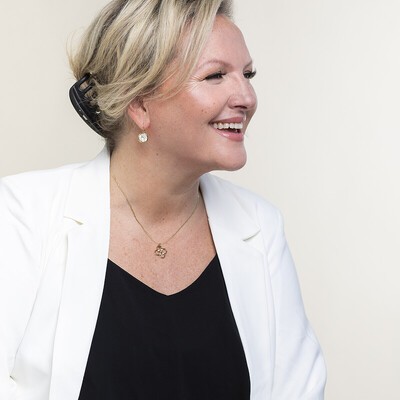
Transcript · Worth Owning · Episode 11
Selling The Peak for $5M, then buying it back
Brett Chang, Co-founder and CEO, The Peak · Feb 2026
Brett
There was a lot of pressure on us to make this one work. I really do think we were running out of runway. And so it was either, is this going to become a real business that we can pay ourselves a salary with, or will we have to go out there and get jobs?
Krystyn
Today's guest is Brett Chang, the co-founder and CEO of The Peak, one of Canada's most read business news brands. Brett built The Peak during early COVID, intentionally designed it as an asset that could run without him, sold it in 2023 for a reported $5 million, and then most recently he bought it back.
Brett
I just much prefer working for myself, is basically what happened. The exciting thing for us isn't about how we cut costs with AI. It's how do we increase the amount of work that we can do with AI. We want to raise the ceiling. By freeing up my time, I now get to work on more things that I'm excited about. So I look at this as additive to the business. It's going to allow us to do more, expand quicker, and that's truly what gets me the most excited about finding these new efficiencies with it. 20-year-old me would have been really happy to sell a business. If you find one that is working, that is generating revenue, and is a profitable business, you're best just to hold on to that business, try to make it better. And...
Krystyn
Brett, welcome to the show.
Brett
Thanks so much for having me, Krystyn.
Krystyn
Let's go back to the beginning, before The Peak was a brand, before it was a deal, when it was just three people at home in between projects, staring at a blank page. Uh, it was early COVID. What was that like, the week that you decided to really start this? And why did you want to build a media company?
Brett
I had a very tumultuous career. I would go from having a really stable job to leaving that job and starting something on my own. And oftentimes when I would start something, it just wouldn't work. And we were in one of those in-between phases, where we had started this cannabis accelerator and venture capital fund called Leap Forward. It didn't work. We made the decision to shut it down at the start of COVID there. And me, Taylor, and Alex, my two co-founders and I, we tried to regroup and figure out what we wanted to do next. And we were going through a bunch of ideas. And one that kept sticking out to us was that there's this publication in the US called Morning Brew.
It was really popular there, but also really popular here. Didn't have any Canadian content in it. And so we thought, we all have the skill sets that, if we put it together, we thought we could produce a good publication. We thought we could operate it, and we'd sell ads and build a real business. And so we made that decision to just jump into it. And that was day one. Now, I think we got really lucky that, because it was COVID, we could just put our full attention to it with very little distraction. And so we just started running the newsletter and taking it one step at a time.
Krystyn
It's amazing. And how did you, at that stage, define the end state, what you wanted to build? In terms of, like, what did success look like to you? What did making it mean?
Brett
Making it at that time was simply paying our rent. As I mentioned, we were all unemployed, and so, yeah, exactly. So for us it was, how do we get money in the door that we can pay ourselves a salary? That was priority number one. Early on, really early on, that was the goal. As, over the next kind of few weeks from when we first started doing this, I read this book called The E-Myth. And that gave me a really good sense and a vision for where I thought we could take this. And I came back from a trip, I was going to Vancouver.
I came back from a trip after reading the book on the plane, and it gave me much more of a systematized, process way of looking at the business. So I really had focus on, hey, how do we get validation that people will, one, want to read this thing, and two, pay to get in front of the people who are reading it? And once we started getting some money in the door, it gave us confidence that there was a real business to be had here.
Krystyn
On that point about kind of The E-Myth, the learning that you did, and sort of the perspective building to go, like, okay, I want to build this a little differently. You'd mentioned, you know, one of the last businesses you started didn't work out. I myself, I've been an entrepreneur since I was 16. You can't shake it. It's in our DNA. And I've had a ton of failures. I've had a ton of stop-starts. And I don't know, for me personally, you have this moment of like, this one has to work. What were you feeling in that moment, when it started to sort of start, and then you start to see some traction? For you personally, what did this mean for you, this business?
Brett
There was a lot of pressure on us to make this one work. I really do think we were running out of runway. And so it was either, is this going to become a real business that we can pay ourselves a salary with, or will we have to go out there and get jobs? That was kind of the binary outcome here. And we gave ourselves a couple months to see, could we start bringing some money in? And as that started to happen, as we started to bring in, it wasn't a lot. It was a couple hundred bucks here, maybe a thousand dollars here. It was just validation for us that there is room in the market for a product like this.
And on top of that, and I guess this was what was most promising to us, was people were actually consuming the product. People loved the publication. They liked the content that we were putting out there. They liked our tone and voice and format. And so we had a lot of really positive signals around it, more positive signals than we've had in a number of other businesses that we've started before. And so we did feel really good about it, but again, you're so early, and the money is so little, that knowing whether or not this could become an actual business that you can pay yourself out of, that still felt very far away.
Krystyn
And flash forward, and we'll work back into the in-between, because there's always a messy middle when you're getting into that scale phase. Um, but you hit around 165,000 subscribers, give or take. What was it like at its peak, if you will, pun kind of intended?
Brett
Yeah, I think, you know, there's kind of two points to it, which was the, right before we sold to Zoomer Media, and that to me was the peak of the business. We were doing about 2.3 million in annual revenue. We were operating on a 30% net margin. So, we had built a really good business. And most importantly, and probably the main reason why we were able to do that, is we had been able to recruit and retain a really great team. So there was about 12 of us that were working on the business at the time. They were just exceptional people. Many of them still work for us today. And that really was critical to our success.
Krystyn
And 30%, was that your EBITDA, or like your net profit margin for the business?
Brett
That was net, that was net profit margin for the business.
Krystyn
Beautiful. What a, I mean, just for context for folks listening, like a services business is generally like 12%, maybe 15, uh, if you're lucky, but seeing what looks like a very high margin business. You had a small, awesome team, it sounds like, to do this. Is that common in media companies?
Brett
It's uncommon in Canadian media, and there's a few reasons why I think we were able to produce that, but it's, uh, yeah, it was unusual.
Krystyn
So then going backwards into the starting point, to where you got to this moment, what was the moment, do you think, that really changed everything, and also that changed your mindset from, I just need this to be a job that pays my bills, the practical need, to, I want this to be an asset that I could potentially have the option to sell?
Brett
Well, the most critical decision point for us when we were building The Peak was whether or not we were going to raise money. And we ran into this chicken and the egg situation, where, in order for us to sell more ads, we had to grow the audience. And to grow the audience, we had to invest in advertising that would acquire new subscribers onto our list. And we had basically exhausted most of our savings at that point. None of us really felt comfortable putting more of our own money into it. We knew there was something there. People loved the product. They were reading it on a daily basis, and we were able to sell ads for it. And so for us it was either we go out there and raise money, or we keep trying to bootstrap it.
But the problem with bootstrapping at the time was that, at a certain point, we really, really would feel uncomfortable putting more money into it, and ultimately would just go get jobs, or one of us would go get a job, and all of us had to have our full attention on it in order to make it work on a daily basis. And so we ended up going to raise about $350,000, primarily from, uh, friends of ours. And that was the most critical decision for us. And that's also when we realized that the goal here has to be to provide some type of liquidity event for our investors. That really oriented us towards that, and we worked backwards from that point to build an asset that we thought could be sold to someone someday.
Krystyn
That was the mindset shift. That's the moment it starts to become more formal. You have more accountability, you have shareholders. Um, at that point, you know, you have to look at your decision set. You could either retain more equity in the business, or you could start to share the pie, if you will, but, uh, ideally at a higher valuation. For a founder who's never raised money before, would you have any advice for them in terms of how to think about equity? Because when I first gave equity away in one of my businesses, I really felt it was very cheap, because at early days it's kind of easy just to hand it out, because you don't have cash necessarily. But as you build and scale, you do build more value in the business, and all of a sudden that equity becomes very expensive. And so how would you advise someone thinking about the trade-offs of that decision, of whether to raise capital or not?
Brett
There are two types of businesses that raise capital, in my mind. It's, one, the hyper-growth startups, and if that's your game, you're going to venture capital firms and you're doing big deals, and I'm not as familiar with that. In our case, what happened was that we knew we had a business. We knew that we could grow this business into something that was profitable and could be sold at some point. And we needed a small investment in order to bridge us from the point that we were at, at that point, to the point where we could actually create a viable asset that has some potential to be sold, and to get a liquidity event for our investors.
I think the most important thing that we did, though, was we were really honest with our investors. We didn't pitch the business as the latter, or as the venture-scale startup, but we pitched it as, hey, you invest 350K, you're going to get about 30% of the business, and, you know, we think that within 3 to 4 years, this business could be worth about $5 million. And we kind of charted that path about how we would get there. And that's what we sold. That was our primary pitch to them. And it landed well. Now, there were two things I think worked in my favor.
One, I had this existing network that I could tap into, that I didn't have 10 years prior. And so that was probably the big difference from when I was first doing entrepreneurial stuff to when I was doing entrepreneurial stuff then, is that I had this network that I could tap into. And two, I actually really did believe in the business. I think we had some really early traction that would demonstrate that there was a real viable business at hand, and that made it a lot easier to raise money.
Krystyn
Yeah. And this point, just in terms of your social capital, the network that you had, that you built. I think a lot of times founders, myself included, get so heads down in our builds that we forget to actually look outside our business and just build relationships, purely for no other reason than to build relationships and to connect with other people. Um, curious, in terms of, you know, you did end up selling for 5 million. We can talk deal structure, because that also matters for founders listening. You hear headlines, but until you really understand deal structure, ownership, it's actually very, you know, it's a little nuanced in terms of what the founder actually takes home at the end of the day. Um, what was the pivotal moment for you that you think unlocked that exit path, that you sold those investors early on, to get to that $5 million outcome?
Brett
The most important thing you can do, if you're trying to build a business for an exit, is just build a good business. I think a lot of the times entrepreneurs and founders, they might think they want to get an exit, and they might try to architect an exit in an artificial way. The best thing you can do is just build a really good business, a business that's so good that somebody would want to buy it, and that was our primary focus. It also gives you optionality, too, where, if somebody does come along and wants to buy the business, yes, you can do that, but also you could build and hold the business for a really long time, and hire an operator for it, and pay yourself a really nice dividend check.
So you've got two different paths that are both equally good and have different merits to them. That was probably the most important thing that we did, is we were really heads down in, how do we build a really profitable, efficient, well-run business that could operate without the founding team? And that was our way of packaging this up for an acquisition. Now, there's a lot of luck that comes with all of this, too. There has to be a buyer, and we got lucky in that there was a buyer in the market at the time that was rolling up these types of assets. And that is kind of how we made it happen. And to be fair about it, I reached out to them, not the other way around.
And so that is something to also take into consideration, which is, if you do want to sell, you do kind of need to be a bit proactive about it. Find out who the buyers might be and reach out to them and start building those relationships. I didn't think it would happen as quickly as it did, but I knew that I'd have to start talking to people if we wanted to sell down the road anyways. So I was putting an effort into that, uh, while working on the business.
Krystyn
So, there's a few things here I'd love to unpack. So, one of them is just, like, how you systematically built a business that was super attractive, and just frankly a great business, based on great fundamentals, which we can talk a little bit about, those moves, margin being part of the story, I'm sure. And then the other piece is, in terms of, people buy from people, and that is true in SaaS sales, that is true in buying a company. Um, and would love to kind of get a sense of what that journey looked like. But back into the build and the fundamentals. When you're thinking about, you know, what we talk about all day every day in our business is, like, how do we help you build enterprise value?
What does that actually look like? Because so many founders, myself included when I was building, are focused on maximizing EBITDA or their net profit, um, and they're not necessarily thinking about the enterprise value of the business unless they go out and they raise money and they start to think valuation. Um, what were the levers for you, or what are the levers in a media company, to grow the value of the business, to enhance its value over time?
Brett
In many ways it's no different from any other business. We read this book, Traction, and that gave us a really good operating system that we could work off of, where we would have our values. We would have a 10-year plan, a five-year plan, a three-year plan, a one-year plan, and then we'd have quarterly rocks that we work off of to build towards that one-year plan. And that one-year plan builds towards the three-year plan, sequentially upwards. That just gave us a lot of structure that we could work off of. It really forced us to focus on what really matters. I think that was really important in the business as well, which is that everyone at the company was focused on one to three things each quarter. And that's how we made sequential progress.
Um, that was super important. I think that's super important for any business. I don't think that's unique to media. Now, within media itself, there are two different audiences that you're trying to sell to. There is, one, your actual audience that is consuming the product. You want that to grow, and you want to retain that audience. And so that was obviously very important to us. And we had an editorial team that I think was world class at doing that. And the second audience would be the advertisers. These are the people who are buying ads in the newsletter and in the podcast and buying social videos with us. And so being able to figure out who is our ideal customer, how are we going to get in front of them, what does that whole sales motion look like?
And again, that kind of ties back to this operating system, which is, we tried to systematize everything. We were really focused on creating sustainable processes that we could execute, no matter who was in that role. And that's the last thing I'll say, which is, the talent that you bring in is so critical to the company's success and creating that enterprise value. Again, when somebody is looking at buying a business, they're looking at buying the complete business, including all of the people that currently work there. That comes as a package deal. So being able to incentivize those to produce great outcomes, finding great people, retaining great people, that's all a really big part of it, and I think we did a really good job at that.
Krystyn
You built The Peak with systems and processes from day one, but when you're in a high growth phase, subscribers are climbing, sponsors are coming in, how do you scale without breaking what you've built? Do those systems actually hold up under growth pressure, or do they become constraints?
Brett
If you have a great foundation of process and systems, and that's where you start from, I do think it's a lot easier to see that growth through sustainably. The challenge with growth normally, and I'm taking myself out of the media business for a second here, but you start going out there, and your marketing and sales is really clicking, and you're acquiring a bunch of new customers, and you have to figure out a way to service them. At that point, then you have to scale up your team to be able to provide the best possible service to those new customers. This is true for us as well, but I think that's more true in something like software. In that event, again, if you have a solid foundation and a culture of process, it shouldn't, you're going to run into issues no matter what.
But I promise you that those issues will be much easier to resolve and address if you have that foundation of process. If you have all your guides written out, if you've got all your documentation with video instructions that people can watch, and if you have a great onboarding process to get new employees, uh, on the team up to speed on everything that's going on, if you do all of those things, it'll be a lot easier. But of course, if you're in a high growth company, you're always going to run into different issues, and I don't think there's a way around that, but there is a way to minimize the damage that that could cause to the team and the organization.
Krystyn
Walk me through how the Zoomer deal actually came together. How did that conversation start? Was it inbound from them, or did you reach out? Were you actively building a relationship? And once it started, what was that timeline, from first conversation to signed deal, uh, all the way through to closed?
Brett
Yeah, I'm trying to think of the exact months in which this happened, but it was about two, two and a bit years ago. I first reached out to them when they bought some other media assets, to set up a conversation with the COO at the time, and I had to convince him that we were worth talking to. And so I sent a few emails. We had a few emails back and forth, telling him about The Peak. He set up lunch with us. I went to go get lunch with him. We spoke. I talked to him about the business. Um, and then I didn't hear from him for three or four months. But after three or four months, he got back in touch with us, and he said that he wanted to have a more wholesome conversation about it. So I met with him. He said he was interested.
We went to go meet with him and the CEO about two weeks later, and there was a decision in that meeting that they wanted to move forward with an LOI. And so we probably got an LOI a week or two after that, and we negotiated the LOI. That probably took another two weeks, and then we were kind of off to the races. And this is what I tell founders that are kind of going through this process: it takes forever. It'll always take way longer than you think it'll take. Even if that early conversation of, yes, we want to buy you, and here's the LOI, and you sign the LOI, that's not the tricky part. The tricky part is the, you know, 60-page share purchase agreement that you've got to negotiate after. And that will always take longer than you think.
Krystyn
So from LOI to close, how long did that actually take? And what was it like operating the business during that period, when the deal is happening but not done yet?
Brett
Yeah, it probably took about four to five months. Uh, and that is fast. That's fast for M&A, but it took about four to five months. And of course, it's a very nerve-wracking four to five months. And it's a very challenging four to five months, because psychologically, you find yourself in this place where you're like, I'm selling the business, but I still need to keep the business operating and running well, because there is the possibility that the deal might fall through. The deal isn't done yet. And so, how do you keep the team motivated? How do you keep yourself motivated, uh, while this deal is happening? That was a really tough thing to do. And also, you're making decisions that might have impact a year out, but you don't want to make those decisions, because you don't really know where the company is going to be, or who is going to own the company, a year out.
Krystyn
This is a really important point. You are effectively operating your business and needing to demonstrate growth while also doing and running a sale process of your company. And from a founder perspective, you're holding that very close. Only a few select people know that you're going through the sale process. So, it's a very challenging phase. I'm curious, Brett, for you, during those first four to five months of negotiations, who actually knew that you were selling? And when did you tell the team?
Brett
Up until, you know, a few days before we announced it, it was really just myself, Taylor, and, uh, Alex. So, the two co-founders and I, and maybe our close, close family and friends.
Krystyn
That sounds incredibly stressful, just the three of you carrying this for months while running the business. How did you manage that psychologically, from a mindset perspective? Was there anything that kept you grounded during that period?
Brett
My wife was a VC investor in a past life, and so she knows lots about deals, and she was really helpful in just settling me down. I think probably Taylor would say the same thing. And, uh, and Alex, uh, I don't know what Alex did, but, uh, but, you know, we made it work somehow.
Krystyn
Okay. So you mentioned the Zoomer deal was clean. No earnout, no requirements to stay. Was that unusual? And did you have other offers to compare it against, or was this the only buyer at the table?
Brett
We had one other competitive deal that we had sourced as part of this process, and so we had something to compare against, which I thought was really helpful, and that deal was also quite competitive. But, as you said, uh, the standard is that there are much more terms and conditions to the deal than the one that was presented to us by Zoomer Media, and that was definitely true for the other deal that we received. So in the end, we thought the Zoomer deal was the best, and we decided to move forward with that.
Krystyn
And for founders listening, this is very atypical. Typically, you'd see, you know, around 50% minimum cash at close, and you'd have a period of transition, or earnout, where the rest of the deal structure may be, um, structured as a performance-based earnout. So, the fact that you didn't have to stay, that you didn't have that earnout, and you had a more cash, uh, kind of component structure, was really unique. Um, and clearly a great reason why you decided to choose that path versus a more performance-based earnout. Um, and so you stayed on for another two years after the sale. What was it like going from founder to employee? You're running the same business, doing the same work, but now you have a boss. How did that shift feel for you?
Brett
Originally, I was very excited to join this new organization. I thought it was cool what they were trying to do. They were acquiring all these different new digital media assets and trying to modernize what was, prior to this, a traditional media organization. They had a magazine, radio, TV. So I thought there's a really neat opportunity here. Uh, I knew, or I had gotten to know through this process, some of the founders of the other brands that they had acquired, who I had a lot of respect for. So I was eager to get involved. And, you know, I think this is a process that a lot of, like you said, a lot of founders go through when they're acquired, which is, if you are used to working for yourself and being accountable to yourself and to your investors, to go from that to having a boss is a big jump, and I don't think it was any different for us.
I actually give a lot of credit to the team at Zoomer. They really did, for the most part, leave us alone, which was really helpful. But in the end, there are always going to be natural conflicts that arise in just a manager-employee relationship. And I just much prefer working for myself, is basically what happened.
Krystyn
So flash forward to when we've reconnected. You've now bought back the company. You own The Peak again, but it's not the same company that you sold. What did starting over actually look like for you? How did you think about the rebuild?
Brett
Yeah, so once we had decided that we were going to do another transaction with Zoomer Media to take the business back, we started to really think about, well, where do we want to go with The Peak now? It was under the Zoomer Media umbrella for two years, and, uh, you know, we're excited about the potential of the business long term, but it required work. And, uh, for us it was exactly that, Krystyn, starting from square one and figuring out, going back to, you know, truly, it was going back to what we know, which is going back to the process and the systems that we were actively using prior to selling the business, and figuring out, what are the few things that we want to focus on?
What are our one-year rocks? What are quarterly rocks? How do we want the team to be structured? How do we just go through all the processes that we have and modernize them and update them? That was really the work that we've been doing for the past few months. And I feel like we're in a really good place now.
Krystyn
Just so folks listening understand the timeline: you sold the business, and you stayed on for 2 years, and then just last year you announced that you were buying back The Peak. Walk us through kind of how you go from selling two years prior to this moment. Um, did you have any time off to take a moment for yourself, or were you fully just jumping back into the build and then making this next play?
Brett
I technically had no time off, and so I was there throughout. So I was working there throughout, um, and, uh, and so, yeah, there was really no time off. And once we took it back, or once we decided to take it back, it became real to us. Part of the deal was that, uh, Zoomer paid out us, yes, and our investors, and the promissory note that is owed to, uh, us is also owed to the investors. And so we have a responsibility now to fulfill that promissory note. And so for me, that's something I take, uh, I take very seriously. And so it was, how do we get this business back into shape so that we can pay our promissory note holders out by the end of the year?
Krystyn
So you got The Peak back. The landscape has changed. Generative AI is everywhere now. How are you using AI to rebuild differently? What's it unlocking that perhaps you couldn't do before?
Brett
AI is the biggest shift that's happened in the business, uh, since we owned it. The operating side is where that's benefited us the most. And so there's kind of three different teams that we have at The Peak, which is, one, editorial, two, sales, and three, account management. On the account management side, the AI side has been really helpful. We've now been able to create workflows and automations and agents that can take a lot of that monotonous work off the plate of our account managers. And that's been hugely impactful. And so playing around with that and getting into it again, I've really enjoyed.
I like the process side of things. I like tweaking processes and trying to make them better and more efficient. I just wrote a book called The Origins of Efficiency, and it really inspired me to... Yeah. No, I read a book. I read a book. I've never written a book, but I read a book, and it was just very inspiring. And so that was great, just getting back into that and making it work really well. But that's been the biggest shift.
Krystyn
Can you give me a concrete example? Like, walk me through one specific workflow that used to be very manual and is now more automated with AI. What does that actually look like?
Brett
Yeah, you know, there was, prior to taking the business back, or prior to the advances in generative AI, we had to go into our email service provider, in this case now it's beehiiv, and we'd have to pull all the numbers of how our different ads performed, put them into a Notion page, and then we'd have to go in and find those numbers and create a dashboard and create a debrief deck. All of that work has been automated now. And so we can have the numbers go from beehiiv into Notion. We can have the Notion numbers turn into a dashboard that we can send over to clients. And then we can take those numbers and we can create a debrief deck that we send over to them when the campaign is ended. That's a good example of a workflow that's now entirely automated, which prior to required probably, cumulatively, two, two and a half hours of work.
Krystyn
So when you think about AI, is this about cutting costs and getting leaner, or is it about doing more with the same team? What's the actual goal here for your business?
Brett
It's all about efficiency. And I think the exciting thing for us isn't about how we cut costs with AI. It's how do we increase the amount of work that we can do with AI. We want to raise the ceiling. And so that is what gets me excited. Another example is on sales, which is, I talk to a prospect, they want to move forward with a package. I can now have Claude create a spreadsheet media plan that has all the different components of the campaign that I want to pitch to the client. They put that all together, export it into an Excel document, send it over to the client, and that frees up my time. And by freeing up my time, I now get to work on more things that I'm excited about. So I look at this as additive to the business. It's going to allow us to do more, expand quicker, and that's truly what gets me the most excited about finding these new efficiencies with it.
Krystyn
What about the editorial side? Are you using AI to write content, or do you have a strong stance against that? What's the line for you?
Brett
I don't think I have anything particularly strong. All of our editorial content is still produced by our editorial team. We use AI to create efficiencies there as well, but it's not in the content production. Another example is Taylor, my co-founder. He's built a tool now so that the stock market indices that we put at the top of every newsletter, that's automatically generated now, whereas before we'd have to go and copy and paste from MSNBC and put it in and change the arrow and do all that. So that's been great. We do fact-checking now, uh, using generative AI, which has been really helpful for us. Copy editing, like stuff like that. It's additive to it. It's not, uh, it's not replacing, you know, the key for content moving forward is, how do you create as original content as possible?
And when I say original, it's, yes, original reporting. So that's finding stories and breaking stories. That's really important, because it's just something that AI can't do. It can't talk to sources. It can't pull unique insights that only some person has in their heads. Um, but it's also that tone and that voice. It's like, how do you make really funny jokes and produce really humorous copy that people just laugh at and love every day? And it just, it can't do that. Uh, and so that's kind of where we play, is on the latter more so than the former. But yeah, I'm excited about, uh, just different ways that it can make us more efficient. Again, let's do more, create more content, uh, and more original content.
Krystyn
So, what does the team look like now? Who's actually running The Peak day-to-day?
Brett
It's me and Taylor, my co-founder, and then our other co-founder, Alex. He owns an equal stake in the business like he did before, but he's no longer working with us. He's got other projects that he is more passionate about, and, uh, yeah, he's doing great.
Krystyn
So, you sold once, you bought it back. Are you building to sell again, or is this a hold-forever business now? What's the long-term vision?
Brett
I don't think there's a lot of buyers for Canadian media companies anymore. And I don't expect there to be in the future. And so for us, it's, how do we get this back to where it was before, a really good, just, business. Forget media, just business. And yeah, would love to hold it forever. Would love to get to a point where we can build another great team. We lost a few people along the way, from when we sold to Zoomer and when we took it back. How do we recruit great people to work on this business, and get it to a point where, you know, we don't have to be that involved, and that we can just have an ongoing dividend check and work on other projects that we're passionate about?
Krystyn
That's a big shift in mindset, from build-to-sell to hold forever. Where did that come from, and what do you think changed your thinking about ownership and compounding?
Brett
Yeah, I didn't know about Warren Buffett and Charlie Munger and these folks before, and I've learned a lot about that philosophy of investing and operating businesses since, and that has really informed a lot of my views on this. And there's a whole crew of other people that are following in those footsteps as well. There's Andrew Wilkinson and Brent Beshore and all these other folks that are doing very similar stuff. But, you know, really, and most importantly, it's the power of compounding, which I just didn't understand when I was younger, and I understand a lot better today.
And I just know that if you have a really good business, and we were talking about this off the podcast, but finding product-market fit is really hard for businesses. And so, if you find one that is working, that is generating revenue and is a profitable business, you're best just to hold on to that business, try to make it better, and just keep working on that. And I think that that's probably one of the biggest lessons that I took away over the past two years.
Krystyn
So if you're thinking hold forever now, does that mean you'll never sell again, or are you saying build it so well that you have the choice, the option?
Brett
That's exactly right. And, you know, like I said earlier, it's about the optionality of it. You know, someday maybe there is some private equity firm that wants to buy a Canadian media asset. I'm not sure why, but maybe there is. And if you have built just a great business, you have the option to sell to them. But alternatively, you also have the option to hold on to this forever and be really happy about that. So, again, it's all about creating optionality for me. And I think these are kind of two paths that are available to you. But most importantly, just building a really good business that's focused on the fundamentals is the best thing that you can do.
Krystyn
All right, we're going to close the loop with a couple more questions to end here. What's one belief about success you had at 28 that you no longer have?
Brett
You know, the 20-year-old me would have been really happy to sell a business. Uh, and when we sold it, it really felt like that. It was a huge accomplishment. And I was really proud of my team and myself. And that was a really great feeling. And that, I think, is exactly what 28-year-old me would have wanted. So, I was really happy that I could have achieved that. And it wasn't the biggest outcome in the world, but I was really happy that we were able to pull something off, and so that was great. Um, yeah, I think that, you know, 20, that's what I, you know, I did it, and so I'm pumped about that.
Krystyn
So, what does success look like now? What is the definition for you today?
Brett
A successful life is being able to care for my family, being able to spend time with my daughter and my wife, and that's a successful life for me moving forward. And now the business side of things is whatever can support that. So, uh, if I can find and build a business that can support me just spending a lot of time with them, uh, that would be awesome.
Krystyn
That's beautiful. What a shift. If you were to zoom out, what makes a business truly worth owning?
Brett
It's a great question, and it's one I think of a lot. There are businesses out there that, unfortunately, are just jobs for people, and that business requires them to work on it non-stop, and it never produces enough profit that they can hire a team to replace them and they have the option to step away from it. That is a really tough place to be, and I wouldn't want to own a business like that. I would love to own a business, and I don't know if that's ours. There's other businesses out there that are better, that are, you know, high margin businesses that you can build a team around, and if you deploy these processes and an operating system, can be run really well. That is, I think, a business that's worth owning. And I wouldn't want to own the ones where it's just another job for you.
Krystyn
And what about the team? What makes a business worth owning, not just for you as the founder, but for the people who work there?
Brett
Yeah. And, you know, also, like, uh, the nice thing about The Peak is that we never, and we will never, make people work overtime. It's a nine-to-five business. 9 to 5, 5 days a week. And we're pretty flexible on vacation, too. And I really liked that about The Peak as well, which is, I didn't have to, we didn't have to grind people to death to get them to produce the best possible outcome. We did find a way. And again, this is through process and systems and automation. We found a way that we were able to give everybody a good work-life balance, but still build something of real value. And I think that's important.
Krystyn
Brett, thank you so much for telling this version that includes the messy middle, not just the headline. Appreciate it.
Brett
No, thank you, Krystyn. It was great to share it.
Krystyn
Thanks for listening to Worth Owning. If you found value in this conversation, share it with another founder who needs to hear this. Subscribe to Worth Owning for more unfiltered conversations about building enterprise value and designing the life you actually want to live. New episodes every other Wednesday.
The full conversation, from the episode captions with light clean-up for reading. Check against the audio before quoting.
Free · 5 minutes
How much does your business still need you?
Get your Optionality Score: where value is leaking, and the first three moves to fix it.
Get my Optionality Score →